

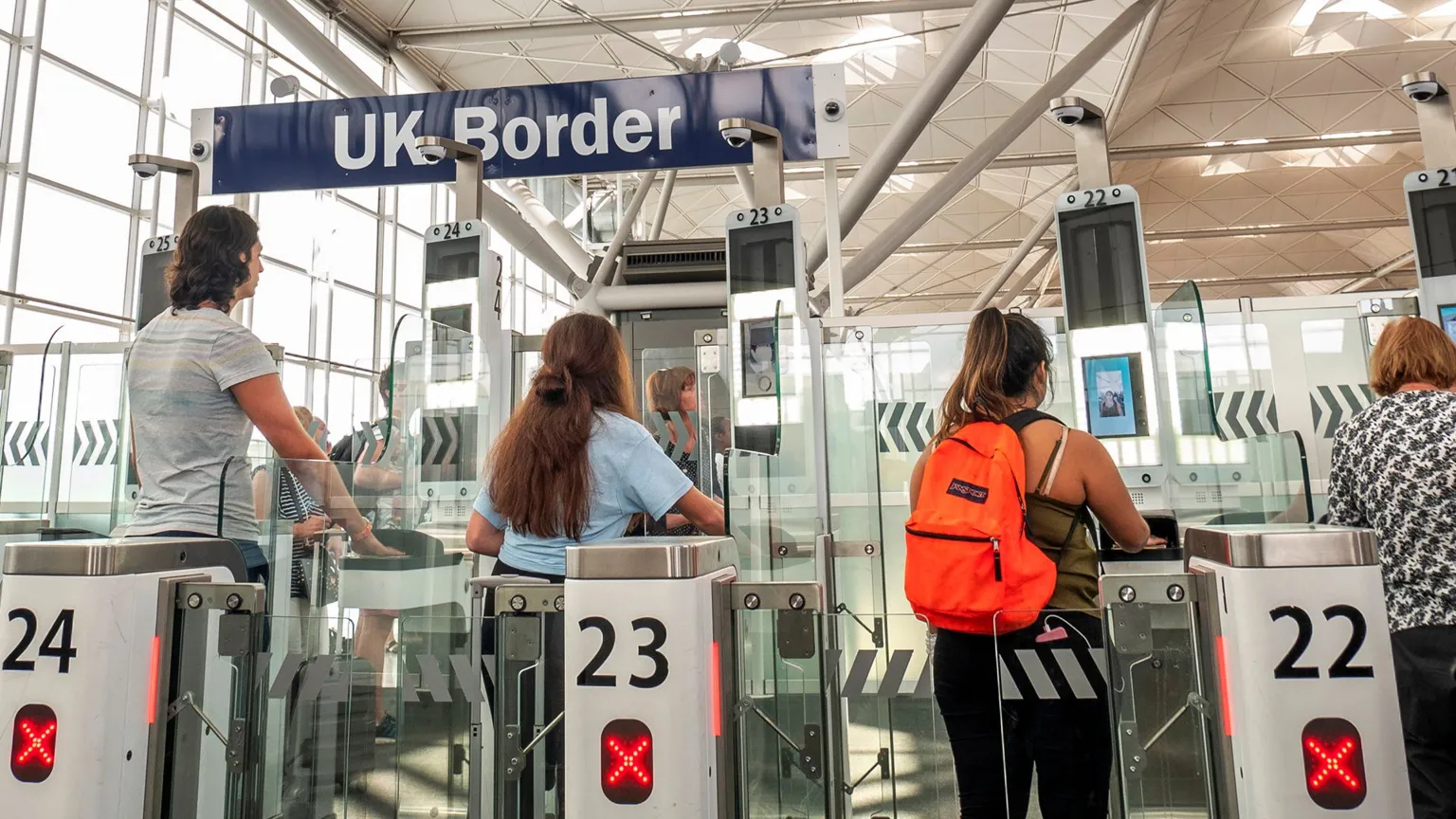
New digital travel rules have come into effect for visitors entering the United Kingdom, introducing an electronic travel authorisation system that now applies to citizens from dozens of countries, including the United States and Australia.
The system, known as an Electronic Travel Authorisation (ETA), became mandatory on Wednesday for travellers who were previously able to enter the UK without a visa. The government says the change is designed to modernise border controls and strengthen immigration checks, though it has already caused disruption for some travellers — particularly dual nationals.
Under the new rules, people arriving in the UK will still be required to pass through passport control on arrival, despite having secured digital permission to travel in advance.
What is an ETA and who must apply?
An ETA is a digital clearance that grants permission to travel to the UK. From 25 February, most visitors from countries that previously qualified for visa-free entry are required to hold one before travelling.
The requirement applies to citizens of 85 countries. Once approved, an ETA allows travellers to visit the UK for up to six months at a time and remains valid for two years, or until the passport used in the application expires — whichever comes first. During its validity period, the ETA can be used for multiple trips.
The authorisation covers short stays for purposes such as tourism, business meetings and short-term study. It also applies to travellers who pass through the UK en route to another destination. However, passengers transiting through UK airports who do not pass through border control will not need an ETA.
Those planning to work in the UK or stay for longer periods will still need to apply for a visa.
People who already require a visa to enter the UK will continue to do so and do not need to apply separately for an ETA.
British and Irish citizens are exempt from both ETA and visa requirements, as are certain other groups, including individuals with settled status and some schoolchildren travelling from France on organised trips.
Although the ETA scheme was launched in October 2023, the government initially chose not to strictly enforce the requirement to give travellers time to adapt. In November, it confirmed that ETAs would become compulsory from 25 February.
The government says the new system will make the immigration process faster, more efficient and more secure.
How to apply and how much it costs
Applying for an ETA currently costs £16, though the government has said the fee is expected to rise to £20 at a later date.
Travellers are advised to apply using the official app, available via Google Play and the Apple App Store. Applicants must submit passport details, contact information, a suitable photograph, and answer a series of questions.
Once approved, the ETA is digitally linked to the passport used in the application. Travellers must use that same passport when entering the UK.
The government says most applications made through the app are processed automatically within minutes, but recommends applying at least three working days before travelling.
If an ETA application is rejected, applicants will be told why and may submit another application. However, if an application is formally refused, there is no right of appeal. In such cases, travellers must apply for a visa instead.
How the new system is enforced
Travellers without a valid ETA may be prevented from boarding their journey to the UK.
Although the ETA exists digitally and does not require a printed document, the government says travellers may still wish to keep a paper copy for personal records.
Holding an ETA does not guarantee entry into the UK. Travellers must still clear passport control on arrival and can be refused entry if other issues are identified by border officials.
Why dual nationals are facing difficulties
The introduction of ETAs has created particular challenges for dual nationals — people who hold both British citizenship and citizenship of another country.
Dual nationals are not eligible for an ETA. To enter the UK, they must present either a valid British passport or a digital certificate of entitlement linked to their non-British passport.
Without one of these documents, they risk being denied permission to travel back to the UK.
Neither British passports nor certificates of entitlement are automatically issued when someone becomes a British citizen. As a result, some dual nationals — including those who have lived in the UK for decades — have never applied for either document.
Both options involve delays and significant costs. A British passport costs around £100 for an adult, while a certificate of entitlement costs £589. Processing times for both can take several weeks.
Before the rule change, dual nationals were often able to leave and re-enter the UK using their non-British passport alone.
Several affected travellers have told the journalists “they have struggled to obtain British passports in time. Some say they were already abroad when the changes were announced and were unable to adapt before enforcement began.
A spokesperson for the Home Office previously said guidance advising dual nationals to carry the correct documents had been available since October 2024, adding that a wider public communications campaign around the ETA system had been running since 2023.
Is the UK alone in using ETAs?
The concept of an electronic travel authorisation is not unique. Similar systems are already in use in countries including Canada and the United States, where travellers must also obtain digital approval before entering.

