

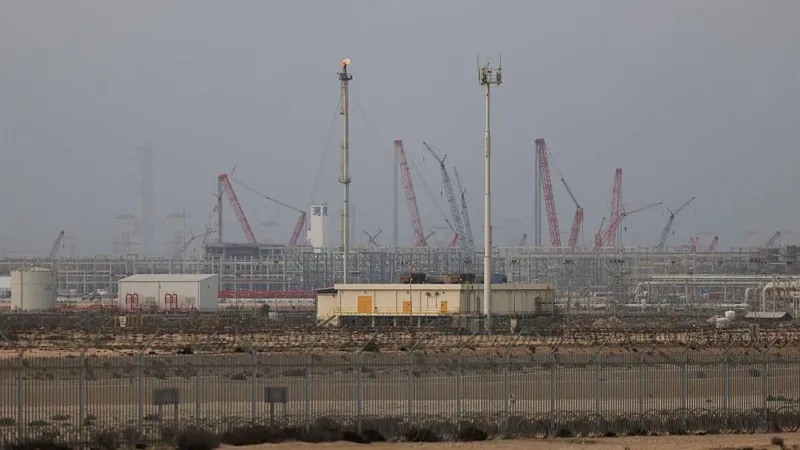
Energy markets went into shock on Thursday after Iranian strikes hit Qatar’s main liquefied natural gas facility at Ras Laffan one of the most important gas export sites on the planet sending prices surging and stock markets tumbling around the world.
Brent crude hit $119 a barrel during the day before settling back to around $111 by Thursday afternoon. UK gas prices spiked 13% to 157p per therm, having briefly touched nearly 183p earlier in the session. European natural gas prices hit a three-year high. The price of gas on the continent is now more than double what it was before the US-Israeli war with Iran began.
The attack on Ras Laffan followed reports that Israel had struck Iran’s South Pars gas field one of the world’s largest the previous evening. Iran retaliated by hitting the Qatari LNG facility, causing what QatarEnergy described as “extensive damage.” The company’s chief executive Saad al-Kaabi told Reuters that the damage would sideline 12.8 million tonnes of LNG for three to five years. QatarEnergy, which had already declared force majeure in early March after earlier strikes, warned it may need to do so again on contracts for up to five years — a legal clause that frees it from liability when supply failures are caused by events beyond its control.
Qatar produces around a fifth of the world’s liquefied natural gas. Matthieu Favas, commodities editor at The Economist, told the BBC the scale of the disruption was enormous. The market had been holding out hope that the facility could be restarted within weeks, he said but the direct missile hit has put that scenario firmly off the table. “This could last months,” he said, “and these facilities provide a fifth of the global supply of liquid natural gas, which is why the market is reacting the way it is now.”
Nick Butler, former head of strategy at BP, was blunter still. “I think the worry now is that the market is expecting things to get worse,” he told the BBC. “In their view, Mr Trump has opened a Pandora’s box, and he’s lost control of what is happening day-to-day in the region.” The gas from Ras Laffan, he added, “can’t be substituted very quickly at all, and maybe not for a very long time.”
Stock markets reflected the anxiety. Japan’s Nikkei closed down 3.4%, London’s FTSE 100 fell 2.3% in early afternoon trading, and all three main US indices opened lower.
Iran’s military had explicitly warned that attacks on its energy infrastructure would be met with strikes on the energy infrastructure of those behind the aggression — naming “fuel, energy, gas and economic” targets as fair game. It said it would “retaliate strongly at the earliest opportunity.”
In response to the spiralling oil prices, US Treasury Secretary Scott Bessent said Washington was weighing the suspension of sanctions on Iranian oil — a move that would release around 140 million barrels already at sea. The US has also already suspended sanctions on Russian oil and is working to ease domestic shipping rules to help move more supply. An earlier emergency release of oil reserves by world leaders did little to cool prices.
Meanwhile, Iran has cut off gas supplies to Iraq to protect its own domestic needs, a senior Iraqi official told Reuters a reminder of how the conflict is rippling outward well beyond the countries directly involved in the fighting.

