

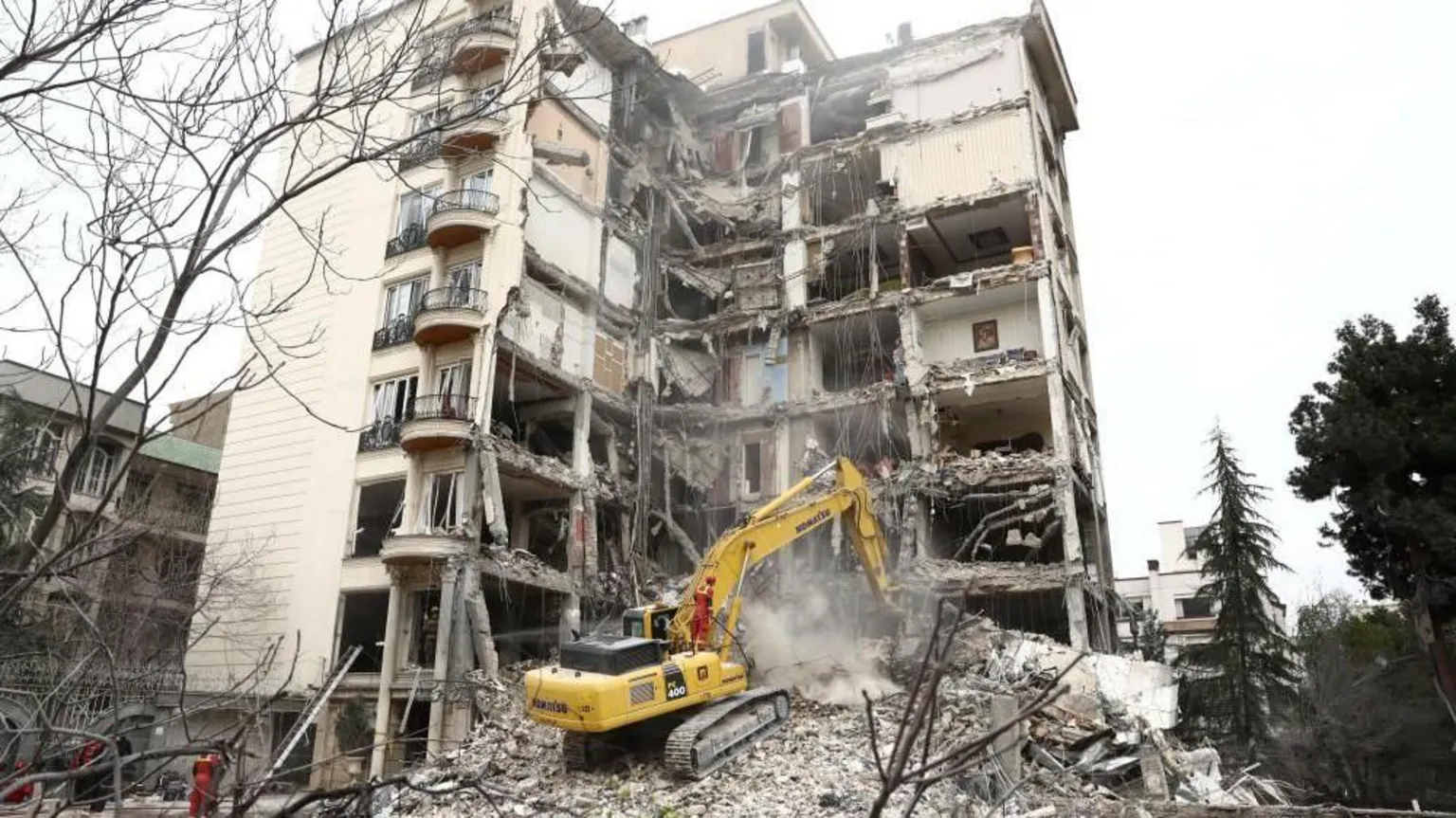
The war involving Iran is starting to look less like a conflict bound by rules—and more like one where the limits are being pushed, or ignored entirely.
Recent US and Israeli strikes, along with Iran’s retaliation across the Gulf, have raised serious concerns that the old playbook for how wars are fought is breaking down. Donald Trump has openly threatened to hit Iran’s energy infrastructure, at one point saying he would “massively blow up” the South Pars gas field, and later warning he could “obliterate” major power plants if Iran didn’t reopen the Strait of Hormuz.
For critics, that kind of language—and the actions tied to it—crosses a line. Luis Moreno Ocampo, the founding prosecutor of the International Criminal Court, argues that this war fits the definition of a “crime of aggression,” where one state uses force against another without clear legal justification. He warns that what used to be a rules-based system is slipping into something far more unpredictable—driven less by law, and more by the decisions of powerful leaders in the moment.
The White House sees it differently. Officials insist the US is acting to neutralise a dangerous regime and defend both itself and its allies. They argue that when infrastructure is tied to military or strategic threats—like Iran’s nuclear ambitions—it can become a legitimate target.
Still, the line between military and civilian targets is exactly where the tension lies. Under international law, attacks on civilian infrastructure—like power plants—can be considered war crimes unless they are clearly being used for military purposes. Even then, there are strict rules about limiting harm to civilians. Rights groups warn that hitting Iran’s energy systems could have devastating consequences for ordinary people, especially as the country already struggles with power shortages.
Iran’s own actions are also under scrutiny. Its strikes on neighbouring Gulf countries many of which were not directly involved could also be seen as violations of international law. The conflict has already damaged dozens of energy facilities across multiple countries, showing how far beyond national borders this war has spread.
What’s unfolding is bigger than just one conflict. Analysts say it reflects a deeper shift in global politics, where trust between allies is weakening and long-standing norms are losing their grip. Some argue this moment signals a return to a more chaotic, power-driven world—where countries act first and justify later. Others say it’s a continuation of trends that have been building for years.
Either way, the rules that once shaped how wars start and escalate are being tested in real time and the outcome could redefine how future conflicts are fought.

