

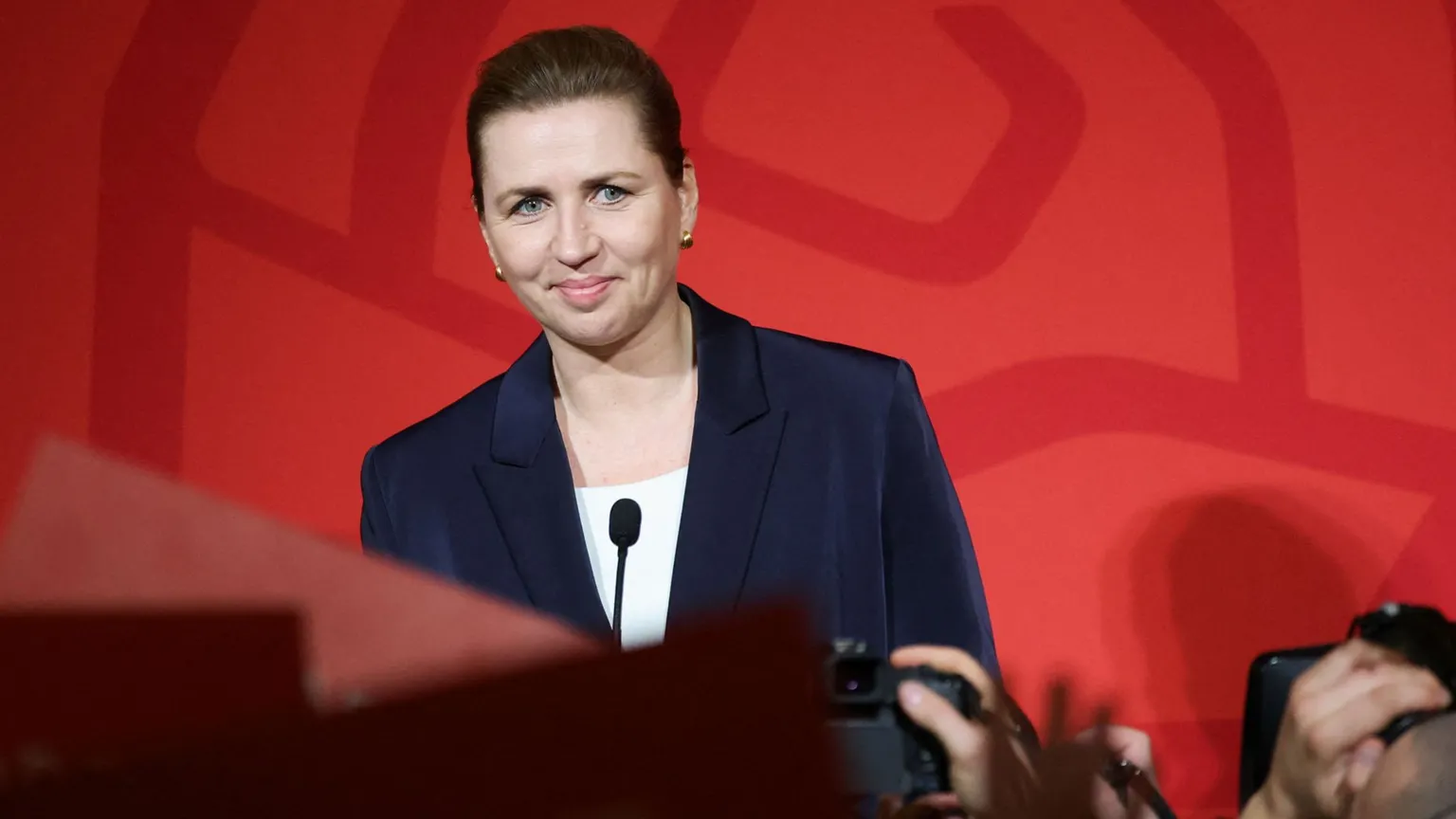
Denmark’s Prime Minister Mette Frederiksen has come out on top in the general election—but with a result that feels more like a warning than a win. Her Social Democrats secured the largest share of votes, 21.9%, yet it marks their weakest performance in more than a century, dating back to 1903.
Despite leading the race, Frederiksen’s left-leaning “red bloc” fell short of the 90 seats needed to form a majority in parliament. They currently hold 84 seats, just ahead of the right-wing “blue bloc,” which has 77. With neither side in control, the country is heading into tense coalition negotiations that could stretch for days—or even weeks.
Frederiksen, who has been in power since 2019, acknowledged the disappointment but struck a determined tone. She told supporters she was sorry for the loss in support but emphasized that her party remains the most popular in Denmark. Still, after nearly seven years leading the country, the result reflects a clear dip in momentum.
The election reshaped the political landscape in other ways too. The Liberal Party, Venstre—traditionally a major force on the right—also suffered one of its worst results in decades, pulling in just 10.1% of the vote and falling behind the Green Left party.
Now, attention has shifted to the Moderates, a centrist party holding 14 seats, which could decide who ultimately forms the next government. Its leader, former Prime Minister Lars Løkke Rasmussen, has positioned himself squarely in the middle, signalling openness to working across political lines.
Frederiksen still has a path to a third term, but it won’t be straightforward. Potential alliances are already being debated, with some analysts pointing toward a centre-left coalition that could bring together multiple parties to secure a majority.
The election itself was shaped less by global tensions—like Donald Trump’s past comments about Greenland—and more by everyday concerns at home. Voters focused on the cost of living, the economy, welfare, and environmental issues, all of which appear to have chipped away at support for the current government.
In the end, Frederiksen remains in the game—but this time, holding power will depend not just on winning votes, but on navigating a much more complicated political middle ground.

