

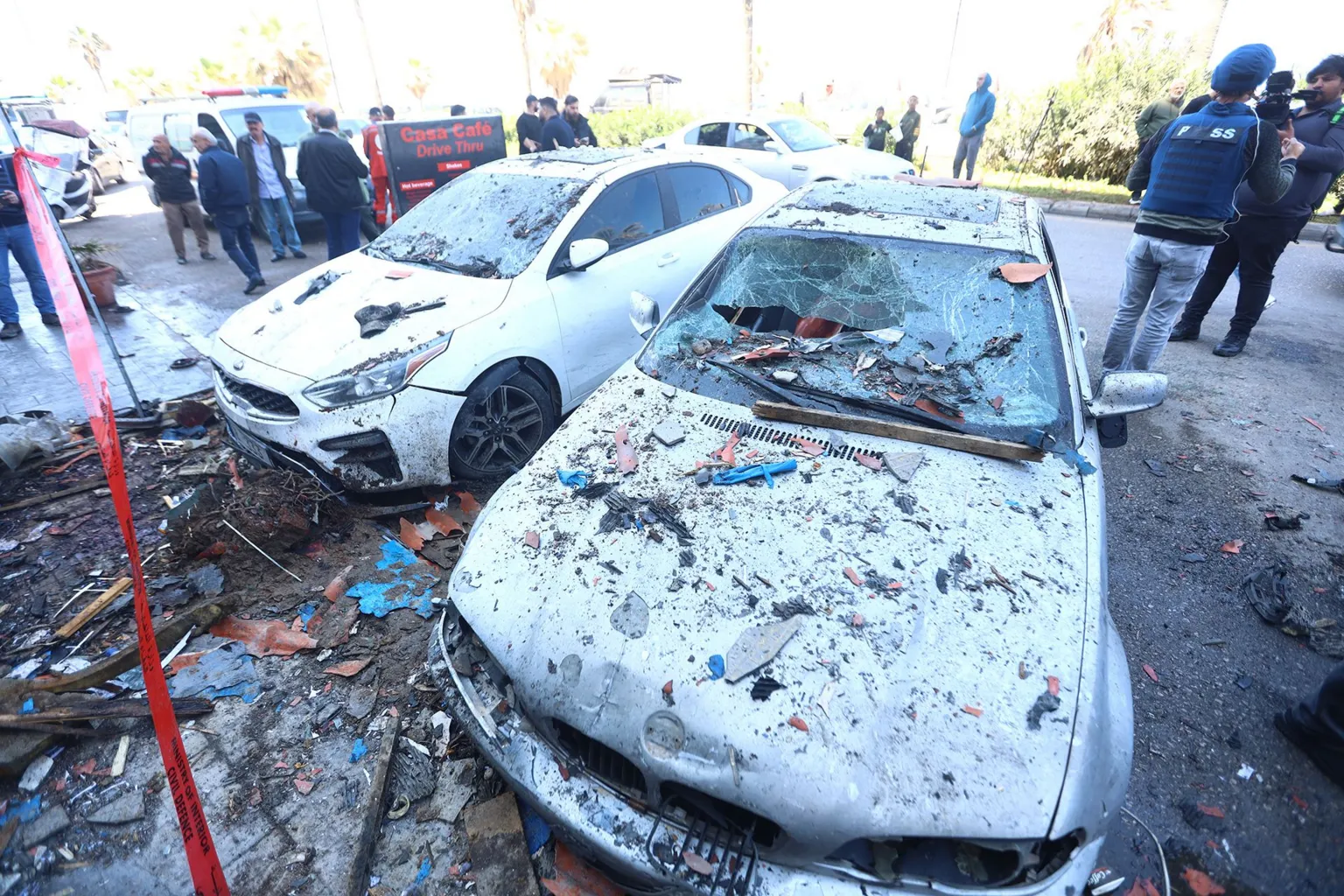
Israel has continued its military campaign in Lebanon despite the newly announced ceasefire between the United States and Iran, underlining how limited that agreement is in scope.
Air strikes hit southern parts of Lebanon, including the cities of Tyre and Nabatieh, just hours after the ceasefire was announced. The Israeli government, led by Benjamin Netanyahu, made it clear that the deal with Iran does not extend to its ongoing conflict with Hezbollah.
For Israel, the war in Lebanon is a separate front. Its military says operations—both air and ground—will continue with the aim of pushing Hezbollah fighters away from the border and dismantling their infrastructure. This includes plans to establish what it calls a “security buffer zone” in southern Lebanon.
The humanitarian toll has been severe. More than 1,500 people have reportedly been killed, including children, and around 1.2 million people—roughly one-fifth of لبنان’s population—have been displaced. Entire villages near the border have been destroyed, and many families remain uncertain if they will ever be able to return home.
The conflict itself is deeply tied to wider regional tensions. Hezbollah, whichis backed by Iran, entered the fighting after escalating hostilities linked to the road war involving Israel, the US, and Iran. Although the group has not claimed new attacks since the ceasefire announcement, it has signalled that it is not yet ready to stand down, warning displaced civilians not to return prematurely.
Meanwhile, the Lebanese government is attempting to push for inclusion in any broader regional peace efforts. In a significant shift, it has even indicated willingness to negotiate directly with Israel—despite the two countries having no formal diplomatic relations. So far, that offer has not been taken up.
What this situation shows is that the US-Iran ceasefire, while important, does not resolve the wider network of conflicts across the Middle East. Fighting in Lebanon continues independently, and unless separate agreements are reached, the risk of further escalation remains high—even as diplomacy progresses elsewhere.

