

After 16 years of dominant rule, Viktor Orbán’s political era has come to a dramatic close. In a historic landslide, Péter Magyar and his Tisza movement have not only defeated the long-standing establishment but dismantled a system critics long described as an “electoral autocracy.”
The scale of the victory is striking. With preliminary results pointing to a commanding parliamentary majority, Magyar now holds the power to reshape Hungary’s constitution, institutions, and global positioning. But beyond the numbers lies something deeper: a clear signal from voters that the status quo had run its course.
For over a decade, Orbán and his Fidesz built a formidable political machine, securing repeated electoral victories and consolidating power across institutions. Yet what once appeared unshakable unravelled with remarkable speed. As results emerged, even before the full count was complete, Orbán conceded defeat, an acknowledgement that the political tide had already turned.
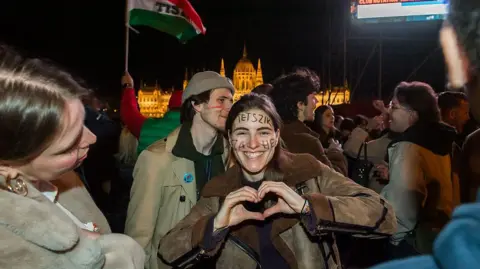
In Budapest, celebrations erupted along the Danube as supporters of the Tisza Party marked not just a win, but a turning point. Magyar’s rise itself is remarkable. A former insider within Orbán’s political circle, he rebranded himself as the face of opposition, tapping into widespread frustration over corruption, patronage networks, and weakening institutional independence. Over two years, he built momentum across towns and cities, drawing support from voters who were less united by ideology than by a shared desire for change.
Armed with what appears to be a constitutional majority, Magyar is poised to act decisively. He has pledged to dismantle entrenched systems of patronage, restore judicial independence, and reform key sectors like healthcare and education. His victory gives him not just political authority, but a rare opportunity to reverse years of structural change.
The implications stretch far beyond Hungary’s borders. Orbán had positioned the country as a difficult partner within the European Union, while maintaining close ties with Donald Trump and Vladimir Putin. Magyar has promised a shift toward renewed cooperation with Europe and stronger alignment with Ukraine. Early signals, including planned visits to Warsaw and Brussels, suggest an effort to rebuild trust and unlock frozen EU funds.
In the final days of the campaign, Hungary seemed to exist in two parallel realities—one projecting confidence in another Orbán victory, the other driven by growing crowds rallying behind Magyar. On election night, those competing narratives collided, and only one held.
Orbán, still leader of Fidesz, remains a significant პოლიტიკური figure, but his dominance has been broken. Hungary now enters a new phase, one defined not by entrenched power but by expectation and uncertainty. The task ahead for Magyar will be to convert momentum into meaningful reform while navigating both domestic divisions and international pressures.
For many Hungarians, however, the message of this election is unmistakable. After years of continuity, they have chosen change—and with it, the possibility of a different future.

