

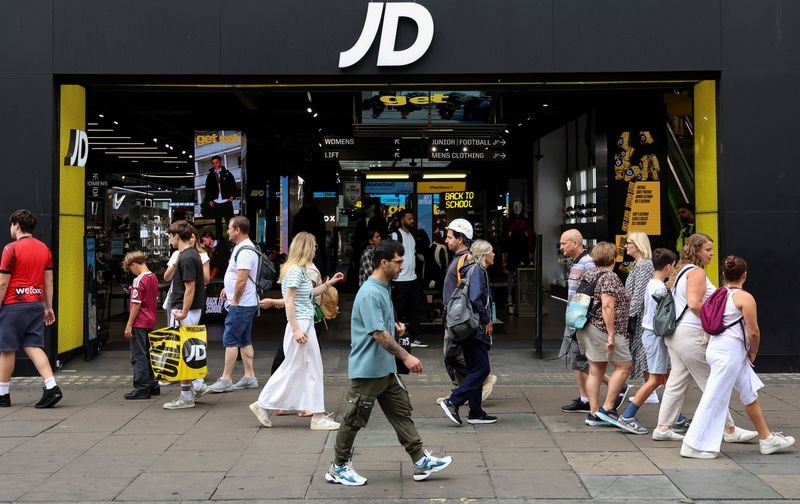
The sports fashion retailer JD has cut £50m from its profit forecast as cost of living pressures, fuelled by the US war on Iran, weighed on sales of trainers.
JD Sports, which sells brands including Nike and Adidas, said widespread inflation had hit shoppers’ wallets, particularly its core young shoppers, resulting in a drop in sales across important markets such as the US, where it struggled to shift trainers and other footwear.
Bosses went on to warn that the wider fall in consumer spending was likely to continue into the second half of the year. The retailer now expects lower pre-tax profits of between £700m and £800m for the full year, having previously hoped to reach £750m to £850m.
The news led to a 14% drop in JD’s London-listed shares by Thursday afternoon trading, to their lowest level since May.
Régis Schultz, JD’s chief executive, said: “Trading in the second quarter remained tough,” adding that the company had been forced to cut prices and offer promotions to compensate, as “our core consumer was impacted by incremental cost-of-living pressures.”
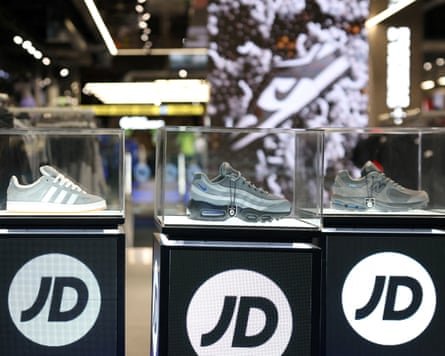
The company, which runs 4,800 stores worldwide including the JD, Blacks and Millets chains in the UK, said pressures included higher fuel prices, which have been pushed up by the US-Israeli war on Iran, which has effectively stopped tankers passing through the strait of Hormuz.
Overall, JD said like-for-like sales fell by 3.1% in the second quarter, with its North America operations taking the biggest hit, down by 6.8%. Sales across Europe were down 2.7%.
The UK was a rare bright spot as World Cup excitement drove sales of football replica kits, while consumers bought more outdoor gear, including from its high street brands Blacks and Go Outdoors.
Chloe Tedford-Jones, apparel analyst at the industry research firm GlobalData, said JD’s sales performance reflected a maturing sportswear market and problems at its biggest brand, Nike.
“The retailer’s performance is heavily impacted by its over-reliance on Nike, which has continued to struggle due to an innovation drought in footwear,” she said. “While JD Sports now also stocks surging alternative brands like On and Hoka, they lack the volumes required to offset this heritage deficit.”
Tedford-Jones said JD needed to move faster to adapt to changing trends, which are shifting towards outdoor gear and performance sports rather than casual “athleisure” clothing.
Disagreements about strategy at the retailer led to the exit of the chair Andrew Higginson at JD’s annual meeting last month, reportedly after he failed to convince the board to oust Schultz.
Peter Agnefjäll, former boss of the furniture retailer Ikea, is to step in as the new chair next month – making him the group’s fourth chair in just over four years.
Darren Shapland, formerly chair of Poundland and Topps Tiles, has been acting as interim chair since the exit of Higginson, who joined to the replace long-term boss Peter Cowgill, who stepped down in 2022 after the competition regulator fined the retailer more than £4m over clandestine meetings with the boss of its takeover target FootAsylum.
Susannah Streeter, chief investment strategist at the investment firm Wealth Club, said JD’s troubles reflected wider issues in the US economy, a key market in the retailer’s growth ambitions, as well as sportswear overall. “JD Sports is offering another glimpse of the darkening clouds gathering over the US economy, with American shoppers looking considerably more cautious,” she said.
“The sneaker is fast becoming a canary in the coalmine for confidence. More consumers are resisting the lure of hyped brands, which is not surprising when the jobs market is weakening and inflation is still such a concern. Consumers may still be spending, but they are becoming more selective about discretionary purchases, particularly when household budgets are already under pressure.”

