

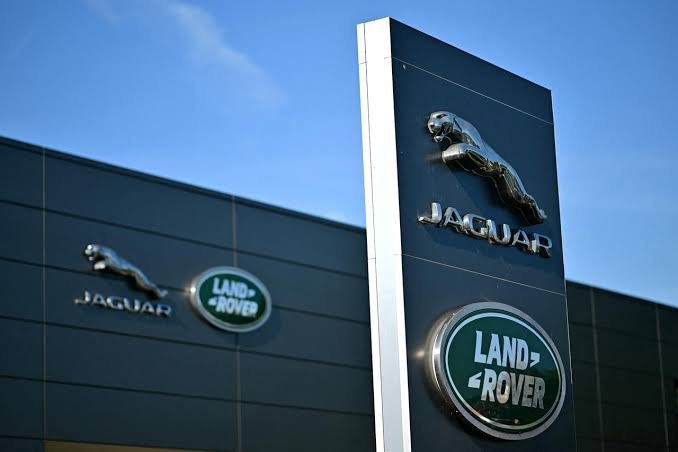
Jaguar Land Rover (JLR) is to cut 4,000 jobs as the carmaker struggles with Chinese competition, US tariffs, and the transition to electric vehicles.
The cuts will happen over the next two years and will mostly affect the head office, which is based in the UK.
JLR’s long-term issues were made worse after a cyber-attack last year caused the firm, which employs 43,000 people globally,to shut down production for more than a month.
Chief executive PB Balaji said the firm was “committed to supporting everyone with care, fairness and respect” through the redundancy process.
“The automotive industry faces significant challenges, with technological change amidst intense competition and ongoing geo-political uncertainty,” he added.
JLR is hoping to achieve the cuts through voluntary redundancy, with a window open until 4 October, but said it would make compulsory redundancies with less generous terms if necessary. Affected staff will receive an email in the coming days.
The redundancies are being made in an attempt to save £1.7bn over the next two years.
JLR is “as strategically important as it gets for the UK economy”, according to David Bailey, business and economics professor at Birmingham University.
He said many UK jobs were dependent on its supply chain and the economy as a whole took a hit when the firm closed down production because of last year’s cyberattack.
“It’s the centre of our automotive industry,” he added.
Yet, the car maker has been losing sales to rivals from China, a country which JLR initially saw as a market for growth rather than a source of competition.
In addition, US President Donald Trump’s tariffs have hurt the company, which unlike many of its rivals does not have a factory in the US.
In its results for the year to the end of March, JLR said US tariffs and the cyberattack were the main reasons why its sales had slumped by a fifth to £22.9bn from £29bn in the previous two years.
Ian Robertson, former director at BMW, told the BBC’s Today programme that JLR should have copied its rivals and started manufacturing in the US.
“The biggest operation for BMW in the world is in Spartanburg, South Carolina. Mercedes have their plant further south in Tuscaloosa. JLR didn’t take that decision early enough in my view,” he said.
He also said JLR had been “somewhat late to the party in terms of producing their first electric car which is just about to go into production”.
Robertson added that Brexit had hurt the firm, despite its factory in Slovakia giving it “some flexibility”.
The prime minister’s official spokesman said: “We understand that this will be an uncertain and concerning time for affected workers, their families and the wider communities.”
The spokesman added that Business Secretary Jonathan Reynolds “is in close contact with JLR and he will be meeting them early this week”, but ruled out “any form of bailout”.
Business and trade committee chair Liam Byrne called the cuts a “body blow for workers, families and communities across the West Midlands”.
“Whether or not these redundancies are voluntary, we now need urgent assurances that maximum support will be deployed to help everyone affected find new work,” he added.
‘Death by a thousand cuts’
Some have blamed the issues facing JLR and the wider UK car industry on the zero emission vehicle (ZEV) mandate, which was introduced by the previous Conservative government and kept under Labour.
It requires that all new car and van sales in the UK must be zero emission vehicles by 2035, but it does not apply to cars sold overseas, which is where JLR makes most of its revenue.
Shadow transport secretary Richard Holden said the ZEV mandate and higher energy costs were “crippling the British automotive industry”, pledging to scrap the mandate.
At the weekend, the general secretary of the Unite union, Sharon Graham, said the ZEV mandate was “unsustainable” and that the UK car industry had suffered from “years of underinvestment” under both Labour and the Conservatives.
“Death by a thousand cuts has been going on under the nose of successive governments,” she said over the weekend.
The UK Sustainable Investment and Finance Association has defended the ZEV mandate, previously calling it “crucial for attracting finance into this infrastructure as it sets out a clear, predictable pathway for the growth of the electric vehicle market”.

