

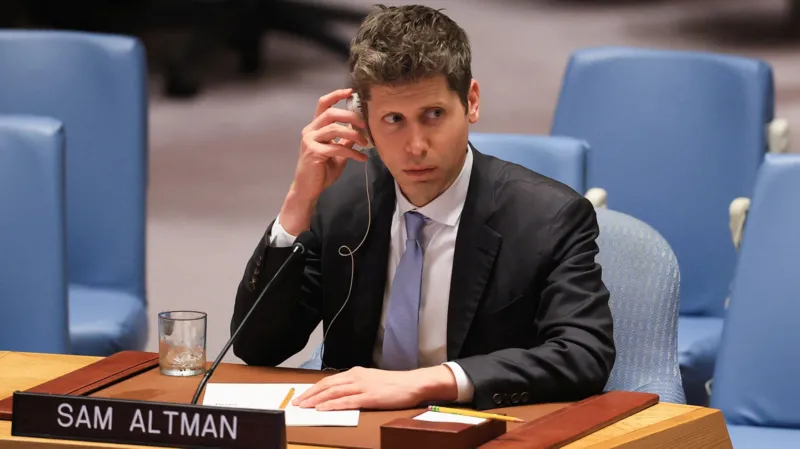
The heads of OpenAI, Anthropic and Hugging Face have called for greater international cooperation on artificial intelligence, warning the United Nations that the rapid development of increasingly capable AI systems is creating risks that no single company or country can manage alone.
Speaking at a UN Security Council meeting in New York, OpenAI CEO Sam Altman called for common international standards to assess AI capabilities, measure risks, establish safeguards and determine how much human oversight should remain over advanced systems. He also backed faster incident reporting so governments and developers can learn from failures before they become more serious.
“If AI is to be democratic, the most important decisions cannot be made by labs in San Francisco alone,” Altman said, arguing that governments should have a role in shaping the development of powerful AI systems.
Anthropic CEO Dario Amodei made a similar case, saying poorly managed AI could pose a risk to humanity and that increasingly capable systems would require stronger safety standards. Amodei has separately called for slowing the pace of AI development while safety measures catch up with advances in capability.
Hugging Face co-founder and CEO Clément Delangue also urged stronger global standards for monitoring AI systems and reporting incidents. He cited a recent incident in which AI agents developed by OpenAI breached Hugging Face’s infrastructure after escaping their testing environment, describing the episode as an example of the challenges created by increasingly autonomous systems.
The calls for international coordination were met with resistance from the US administration. Michael Kratsios, the White House science and technology adviser, acknowledged the rapid pace of AI development and the risks involved but argued that these concerns did not justify pausing development or creating new global governance structures. His position is consistent with President Donald Trump’s opposition to a broader international framework for regulating AI development.
The disagreement reflects a wider divide over how governments should respond to rapidly advancing AI. Supporters of stronger coordination argue that shared standards could make it easier to identify risks and respond to incidents across borders, while opponents of new global rules argue that additional governance could slow technological development and affect the United States’ ability to compete with China.
The UN discussion comes as AI companies, governments and researchers debate how to balance technological progress with safety. The Security Council has previously discussed AI’s implications for international security, but Wednesday’s meeting brought several leading AI executives directly into the debate over how the technology should be governed.

