

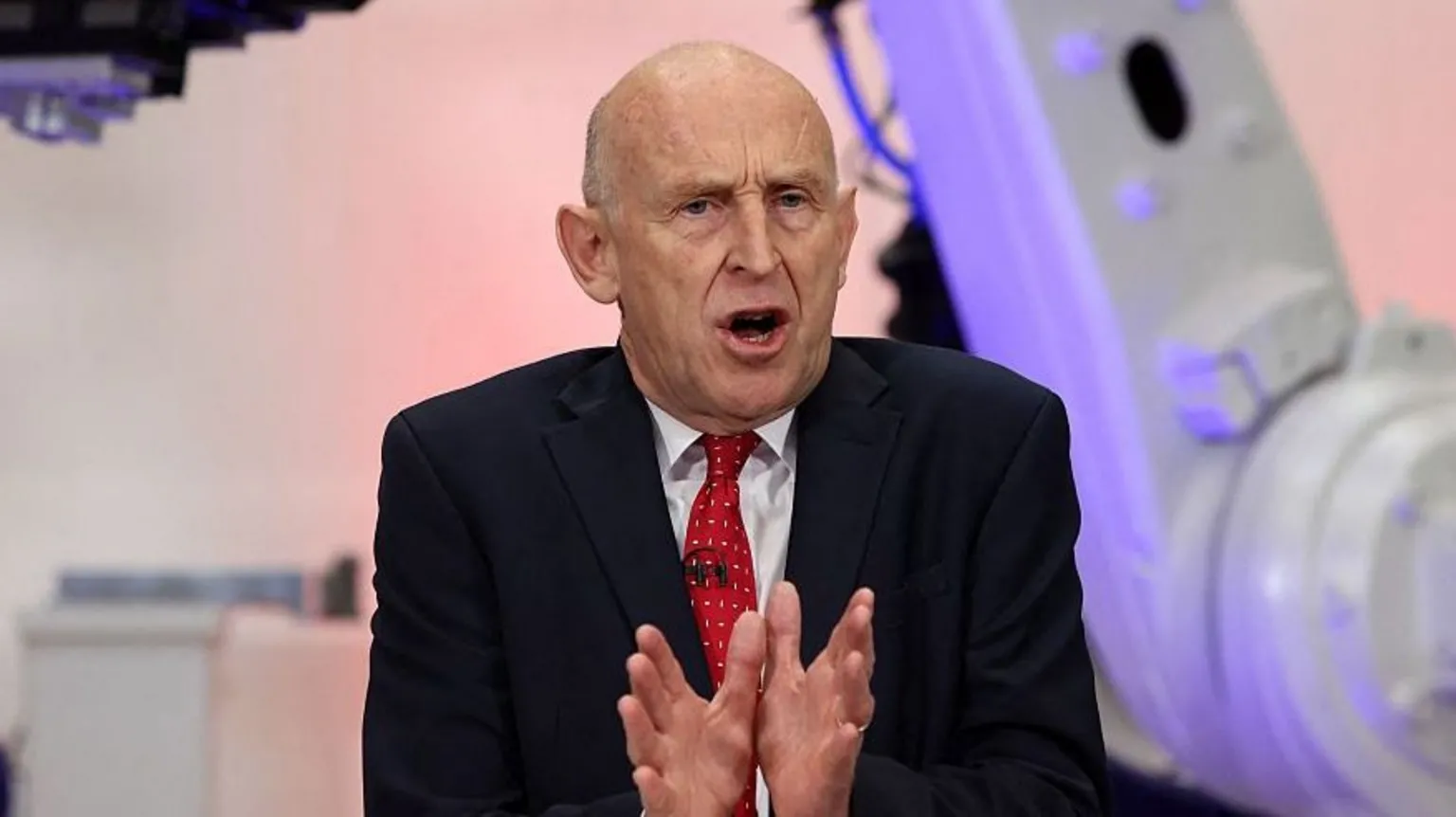
UK Chancellor John Healey is facing a difficult balancing act ahead of his first Budget on October 28, with higher energy prices, rising government borrowing costs and renewed uncertainty putting pressure on the economy.
Healey has acknowledged the challenges facing Britain but has also argued that the country has strong foundations for future growth. His comments come as the government seeks to maintain improving consumer sentiment while preparing for a Budget expected to require difficult decisions on taxation, spending and borrowing.
One of the biggest uncertainties is the economic impact of the conflict involving Iran. Oil prices have risen sharply from earlier levels, increasing pressure on households and businesses while adding to inflation concerns. At the same time, higher yields on UK government bonds mean the government faces greater costs when borrowing.
The uncertainty makes the Budget particularly difficult to plan. If the conflict continues, the government could face sustained pressure from higher energy costs. But if tensions ease soon after the Budget, forecasts based on a prolonged shock could prove overly pessimistic.
That leaves the chancellor with a choice over how much financial pressure to absorb through additional borrowing. One option would be to use some of the government’s fiscal headroom, although that would leave less room to respond to future economic shocks while maintaining its fiscal rules.
The government is also watching signs that consumer confidence has improved. The latest sentiment measures have reached their highest levels in around two years, while business confidence has also shown some improvement, although the picture remains mixed. The government will be hoping that stronger confidence can be maintained even as households and companies prepare for potentially difficult Budget measures.
Financial markets remain another concern. Rising government borrowing costs are not necessarily explained entirely by the Iran conflict, with longer-term pressures including high public debt and increased competition for investment capital. The rapid growth of AI companies and their investment needs has also added another dimension to global capital markets.
The International Monetary Fund has warned advanced economies against delaying efforts to bring down debt. IMF Managing Director Kristalina Georgieva has urged governments to make fiscal consolidation a priority, while acknowledging that Britain’s fiscal plans have been relatively consistent and credible.
There is also uncertainty surrounding the UK’s productivity figures. The Office for National Statistics has recently revised its assessment of productivity, partly reflecting changes in estimates of hours worked. Any significant revision to the government’s productivity assumptions could affect the forecasts underpinning the Budget.
Artificial intelligence could provide another factor in the longer-term economic outlook. Jonathan Haskel, the new chair of the Office for Budget Responsibility, has previously argued that official statistics can underestimate investment in intangible assets such as software and data. His research has also examined the potential impact of AI investment on productivity, although it remains unclear whether such considerations will materially affect the OBR’s calculations for the October Budget.
Beyond the immediate economic pressures, the government must find funding for defence commitments and other spending priorities. The Budget will therefore have to balance these demands against the government’s fiscal rules and its efforts to maintain confidence among households and businesses.
The government has also begun announcing policies ahead of the Budget rather than revealing measures through a prolonged period of speculation. One example is the Your First Home scheme, announced ahead of the Labour Party conference. The programme is expected to allow eligible first-time buyers in England to purchase new-build homes with deposits as low as 2.5%, supported by a government-backed equity loan of up to 20%. Further details, including income and property-price limits, are due at the Budget.
With the Budget less than five weeks away, Healey faces the challenge of responding to immediate economic pressures without undermining the recent improvement in consumer and business confidence. The scale and duration of the global energy shock will be among the factors shaping those decisions.

