

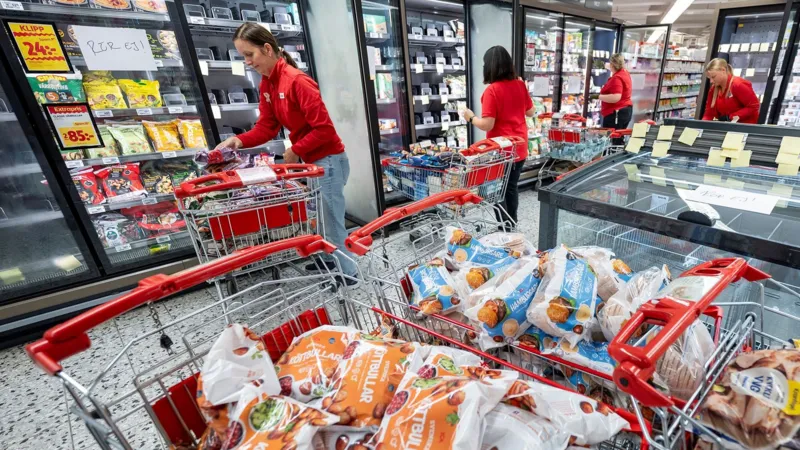
Dozens of supermarkets have been affected after hackers reportedly manipulated refrigeration systems, forcing stores to dispose of spoiled food and raising concerns about the security of connected retail equipment.
Supermarkets across seven European countries have been hit by a cyber-attack targeting their refrigerators and freezers, leaving retailers facing significant food losses and operational disruption.
Around 40 Delhaize supermarkets in Belgium and Luxembourg were affected, alongside smaller numbers of stores in Sweden, Ireland, the Netherlands, Estonia and Finland.
Belgian refrigeration manufacturer Sabcobel said the attackers switched the evaporators in affected units into defrost mode, causing temperatures to rise. The technique is believed to be similar to the one used during an attack in October that disrupted hundreds of supermarkets in France.
Millions of euros worth of food reportedly had to be discarded following the earlier incident.
Hackers remotely altered freezer temperatures
Stephan Moelans, chief executive of Sabcobel, which operates refrigeration systems for Delhaize, confirmed to the Belga news agency that the latest incident was a cyber-attack.
He said the company had spent the night and following morning disconnecting affected refrigeration units from its network.
Since the French attack in early October, Sabcobel had been working to protect customers’ equipment against the vulnerability. However, Moelans explained that the necessary protection involved physical modifications rather than software updates alone.
Many supermarkets across Europe use internet-connected refrigeration systems that allow maintenance teams to monitor equipment and troubleshoot problems remotely.
Moelans said most customers had adopted secure internet connections to manage their refrigerators following the French incident.
Despite those measures, temperatures in freezers at several European stores reportedly climbed to as high as 50°C (122°F).
The identity of those responsible for the latest attack remains unknown.
Belgian supermarkets report substantial losses
The financial impact has been particularly serious for some Belgian retailers.
A Delhaize supermarket in Hoeilaart, northern Belgium, told news website Het Laatste Nieuws that it had lost approximately €100,000 (£83,500) worth of produce.
The store manager said the figure did not include additional losses expected from closing the supermarket.
Carrefour confirmed that 15 of its Belgian stores had been affected but said immediate measures had been taken to keep all locations open.
Colruyt Group, which operates Spar supermarkets in Belgium through a franchise system, told Reuters that five stores had experienced attacks on their refrigeration systems.
Ikea also confirmed that the refrigeration systems at its store in Mons, western Belgium, had been affected. A company spokesperson said it could not rule out the possibility of additional locations being impacted.
Sweden among the countries affected
Several ICA and Coop supermarkets in Sweden were also targeted.
ICA confirmed that a small number of stores operating outside its central network had been affected. The company said it was supporting the affected branches as they dealt with the disruption.
One ICA supermarket in Sjöbo, southern Sweden, announced on social media that its refrigerators and freezers had been hacked overnight, with their temperatures reportedly set to 50°C.
The store initially closed but later reopened to customers.
Seven of Coop’s approximately 800 Swedish supermarkets were also affected. The company told the BBC that the situation had been contained and was under control.
Images from Sweden showed employees removing frozen and refrigerated products from affected stores, while spoiled food was being discarded outside an ICA supermarket in Stockholm.
Ireland, Finland, the Netherlands and Estonia also hit
The disruption extended beyond Belgium and Sweden.
In Finland, refrigeration malfunctions were detected at several K-stores. Kesko, the owner of the supermarket chain, said its security specialists were investigating the cause of the problem, according to the newspaper Helsingin Sanomat.
In Ireland, 13 SuperValu supermarkets were affected. Musgrave Group, which owns the chain, confirmed to The Irish Times that a cyber incident had disrupted its refrigeration systems. However, the company said the impact was limited to a specific refrigerator model.
In the Netherlands, Danish manufacturer Danfoss reported that the cooling and freezing systems of at least 17 businesses had been attacked overnight. The affected locations included butcher shops and small neighbourhood stores.
Estonia also reported an incident involving a Selver supermarket, with public broadcaster ERR indicating that other businesses in the country might have been affected.
Cybersecurity agencies monitoring the situation
Authorities are investigating the attacks, although no group has been identified as responsible.
Belgium’s and Sweden’s national cybersecurity agencies said they were monitoring developments.
The UK’s National Cyber Security Centre said it was working with international partners and industry representatives to establish the full details of the incident. No similar attacks had been reported in the UK.
Meanwhile, US authorities are investigating refrigeration malfunctions reported at several American military bases in August. They are working with French officials to determine whether those incidents could be connected to the attacks affecting European supermarkets.
The latest incidents have renewed concerns about the security of internet-connected equipment used by supermarkets and other businesses. Although remote monitoring makes refrigeration systems easier to manage, the attacks show how disrupting such technology can quickly lead to spoiled food, store closures and substantial financial losses.

