

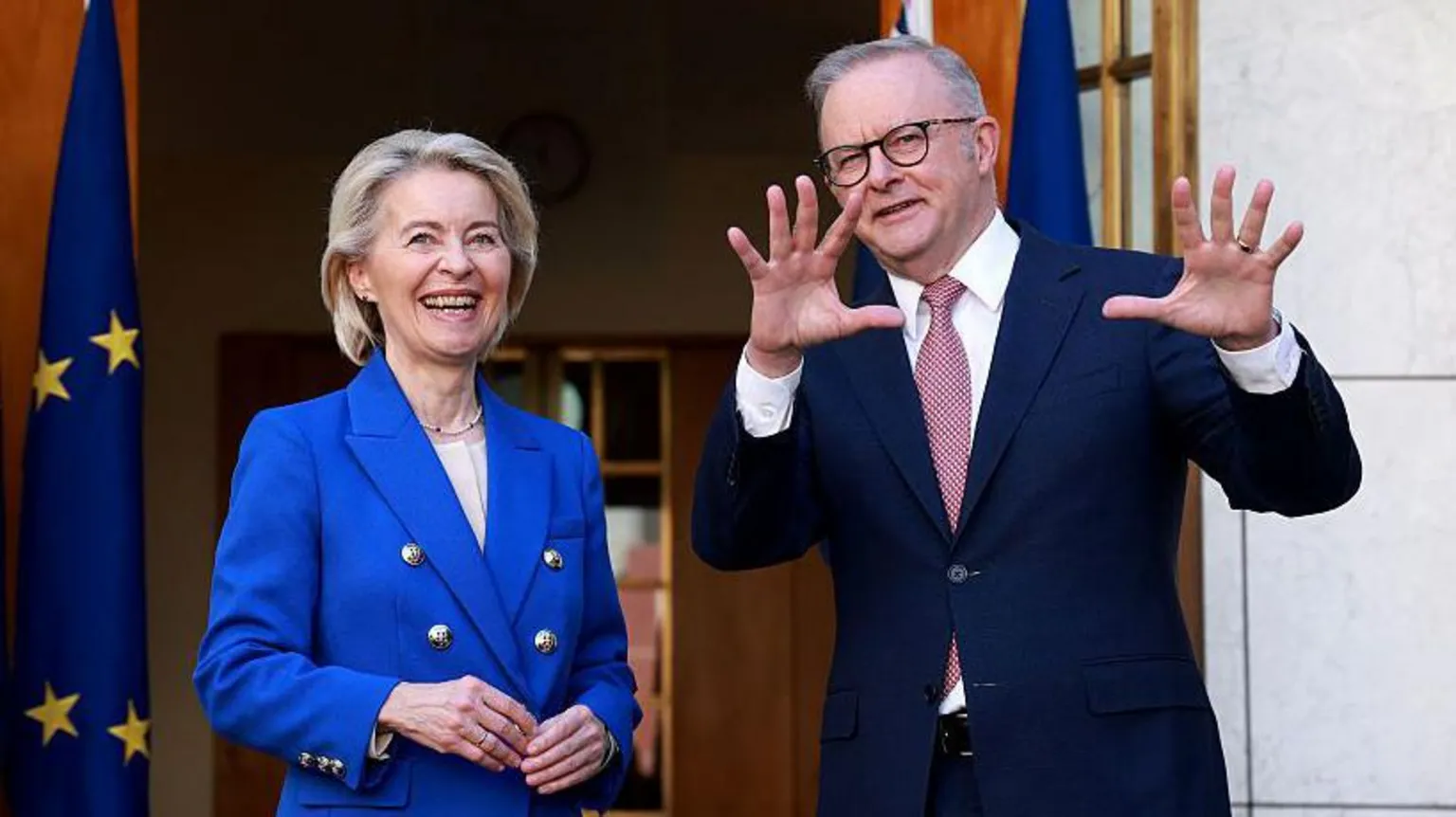
Australia and the European Union have finally sealed a major trade deal after eight years of back-and-forth—framing it as a strong signal of partnership in a world that feels increasingly uncertain. Signed in Canberra, the agreement is worth about A$10bn and was described by both sides as a “win-win,” with European Commission President Ursula von der Leyen calling it a step toward “collective resilience” in a rapidly shifting global landscape.
At its core, the deal wipes out almost all tariffs between the two, opening the door for smoother trade across a wide range of goods. Australian exports like wine, seafood, dairy, and grains are set to benefit, while European products—from spirits to chocolates and pasta—are expected to become more affordable for Australian consumers. For Australian winemakers alone, the government says the changes could save around A$37m.
But beyond trade, the agreement goes deeper. Both sides are tightening cooperation in areas like defence, counter-terrorism, and critical minerals—especially resources like lithium and tungsten, which are becoming increasingly strategic in global supply chains. It’s not just about goods anymore; it’s about security and long-term alignment.
Still, not everyone is celebrating. Farmers on both sides have pushed back, especially over meat export limits. While Australia secured a significant increase in how much beef it can send to Europe—rising to about 30,000 tonnes over time—it still falls short of what producers had hoped for. Meanwhile, European farmers argue that even that increase adds pressure to an already strained sector.
There are also cultural sensitivities woven into the deal, particularly around food names. Australia will be allowed to keep using terms like “parmesan,” and even continue calling its sparkling wine “prosecco” at home, though that label will gradually be phased out for exports over the next decade.
For the EU, this agreement is part of a bigger strategy—diversifying trade partnerships as global tensions rise and economic relationships become less predictable, especially with shifting policies from the US and competition from China. For Australia, it’s a chance to strengthen ties with a major economic bloc while securing new opportunities for its exports.
In the end, it’s a deal shaped as much by geopolitics as by economics—one that reflects how countries are rethinking alliances, supply chains, and trade in a more uncertain world.

