

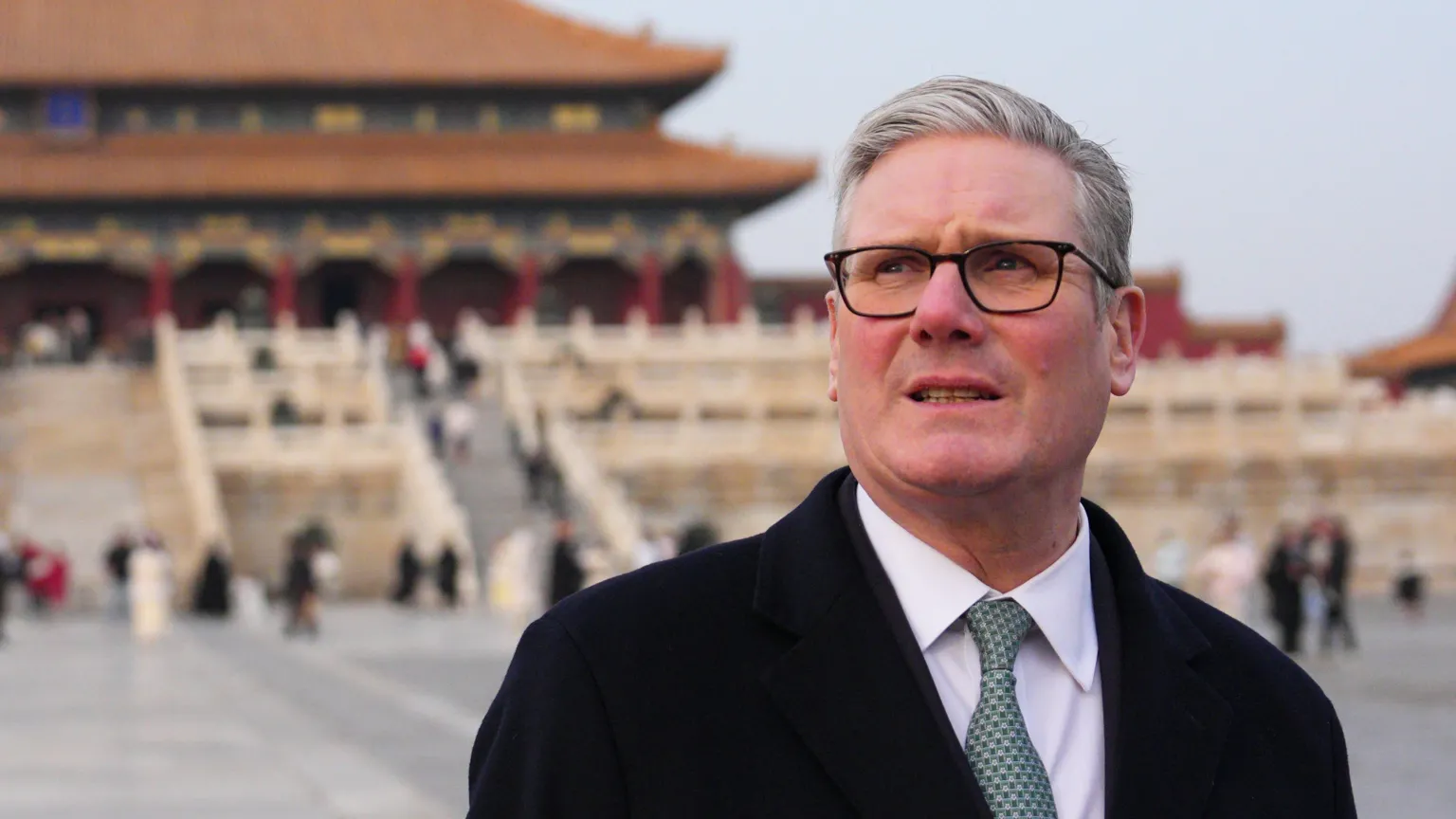
China has agreed to allow British citizens to travel to the country for up to 30 days without a visa, Downing Street has said.
The announcement followed Prime Minister Sir Keir Starmer’s meeting with President Xi Jinping in Beijing, making him the first British leader to visit China in eight years.
The visit also produced an agreement to cut import taxes on UK whisky from 10% to 5%, as the government seeks closer trade ties with Beijing to help boost economic growth. Critics, however, have urged caution, citing concerns over national security and China’s human rights record.
There is no confirmed date for when the visa-free travel agreement will come into force, but the government says it hopes this will happen as soon as possible.
Hundreds of thousands of British travellers could benefit from the change. Around 620,000 people travelled from the UK to China in 2024, according to the Office for National Statistics.
Downing Street said the move would bring the UK into line with around 50 other countries that already benefit from similar arrangements, including France, Germany, Italy, Australia and Japan.
Sir Keir said the decision would make it easier for businesses to expand their presence in China and would also allow people to travel there for holidays without needing a visa.
“As one of the world’s economic powerhouses, businesses have been crying out for ways to grow their footprints in China,” he said.
“We’ll make it easier for them to do so — including via relaxed visa rules for short-term travel — supporting them to expand abroad, all while boosting growth and jobs at home.”
The UK and China have also agreed to explore negotiations on a services agreement, which would establish legally binding rules for UK firms operating in China.
The UK is the world’s second-largest exporter of services, including finance, healthcare and legal services. Downing Street said demand from China in these sectors is growing and that an agreement could open up Chinese markets, including through the recognition of UK professional qualifications.
Meanwhile, pharmaceutical company AstraZeneca announced it would invest $15bn (£10.9bn) in China by 2030, establishing new manufacturing sites and expanding its workforce in the country.
Speaking after his meeting with President Xi at the Great Hall of the People — which lasted around an hour and 20 minutes — Sir Keir said they had discussed how the “huge opportunities” in China could benefit people in the UK.
He said progress had also been made on cooperation over illegal migration. Under an agreement signed on Thursday, UK and Chinese law enforcement agencies will work together to disrupt the supply of small boat engines and equipment used by criminal gangs to facilitate Channel crossings.
Last year, more than 60% of engines used by smuggling gangs were found to be branded as Chinese-manufactured.
The agreement is one of 10 signed between the two countries, covering areas including exports, education and food safety.
Sir Keir said he had also raised sensitive issues during the talks, including the imprisonment of pro-democracy campaigner Jimmy Lai and the treatment of the Uyghur minority in Xinjiang.
“Part of the rationale for engagement is to make sure that we can seize the opportunities available, but also have a mature discussion about issues we disagree on,” he said.
Conservative shadow home secretary Chris Philp criticised the visit, saying Sir Keir had gone to Beijing “to kowtow to President Xi” and accused him of trading off national security for economic gains. He also dismissed the small boats agreement as a “gimmick”.
Sir Keir travelled to Beijing with a delegation of British business and cultural leaders. At the start of his meeting with Xi, he said he wanted a “more sophisticated” relationship with China.
“Events abroad affect everything that happens back in our home countries, from prices on supermarket shelves to how secure we feel,” he said.
President Xi said UK-China relations had experienced “twists and turns” that did not serve either country’s interests. He argued that dialogue was “imperative” in a “turbulent and fluid” global environment.
He praised previous Labour governments for their role in strengthening ties and said both leaders could “stand the test of history” if they were able to rise above their differences.
After the meeting, Sir Keir presented President Xi with a football used in a recent Premier League match between Manchester United and Arsenal. The prime minister is an Arsenal supporter, while President Xi is reported to support Manchester United.
President Xi gifted Sir Keir a copper statue of a horse, while Chinese Premier Li Qiang presented him with three flutes.
The visit comes amid heightened global trade tensions, following threats by US President Donald Trump to impose 100% tariffs on Canada for signing a strategic partnership with China.
Opposition parties have criticised the trip. Conservative leader Kemi Badenoch said she would not have visited China at this time if she were prime minister. Liberal Democrat foreign affairs spokesman Calum Miller said the approach was “all give and no take”.
“Many British firms and universities want Chinese business, but the British public also wants to know the prime minister is standing up for our national security,” he said.

