

Barter (or Bartering) Definition, Uses, and Example
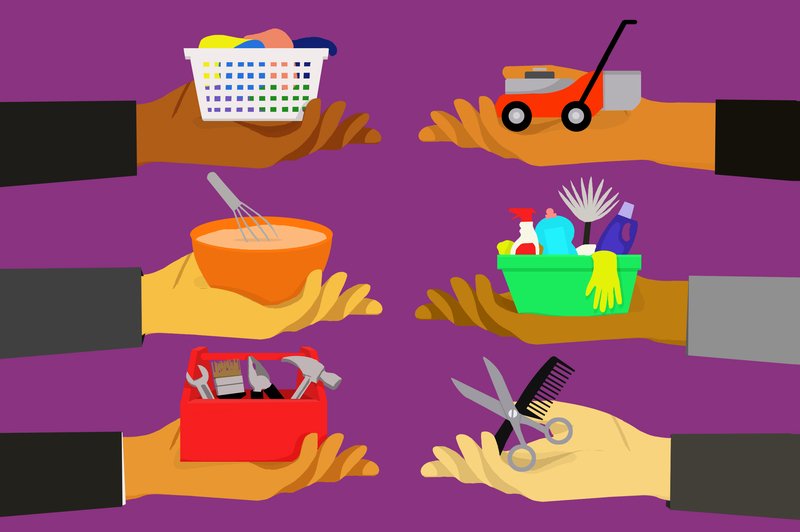
Bartering is the act of exchanging products or services between two or more people without using money or a monetary instrument, such as a credit card, as a medium of exchange. The principle of bartering is that one party will provide another party with a good or service in exchange for the first party’s supply of another good or service.
An agreement in which a carpenter constructs a fence for a farmer is a straightforward illustration of a barter arrangement. Instead of paying the builder $1,000 in cash for labor and supplies, the farmer may compensate the carpenter with $1,000 worth of crops or consumables. This would be an alternative to the traditional method of payment.
Basics of the Bartering Process
A straightforward idea underpins the practice of bartering: two negotiations to ascertain the relative worth of their respective commodities and services and then offer them to one another. A fair exchange is fair. It dates back to when there was no actual currency, making it the earliest form of commercial exchange.
Thanks to the internet, most people in the United States now have access to a nearly unlimited source of potential bartering partners. In the past, members of the current generation would barter with the limited goods they had on hand (such as produce and livestock) or services they could personally render (such as carpentry and tailoring) to someone they knew.
It is possible to barter almost any good or service, provided that the parties involved agree on the terms of the deal. Cashless exchanges may be advantageous for individuals, businesses, and nations alike, particularly when they do not have access to hard currency to purchase goods and use services. Although connected with business transactions in ancient times, the internet has reimagined bartering in the current century.
A Few Advantages of Bartering
Individuals can keep their cash on hand for expenditures that cannot be covered through trading, such as mortgages, medical bills, and utility bills, while also being able to swap products they possess but are not using for items they require through the process of bartering.
The psychological benefits of bartering can be attributed to the fact that it has the potential to establish a more profound personal connection between trade partners than a conventional and commercialized transaction would. Through bartering, individuals may also create professional networks and pitch their firms to potential customers.
If you are in a difficult financial situation, bartering might be an excellent option to get the things and services you want without taking money out of your pocket.
From a more macro perspective, bartering can lead to the most efficient distribution of resources by exchanging items in quantities comparable to one another in terms of their worth. Additionally, bartering can assist economies in reaching equilibrium, which is the state that happens when supply and demand are equal.
How People Engage in Bartering
When two people each have goods that the other desires, both can calculate the valuations of the items and offer the quantity that results in the most efficient distribution of resources.
If they possess twenty pounds of rice, valued at ten dollars, they have the individual who needs rice and possesses something that the individual desires, valued at ten dollars. Another option is for a person to trade in an item for something they do not require since there is a ready market for the item they are trying to get rid of.
How Businesses Engage in Bartering
There is a possibility that businesses will desire to trade their commodities for other things since they do not have the financial resources or credit to purchase the goods in question. It is an effective method of conducting business because it eliminates the risks associated with foreign exchange.
The trading of advertising time or space is the most prevalent example of a business-to-business (B2B) barter transaction that occurs at times. It is usual for smaller businesses to trade the rights to advertise in each other’s company spaces. Additionally, people and businesses engage in the practice of bartering. A good illustration is when an accounting firm would supply an electrician with an accounting report in exchange for the electrician rewiring the accounting business’s offices.
Dealings Between Countries
In addition, countries engage in bartering when they are highly indebted and unable to secure finance for their financial products, which are shipped out of the country in exchange for the country’s required products. Managing trade imbalances and reducing the amount of debt that countries acquire can be accomplished using this method.
12–14 billion dollars
This is the projected yearly value range of barter transactions in the United States, as the International Reciprocal Trade Association (IRTA) reported.
Using Bartering When Things Are Hard
Following the severity of the financial crisis that occurred in 2008, which ultimately resulted in the Great Recession, online barter exchanges were top-rated among small companies.
Barter exchanges became an increasingly popular means of revenue generation for small enterprises as the number of potential customers and sales decreased. Through these exchanges, members were able to discover new clients for their products and access items and services that were utilizing inventory that was not being used.
Additionally, the exchanges utilized a proprietary currency that could be hoarded and utilized to purchase services such as hotel stays during extended holidays. In the aftermath of the financial crisis, the barter economy was believed to have reached three billion dollars.
During times of economic instability, there have been several additional instances in which bartering has become increasingly attractive. For instance, the BBC claimed that bartering had grown far more popular in the United Kingdom in the year 2020, which was a year connected with the enforced lockdown COVID-19 imposed. In addition, it was stated in 2022 that Argentines, who were dissatisfied with the high inflation and poor wages that were prevalent at the time, started holding barter fairs in and around the province of Buenos Aires.
Tax Consequences Associated with Bartering
According to the Internal Revenue Service (IRS), bartering is a kind of revenue that must be recorded as taxable income.
Companies are expected to assess the fair market value of the products or services they have bartered by the generally accepted accounting standards (GAAP) of the United States. To accomplish this, refer to previous cash transactions involving comparable items or services and then use the historical revenue as a reportable value. It is common practice to declare the majority of commodities that have been bartered based on their carrying value when it is impossible to make them correctly.
As a result of the Internal Revenue Service’s (IRS) determination that estimated barter dollars are equivalent to real dollars for taxation, barter transactions are seen as equivalent to cash payments. During the fiscal year the swap took place, the exchanged dollars are considered income and are subject to taxation.
The Internal Revenue Service (IRS) makes additional distinctions between various types of bartering, and the laws that apply to each type are slightly different.
Schedule C of Form 1040, titled “Profit or Loss from Business,” is where most non-monetary business revenue is declared.
As a result of the tax consequences associated with bartering, it is advisable to get the advice of a tax specialist before making significant commitments.
How to Engage in Bartering
In what ways may an individual successfully engage in bartering? I have some advice for you:
- Determine your resources. What things do you own that you won’t have any trouble getting rid of? Conduct a thorough inspection of your house with a critical consideration of any items you might have stored away or that another family member or close friend is now utilizing. Suppose the option of providing services is more appealing to you. In that case, you should honestly evaluate what you could give other people that they would otherwise pay a professional to accomplish. A skill, a talent, or even a pastime like photography may be said to be an example of this.
- Put a price on it: For bartering to be successful, it must result in situations in which both sides are satisfied. This is only possible if the goods traded have a value consistent with reality. When you have an item you are interested in trading, it is essential to get an appropriate evaluation. What someone is willing to pay for an object is the sole thing that determines its value. As a result, you should conduct research and look at the “selling” area on eBay to determine the prices that other online purchasers have paid for things that are comparable to yours.
- You are calling around for local estimates from Pan Excellent, which is a good way to see how competitively you can price your expertise. This will help you determine the worth of a service. Be sure to be truthful about your abilities and consider the fees linked with the transaction, such as the cost of transportation (in the case of items) or the cost of materials (in the case of trading a talent).
- Determine your requirements. Ensure you know what you are searching for in a barter deal.
Furthermore, in addition to certain products that you might want, the following is a list of probable services that you could trade for:
- Children’s care and daycare
- Repair work on automobiles
- Gardening and lawn maintenance
- Service on computers
- Home repair tasks on a smaller scale
- The aid of plumbing and moving
- Administration of taxes and financial planning
- Orthodontist employment
- Care for the sick
- Places to stay
Search for bartering partners: Once you have determined what you have to offer and what you want or desire in a barter setting, the next step is looking for a buddy to trade with. You might attempt word of mouth if you do not have a particular individual or company in mind. Inform your friends, coworkers, and other members of your social network about your needs and desires in the event of a barter situation.
It would be best to look into swap markets and online auctions that include a bartering component. Some examples of such websites include Swapace.com, BarterQuest.com, and Craigslist.com (when you go under “For Sale” for the Bartering category). Also, look into the local clubs that deal in bartering. There is a possibility that the chamber of commerce in your area may be able to supply you with information on clubs that are comparable to those in your region.
Make the deal: Once you have identified a potential bartering partner, you should write the agreement. Ensure that you include specific information on the services or items involved, the date of the exchange (or the labor that will be done), and any potential legal repercussions if either party fails to fulfill their obligations under the agreement. Suppose you are working for a bartering association that is based on membership. In that case, this association will probably give you all the necessary paperwork and structure for the transaction.
The Boundaries of Bartering Indeed, hashing has some restrictions. Even smaller corporations may restrict the monetary amount of products or services for which they would trade. They may not agree to a 100% barter agreement and insist you make at least partial payments. Much larger businesses, such as chain enterprises, will not consider the notion.
Bartering and Trading Exchanges That Are Based on Membership
Some companies that do not directly engage in bartering with their consumers may trade products or services through membership-based trading exchanges such as International Monetary Systems (IMS) or the International Trade Exchange (ITEX). Those who become members of a trading network often find swapping with other members impossible in exchange for “dollars.” Each transaction is subject to a nominal cost; the exchange is responsible for facilitating the swap and managing the tax aspects of bartering, such as delivering 1099-B forms to members engaging in the exchange.
You can use the Member Directory of the International Reciprocal Trade Association (IRTA) to locate a local exchange that is convenient for you. Ensure that the organization’s members provide the products and services you want before you sign up and pay for a membership. In such cases, you can possess credit or money for bartering that you cannot utilize.
So, what exactly is an example of a barter?
For example, a plumber and a copywriter may engage in a transaction of bartering with one another. This is an example of a situation in which a plumber visits a writer’s home to repair some leaky pipes. Instead of asking for payment, the plumber asks the writer to assist in writing some advertising materials for the plumber’s firm. As we watch this unfold, we witness one service (plumbing labor) exchange for another service (writing) without any monetary transaction.
Why is it illegal to barter?
As long as it is appropriate, bartering is permitted for many workers. There is the potential for complications if trades are not reported to the local tax authorities; in this scenario, the bartering transaction becomes unlawful.
Can We Still Make Use of Bartering Today?
In a word, today, the utilization of a cashless exchange system is still thriving widely. By way of illustration, some examples of contemporary forms of bartering include home sitting, childcare cooperatives, and time banking.
Bartering is a practice that is frequently connected with economies that are not yet fully formed, medieval marketplaces, and past eras. On the other hand, this time-honored practice is still widely practiced in many parts of the contemporary globe.
From the United States of America to China, there is a regular trade of goods or services of comparable value that does not involve the exchange of currency. Additionally, technological advancements such as the internet have made locating partners for bartering and exchanging services more straightforward and uncomplicated than ever.
Conclusion
- The trade of products and services between two or more people does not include monetary transactions. This is known as bartering.
- It is the most ancient kind of commercial exchange.
- Individuals and businesses exchange products and services based on comparable assessments of the prices and items involved.
- The Internal Revenue Service (IRS) sees bartering as income subject to taxation.

