

Basel II: Definition, Purpose, and Regulatory Reforms
Basel II is a set of international banking regulations first released in 2004 by the Basel Committee on Banking Supervision. It expanded the rules for minimum capital requirements established under Basel I, the first international regulatory accord, provided a framework for regulatory supervision, and set new disclosure requirements for assessing banks’ capital adequacy.1
Understanding Basel II
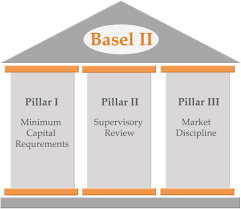
Basel II is the second of three Basel Accords. It is based on three main “pillars”: minimum capital requirements, regulatory supervision, and market discipline. Minimum capital requirements play the most crucial role in Basel II and obligate banks to maintain specific capital ratios to their risk-weighted assets.
Because banking regulations varied significantly among countries before the introduction of the Basel Accords, the unified framework of Basel I (and subsequently, Basel II) helped countries standardize their rules and alleviate market anxiety regarding risks in the banking system. The Basel Framework currently consists of 14 standards.2
The Basel Committee comprises 45 members from 28 countries and other jurisdictions, representing central banks and supervisory authorities.3 It has no legal authority to enforce its rules but relies on the regulators in its member countries to do so. Those regulators are expected to follow the Basel rules entirely but also have the discretion to impose even stricter ones.4 For example, in the United States, the regulators are the Board of Governors of the Federal Reserve System, the Federal Reserve Bank of New York, the Office of the Comptroller of the Currency, and the Federal Deposit Insurance Corporation.
Basel II Requirements
Building on Basel I, Basel II provided guidelines for calculating minimum regulatory capital ratios and confirmed the requirement that banks maintain a capital reserve equal to at least 8% of their risk-weighted assets.
Basel II divides the eligible regulatory capital of a bank into three tiers. The higher the tier, the more secure and liquid its assets are.
Tier 1 capital represents the bank’s core capital and comprises common stock, disclosed reserves, and certain other assets. At least 4% of the bank’s capital reserve must be in the form of Tier 1 assets
Conclusion
- Basel II, the second of three Basel Accords, has three central tenets: minimum capital requirements, regulatory supervision, and market discipline.
- Building on Basel I, Basel II provided guidelines for calculating minimum regulatory capital ratios and confirmed the requirement that banks maintain a capital reserve equal to at least 8% of their risk-weighted assets.
- The second pillar of Basel II, regulatory supervision, provides a framework for national regulatory bodies to deal with systemic, liquidity, and legal risks, among others.
- One weakness of Basel II emerged during the subprime mortgage meltdown and the Great Recession of 2008, when it became clear that Basel II underestimated the risks involved in current banking practices and that the financial system was overleveraged and undercapitalized.

