

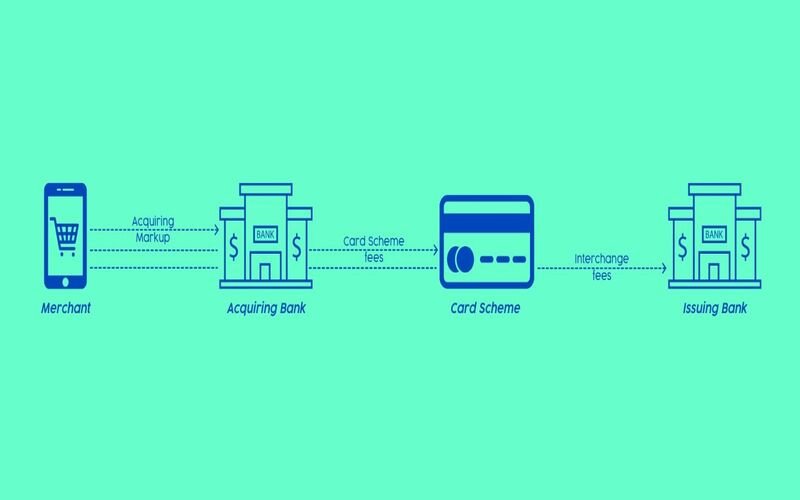
How much does the merchant discount rate cost?
Payment processing companies charge merchants and other businesses a fee known as the merchant discount rate (MDR) on debit or credit card transactions. The MDR is usually calculated as a percentage of the transaction amount. It’s also known as a transaction discount rate (TDR) or a discount rate.
Recognizing the Merchant Discount Rate
Merchants and other businesses that want to accept debit or credit card payments must first open an account with a payment processing firm. Payment processors act as go-betweens for a company and the numerous banks that issue debit and credit cards. The merchant discount rate is the price a company pays for its services.
To enable all sorts of merchant payments, payment processors have well-established infrastructure and fee schedule arrangements in place. Most local and e-commerce merchants can anticipate paying a 1% to 3% fee per transaction for payment processing.
How Payment Processing Functions
Payment processing firms promote global commerce in exchange for a piece of the activity. In addition to POS and online services, several now provide extended payment plans, loans, and lines of credit. Payment processing alternatives are offered to merchants. They can use finance services like PayPal, Square, or Shopify. They can also arrange for payment processing through a typical bank that provides such services. Chase POS Payment Solutions, U.S. Bank POS Solutions, and Bank of America Merchant Services are examples of large banks’ payment processing services. Most payment processors provide e-commerce and mobile payment processing in addition to in-store transaction processing.
Payment Processing Costs for Merchants
Merchants and other businesses can pick from various payment processing providers, each with a different pricing structure based on the size of the firm and the types of transactions. Because of the additional security requirements, merchant discount rates for e-commerce transactions are often higher.
For example, Chase POS Payment Solutions, which bills itself as the “#1 payment processor in the U.S.,” recently published the following rates on its website:
- 2.6% plus ten cents for each tap, dip, or swipe transaction
- 2.9% + $0.25 for every online transaction
- 3.5% plus 10 cents for each keyed-in transaction
Chase also stated that “custom pricing” was available.
While payment processors usually charge the applicable merchant discount rate for each transaction, some levy a flat monthly cost. Fintech processors typically charge cheaper fees, whereas bank processing rates are typically higher. While the merchant may pay a single fee, the fee is usually shared between the payment processor, the credit card issuing bank, and occasionally additional parties.
What Exactly Is an Interchange Fee?
An interchange fee, or “interchange,” is a percentage of the merchant discount rate the payment processor pays the card issuer, typically a bank, for a particular transaction. Credit card companies make the majority of their money from interchange fees and the interest they charge cardholders. These charges are also referred to as “swipe fees.”
Can merchants charge an additional fee for using a credit card?
Most states in the United States allow retailers to charge customers a fee for using a credit card rather than cash, effectively offsetting some or all of the merchant discount rate they must pay on the transaction. This is generally referred to as a surcharge and is usually computed as a percentage of the transaction value. In some situations, merchants might charge convenience fees, usually a fixed cost, for the same purpose.
Can you get a cash discount from a merchant?
Yes, shops can offer a discount for cash payments instead of charging more to use a debit or credit card. This technique is permitted in all 50 states in the United States.
Do merchants prefer credit cards over debit cards?
Merchants typically pay reduced costs when a customer uses a debit rather than a credit card. According to the National Retail Federation, swipe costs for credit cards are typically around 2%. Still, the Federal Reserve has set a cap on debit card fees at 21 cents per transaction plus 0.05% of the transaction amount. Small bank debit cards, it adds, are immune from the limitation.
Why do merchants have to pay more for online transactions?
According to credit card firms, online transactions pose a higher level of financial risk than in-person transactions, where both the customer and their actual card are present. More excellent merchant discount rates for Internet transactions are claimed to reflect this. These are typically referred to as “card present” vs. “card not present” transactions in credit industry lingo.
conclusion
Thanks to today’s electronic payment networks, customers can now make purchases using various credit and debit cards; this benefits consumers and merchants who wish to sell more of their products. Merchants pay a fee for the services that enable this. Consumers may also be charged if the merchant incorporates the fee into its pricing.

