

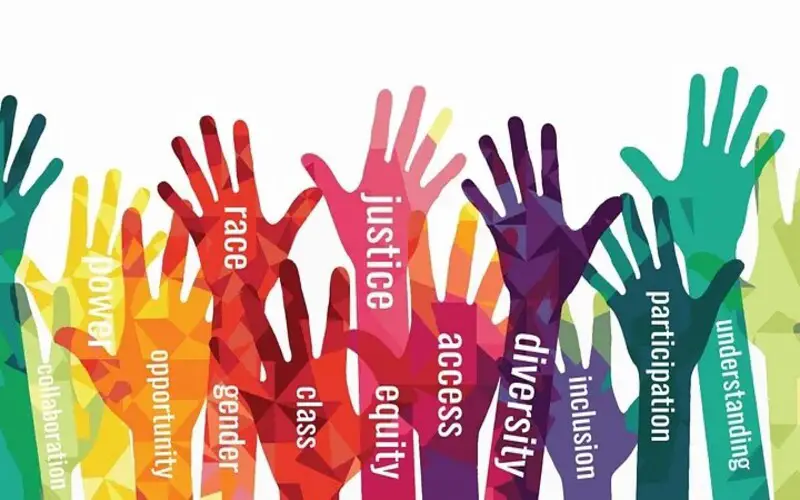
What is social justice?
A fair and equal distribution of resources, opportunities, and privileges within society is referred to as social justice. Initially understood in a religious sense, it is now more broadly understood to refer to the equitable arrangement of social structures that provide access to financial advantages. Sometimes, it’s called “distributive justice.”
Since the word “social justice” is broad, there are various ways that proponents of the viewpoint may apply it. Social justice theory, however, strongly emphasizes social variables such as income disparity across races or unequal access to healthcare. Specific social justice applications, like critical race theory, have become political battlegrounds in the United States.
Understanding Social Justice
The term “social justice” originates in Christian theology; Luigi Taparelli’s Theoretical Treatise on Natural Law from the early 1840s is the earliest known instance of its usage. The Italian Jesuit priest Taparelli wrote during the Risorgimento, a nationalist movement that emerged in the 19th century, and discussed Italian unification.
For most of its history, social justice has been associated with religion. Taparelli’s interpretation of social justice was merely the application of justice to social matters, and it was founded on the idea that morality is best understood in light of natural theology and religion.
However, not all ideas of social justice strongly emphasize religion. The word gained popularity as the Industrial Revolution had a societal influence. Subsequent thinkers emphasized social justice as a moral duty for members of a community to strive for the welfare of everyone; the most well-known example is covered here.
Although controversial in the past, the phrase has gained popularity since the end of the 20th century. Some academics speculate that the neoliberal policies of the Ronald Reagan and Margaret Thatcher governments may have brought about this shift.
Social justice is based on previous ideas, even though Luigi Taparelli is credited with coining the word. Taparelli drew extensively on the writings of Thomas Aquinas, a Catholic theologian who, in turn, drew from the writings of Aristotle, the Macedonian philosopher.
The American philosopher John Rawls, who lived in the 20th century, is credited with one of the most significant social justice studies. Rawls defined “justice as fairness” in A Theory of Justice (1971), which he described as a social justice theory.
According to Rawls, this meant that individuals should consider the degrees of inequality acceptable in a society and the regulations governing the equitable distribution of social goods. Famously, Rawls employed the idea of a “veil of ignorance,” or a pretense of ignorance about one’s fate in any particular society, which he believed should be used to organize society. He also popularized the idea of the “principle of difference,” which maintains that social and economic disparities can be justified if they serve the interests of society as a whole.
The fundamental component of justice is vital, particularly when granting access to social resources, commonly known as “social goods.” Despite its abstract nature, the distribution of social commodities has a significant influence. Significantly, it is thought that a system’s justness mainly depends on the “social determinants” of outcomes.
In public health, for instance, a person’s birthplace might affect their access to healthcare and, therefore, their life expectancy. To address this, healthcare social justice advocates may concentrate on increasing the likelihood that individuals will remain healthy despite resource deficiencies that they may have due to historical or financial circumstances.
Critical Ideas in Social Justice
Although there isn’t a single definition of social justice, inclusion and fairness are the main objectives of most strategies. They create an ethical code for a fair society to accomplish those objectives.
These guidelines might consist of:
Gain access
One of the cornerstones of social justice is equal access to social benefits. This asserts that everyone should have equal access to society’s resources. For instance, a lot of proponents of social justice theory think that everyone should have equal access to chances for work, healthcare, and education. Public officials may respect this value by ensuring universal access to these materials.
Equity
The idea of equity holds that everyone should have an equal chance at success, regardless of past wrongs or institutionalized prejudice. This might imply that resources should be allocated in a manner that takes into account the unique requirements of disadvantaged groups of individuals or communities.
Variety
The idea behind diversity is that leaders in business and government should be widely representative of the populations they serve. This implies that minority populations should have equal representation in public institutions and the presence of women and people of color in positions of authority. At the policy level, this idea might mean that resources are provided in different languages or that discrimination is prohibited.
Engagement
The idea of participation holds that each community member should have a say when making significant choices. A select few influential individuals often need input from the populations they represent in many cultures to determine public policies. This could unintentionally exclude a sizable portion of the community.
By speaking with and taking into account the demands of advocates from minority groups, public authorities may remedy this issue.
Human Rights
Human rights are the last and most crucial tenet of social justice. It also calls for respect for one’s reproductive rights and physical autonomy, as well as freedom from police brutality and political rights like freedom of conscience.
Jobs in Social Justice
Since these professions directly grant access to social and governmental resources, public administration and social work are the most popular careers linked to social justice. Individuals in these fields should be aware of the overt and covert prejudices that might prevent some public members from having as much access to these resources as others.
However, social justice advocacy is also feasible in other domains. For instance, by representing clients whom current institutions often underserve, attorneys may contribute to ensuring equitable access to the legal system, and lobbyists can support legislation that solves inequities in the community. Other professions focusing on social justice include community developers, mental health professionals, and victim advocates.
Focus Areas
While ensuring equality and fairness for everyone is the goal of social justice, it may prioritize those groups that have historically suffered from injustice. Some of the areas that social justice workers concentrate on are as follows:
Equal Racial Opportunity
One of the most prevalent topics in social justice is racial equality, and minority ethnic and racial groups have historically faced prejudice and persecution in many nations. These groups’ members could experience financial hardship or unfair access to healthcare, education, and other vital institutions.
Equal Gender
Gender inequality manifests itself in many ways across almost all nations, including but not limited to salary disparities, glass ceilings, and other types of discrimination based on gender. Women are also more likely to experience sexual assault or other forms of violence. They may experience risks to their freedom to procreate. Racial equality and other rights are impacted by gender equality. Many social justice activists see this as a crucial component of social transformation.
Comparing Equity and Equality
Even though they both have to do with how social goods and privileges are distributed within a community, equality and equity have significantly different connotations when discussing social justice. In this sense, equality is defined as giving everyone equal access to opportunities, regardless of past or present injustices that could limit someone’s ability to take advantage of those possibilities. Contrarily, equity attempts to make up for an unbalanced social structure by providing the means to bring about an equal result.
Most social justice detractors point to the concept’s acceptance of equity, but proponents contend that equality is essential to guaranteeing a fair society. According to Paula Braveman, a researcher at the University of California, San Francisco, social justice and “health equity” are synonymous in medicine. She suggests that “no one is denied the possibility to be healthy because they belong to a group that has historically been economically or socially disadvantaged” as the aim of social justice in health care.
Legal and social justice
Social justice viewpoints in the legal field have evolved into a focal point for the American culture wars. Particular criticism has been leveled against critical race theory (CRT), an approach to law that actively attempts to account for how racial stereotypes impact legal results.
American legal scholars like Kimberlé Crenshaw used the phrase to examine how American legal systems promote racism, sometimes even in the face of the lack of racist people. The fundamental tenets of CRT are that the law has upheld an unfair system and that science does not justify race.
Critics of Critical Race Theory Some have argued that critical race theory is nothing more than a cover for prejudice. The public policy think tank Brookings Institute reports that rather than attempting a comprehensive analysis of how institutions affect social outcomes, critics of critical race theory typically see the assertion that American institutions are racist as a means of accusing white people of being racist on an individual basis.
The Brookings Institution. “Why Are States Banning Critical Race Theory?”
State legislatures around the country are hearing more and more complaints about CRT, and several of them have passed laws prohibiting its instruction at elementary and secondary institutions. According to a state legislative tracker developed by Chalkbeat, a nonprofit media outlet focusing on the American education system, 36 states have moved to implement laws to outlaw teaching racial prejudice in the United States. In comparison, 17 states have moved to extend that teaching.
Along with prohibiting diversity and equity training from government contracts in 2020, President Donald Trump also issued what has been called an “equity gag order.” The presidential order referred to CRT and diversity training as “divisive.” The prohibition was lifted in 2021.
Social Justice: What Is It?
The idea of social justice holds that a society’s advantages and benefits should be distributed equally.
What makes social justice vital?
Social justice advocates argue that it is worthwhile to work for social justice because it protects individuals from being deprived because of unjust biases and aims to give everyone the necessities for a happy existence.
How do equity and social justice connect?
The idea of equity is outcome-oriented. It concerns the idea that social determinants significantly impact people’s lives. As a result, a genuinely equitable social structure would consider the concrete ways this damages economically and socially disadvantaged groups.
The Final Word
A more equitable distribution of opportunities and resources is the goal of the political and intellectual movement known as social justice. Advocates for social justice want to create a more equitable and just society by resolving past injustices and allocating funds to marginalized areas.
Conclusion
- Social justice is the equitable distribution of opportunities, resources, and societal advantages.
- It places a strong emphasis on distributing social resources fairly throughout society.
- The 1971 book John Rawls’ A Theory of Fairness is among the most well-known analyses of social fairness.
- Social justice activism often addresses racism, discrimination against LGBTQ+ people, and gender inequity.
- Specific social justice applications, such as critical race theory, have been embroiled in America’s cultural conflicts.

