

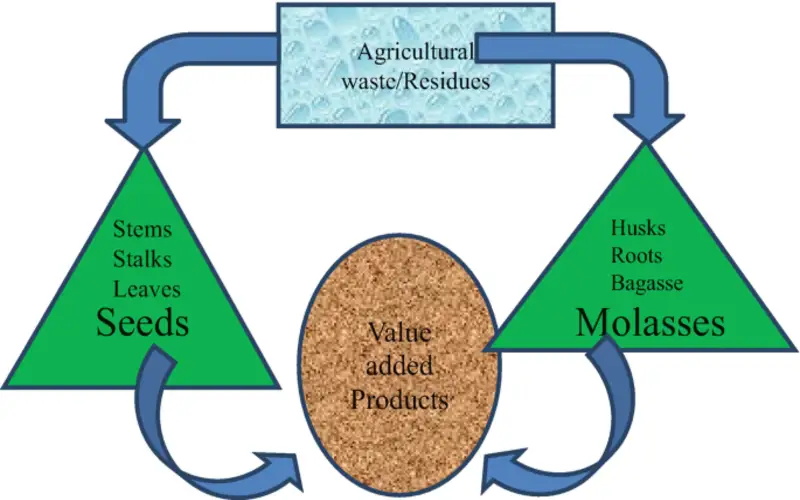
What is a value-added product?
A value-added product is a saleable good that has been improved with extra features that increase its value above the primary materials used to manufacture it. It may be improved over its essential components in terms of convenience, appeal, palatability, and ease of usage.
Businesses can sell their products or services for more than their cost of production because they can add value.
In marketing, added value is a brief statement conveying to the customer why a product is better than its parts and, more crucially, why it is superior to comparable goods from rival companies.
Understanding Value-Added
The difference between a product or service’s price and production costs is called value-added. What consumers are prepared to pay depends on how much they think something is worth. Different methods are used to enhance or generate value.
These are additional features or unique characteristics a manufacturer or firm adds to raise the cost or worth of a product or service. Thus, the price customers are prepared to pay for the goods might rise due to the value addition. A value-added feature may provide a new computer with a year’s worth of complimentary tech assistance. People may also enhance their services by entering the profession with increased skills.
Nowadays, customers may choose from various goods and services whenever they want them. Because of this, businesses are always looking for ways to outcompete one another. The company must ascertain what consumers value to determine what it manufactures, packages, offers, and distributes.
For instance, Bose Corporation has effectively refocused its business from making speakers to offering a “sound experience.” Similarly, a BMW automobile sells for significantly more than its cost of production when it comes off the assembly line due to its stellar performance, German engineering, and high-quality parts. Each brand’s years of refining and symbolic worth have provided an added benefit.
Value Contributed to the Economy
The value-added of an industry, or GDP-by-industry, is the portion of the GDP from the public or private sector. GDP measures the overall value contributed across all production phases, assuming all processes occur within a nation’s boundaries.
The market price of the finished good or service is the total value added, which only takes into account manufacturing completed within a specific time frame.1. Value-added tax (VAT) is a standard tax system in Europe, and its computation is based on this.2.
This allows economists to calculate an industry’s value to a country’s GDP. The difference between an industry’s total revenue and the entire cost of inputs—that is, the total amount of labor, materials, and services—that it purchases from other companies during a reporting period is known as value-added in that industry.1.
Commodity taxes, inventory changes, sales, and other operational income comprise the industry’s overall revenue or production. Inputs such as energy, semi-finished items, services, and raw materials may be acquired from other businesses to create a final product.1.
The value a company creates from its invested capital is known as economic value-added, or EVA for short. It is also known as economic profit.
Worth Added in Advertising
Strong brand builders offer value to their products by imprinting their emblems. Even though its rivals may have comparable manufacturing costs, Nike can charge far more for their shoes. This is so because the Nike name and emblem, used by the best collegiate and professional sports teams, are attributes that top athletes value.
Similarly, luxury car customers considering purchasing a BMW or Mercedes-Benz are prepared to spend more for their cars due to the brands’ prestige and the firms’ continued maintenance plans.
With its free delivery, price guarantees on pre-ordered products, and automatic returns for subpar service, Amazon has been a dominant force in the e-retail industry. Because of the free two-day order turnaround, customers have become so reliant on Amazon Prime that they are prepared to pay for memberships.
Conclusion
- Value-added refers to the extra features or monetary worth a business puts into its goods and services before making them available to consumers.
- Adding value to a product or service enables businesses to draw in more clients, which raises sales and profits.
- The difference between a product’s retail price and its production costs is known as value-added.
- Value may be provided in various ways, for example, by creatively constructing a product or branding a generic product.

