

What Exactly Is Voodoo Economics?
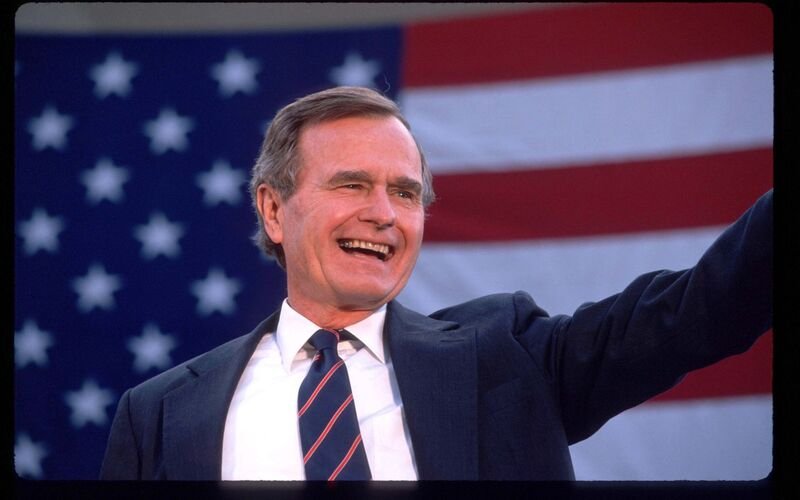
During the 1980 presidential primaries, George H.W. Bush disparaged Ronald Reagan’s plans to revive the American economy by calling them “voodoo economics.” Reagan was elected President, and his economic ideas became known as “Reaganomics.”
Reaganomics was a strategy that included severe tax cuts, domestic market liberalization, reduced government expenditure, and tightening the money supply.
Recognizing Voodoo Economics
Ronald Reagan, a Republican, was elected as the 40th President of the United States following a prolonged period of economic stagflation that began under Republican President Gerald Ford in 1976 and continued into the term of President Jimmy Carter, a Democrat whose single term ended with Reagan’s defeat in the 1980 election. George H. W. Bush served as Reagan’s vice president.
President Reagan supported supply-side economics, which advocated lowering income and capital gains tax rates to stimulate economic development. He anticipated that the savings gained by corporate tax cuts would flow down to the general public. The savings would be spent in ways that helped small firms, stimulated innovation, generated new employment, and, ultimately, benefited the whole population.
He further claimed that the newly energized businesses would ultimately pay more taxes, helping the government’s coffers as a more robust economy spurred them to raise output.
In 1980, Bush Sr. famously referred to these economic plans as “voodoo economics,” claiming that supply-side changes would not be sufficient to revitalize the economy and would significantly increase the national debt.
After being elected vice president, Bush Sr. altered his attitude, first denying that he referred to Reagan’s policy plan as “voodoo economics” and then claiming that he was “kidding” when a film of him using the word was discovered.
Nonetheless, Reagan’s detractors adopted the slogan.
Voodoo Economics Criticism
Bush Sr. was chastised for referring to his rival’s plans as “voodoo economics.” His remarks were seen as a malicious effort to denigrate Reagan while competing in the Republican primary against him.
A fundamental tenet of supply-side economics is that motivating the wealthy stimulates expenditure and boosts worker confidence and job security.
In the late 1970s, these factors were thought to lift the economy from the stagflation it had been trapped in since 1973. Furthermore, it was expected that decreased government expenditure and control would provide a much-needed boost to the banking sector.
Reaganomics’ Unintended Consequences
Those aspirations only sometimes came to fruition precisely as intended. During President Reagan’s two terms, unemployment was reduced significantly, disposable income increased, and inflation was controlled.
However, the hope that lower taxes on the rich and corporations would lead to higher spending on products, services, and wages has not come to fruition. Furthermore, President Reagan’s inadequate regulation exacerbated the savings and loan disaster. By the early 1990s, the U.S. economy had returned to recession. President Reagan’s actions nearly doubled the national debt, partly due to his pledge to lower taxes while raising military expenditures. Voodoo economics has become a catchphrase for dismissing any grandiose economic promises a politician makes.
Particular Considerations
George H.W. Bush was elected president in 1989 after serving two years as vice president. Bush favored greater economic prudence above tax cuts as president. He even consented to a tax hike in 1990, breaking a commitment made only two years before. His party reprimanded him for that humiliating U-turn. He lost the presidential race to Democrat Bill Clinton in 1992.
What exactly is supply-side economics?
The theory of supply-side economics holds that increasing the supply of products and services leads to economic growth. That is, firms that want to boost output must spend money. They recruit more workers, build factories, purchase more raw materials, and seek new product markets.
Government leaders who believe in this viewpoint advocate tax cuts for companies and wealthy people. They say this is a method of putting more money in the hands of producers, who will boost their spending to benefit consumers and workers.
What exactly is demand-side economics?
Demand-side economics is the polar opposite of supply-side economics. According to demand-side economics, raising demand for products and services is the key to economic development. A demand-side economic strategy may call for large-scale government infrastructure expenditures to boost associated manufacturing, purchasing, and jobs. Demand-side economics is often known as Keynesian economics after John Maynard Keynes established the theory and promoted its use as a path out of the 1930s Great Depression.
Was George Herbert Walker Bush a voodoo economist?
As vice president, George H.W. Bush prudently avoided mentioning voodoo economics. He backed President Ronald Reagan’s tax cuts for companies and the rich. Bush, as president, may have been a more moderate supporter of voodoo economics. Two years after vowing not to do so, he hiked the highest individual income tax rate from 28% to 31% in 1990. This led to his inability to win a second term.
Final Thought
Voodoo economics is a disparaging name for an economic strategy that promotes tax breaks for businesses and wealthy people to stimulate economic development that benefits everyone. Another disparaging phrase for it is trickle-down economics. Supply-side economics is the more formal term for it. According to this hypothesis, increasing the production of products and services leads to economic development.
Conclusion
- He first used the insulting term “voodoo economics” to talk about Ronald Reagan’s economic strategies.
- In the end, both fans and foes called it Reaganomics.
- Reaganomics was built on the idea that lowering taxes for businesses and the wealthy would help the economy grow and benefit everyone.
- People now often say “voodoo economics” to laugh off any big economic statement a leader makes.

