

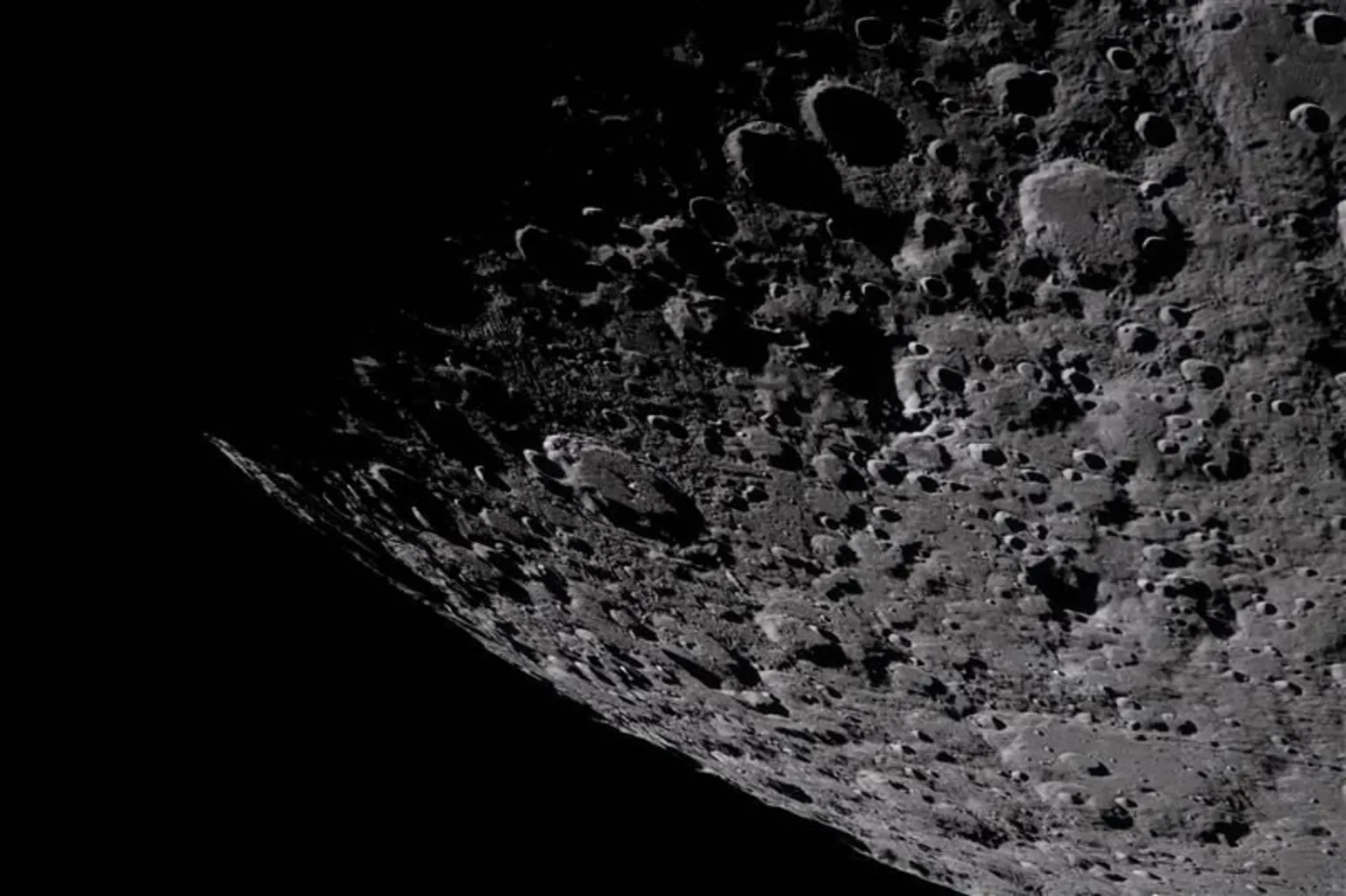
NASA has shared the first breathtaking images captured by astronauts aboard the Artemis II mission during their fly-by of the Moon.
One of the standout photos shows an “Earthset” — a rare view of Earth appearing to dip behind the Moon’s rugged, crater-filled surface. In another striking image, the astronauts captured a dramatic solar eclipse, as the Moon moved directly in front of the Sun, casting a glowing halo of light.
NASA has not confirmed which crew member took the photos, but they were captured as the astronauts made their journey back to Earth.
The Earthset image draws strong comparisons to the iconic “Earthrise” photograph taken in 1968 by astronaut Bill Anders during the Apollo 8 mission. That historic image, showing Earth suspended in the vast darkness of space, remains one of the most powerful visual reminders of our planet’s fragility.
These new images were taken during a six-hour fly-by of the Moon. At one point, the spacecraft passed behind the Moon, temporarily losing radio contact with Earth. According to NASA, the Earthset photo was taken through the Orion spacecraft window at 18:41 EDT on Monday.
In its description, NASA noted that part of Earth was in darkness, while the sunlit side revealed swirling cloud patterns over Australia and the Oceania region. The foreground of the image also features the Ohm crater, with its layered edges and central peaks — formations created when the Moon’s surface rebounds after a powerful impact.
The solar eclipse proved to be one of the most unforgettable moments of the mission. Astronaut Victor Glover described the experience as “unreal” and “like science fiction,” highlighting the glowing corona that remained visible even as the Sun was hidden.
“The Sun has gone behind the Moon, but the corona is still shining, forming a bright halo around it,” he said. “Earth is incredibly bright in the distance, while the Moon just floats right in front of us.”
For the Artemis II crew, the journey has delivered not just scientific progress, but once-in-a-lifetime views that few humans have ever witnessed.

