

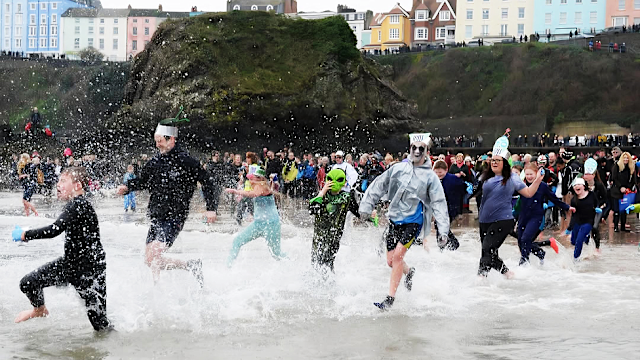
Cold-water swimmers planning festive dips this winter are being warned not to rely on artificial intelligence tools for information about tides, sea conditions or water safety. Maritime experts and rescue organisations say some AI-generated advice has been inaccurate, incomplete or misleading, raising concerns as more people turn to digital tools to plan Christmas and New Year swims.
The warning comes amid a surge in festive swimming events across the UK, from organised charity plunges to informal sea dips shared on social media. While many participants see these swims as a fun seasonal tradition, safety experts stress that winter sea conditions can be unpredictable and dangerous, especially for those without local knowledge or experience.
Coastal safety groups say they have seen examples of AI chatbots providing incorrect tide times, oversimplified guidance about currents and vague advice that fails to account for local hazards. In some cases, AI tools reportedly suggested conditions were safe when official tide tables or weather services showed otherwise.
Tides are influenced by a complex mix of lunar cycles, coastal geography, weather patterns and seasonal changes. According to maritime authorities, this makes them particularly difficult for general-purpose AI systems to interpret accurately without access to real-time, location-specific data.
Rescue services warn that relying on incorrect tide information can put swimmers at risk of being swept out to sea, trapped by rising water or caught in strong rip currents. During winter months, the risks are heightened by cold shock, reduced visibility and rapidly changing weather conditions.
The Royal National Lifeboat Institution (RNLI) and other safety organisations say they have responded to incidents in which swimmers underestimated tidal strength or mistimed their entry and exit from the water. In cold conditions, even experienced swimmers can quickly lose strength or become disoriented.
Safety experts are particularly concerned about the growing popularity of cold-water swimming among newcomers. Festive swims often attract first-time participants inspired by online trends or social media challenges, some of whom may not be familiar with basic open-water safety principles.
Maritime authorities stress that tide times can vary significantly even between nearby locations, and that conditions can change within minutes. Wind direction, recent rainfall and offshore weather systems can all affect water movement, making generic advice unreliable.
Experts recommend checking official tide tables from recognised sources such as harbour authorities, coastguards or national hydrographic offices. These resources are updated regularly and are designed specifically for maritime safety, unlike general AI tools that rely on large datasets rather than live conditions.
Local knowledge is also seen as crucial. Experienced swimmers, surf clubs and coastal groups often have insight into hidden hazards such as submerged rocks, sudden drop-offs or areas where currents accelerate. Safety organisations encourage swimmers to speak with locals or join established swimming groups when visiting unfamiliar locations.
In addition to tide awareness, experts highlight the importance of understanding cold-water risks. Sudden immersion in cold water can trigger an involuntary gasp reflex, rapid breathing and loss of muscle control. Even strong swimmers can struggle if they are unprepared.
Wearing appropriate gear, such as neoprene gloves, boots and brightly coloured swim caps, can improve safety and visibility. Many safety groups also recommend using tow floats, which provide buoyancy and make swimmers easier to spot from shore.
Swimming with others is another key recommendation. Group swims allow participants to look out for one another and respond quickly if someone gets into difficulty. Organised festive swims often have safety marshals or volunteers monitoring conditions, which can significantly reduce risk.
Rescue services also advise swimmers to plan entry and exit points carefully and to avoid swimming near cliffs, piers or harbours unless the area is designated safe for swimming. Rising tides can cut off escape routes, while outgoing tides can pull swimmers away from shore.
While AI tools can be useful for general information or learning about swimming techniques, experts stress they should not be used as a primary source for safety-critical decisions. Unlike specialist maritime services, AI systems may not distinguish between inland waters and open seas, or between summer and winter conditions.
Some safety groups worry that the confident tone used by AI chatbots can give users a false sense of certainty. Advice that appears clear and authoritative may still be wrong, particularly when it lacks context or local specificity.
Authorities say technology should support, not replace, expert guidance. Weather apps, tide charts and official alerts are designed to provide precise, up-to-date information, whereas AI-generated responses may be based on outdated or averaged data.
The warning follows broader discussions about the limits of AI in safety-related situations. From navigation to medical advice, experts increasingly emphasise the need for human oversight and trusted sources when decisions involve real-world risks.
Despite the concerns, safety organisations are keen to stress that festive swimming can still be enjoyed safely with proper preparation. Many long-time cold-water swimmers say the tradition offers physical and mental health benefits when approached responsibly.
As winter celebrations approach, maritime authorities urge anyone planning a festive swim to research conditions carefully, double-check information with reliable sources and avoid taking unnecessary risks. If in doubt, they advise staying on shore or choosing a supervised event.
Ultimately, experts say the message is simple: when it comes to tides and open water, accuracy matters. Relying on verified data and local expertise, rather than general AI advice, could prevent accidents and ensure festive swims remain a joyful tradition rather than a dangerous one.

