

Tucked away behind the grandeur of the Vatican lies a quiet studio where time moves slowly and craftsmanship reigns supreme. For more than four centuries, a small group of artists has been entrusted with preserving the shimmering mosaics that cloak the interior of St. Peter’s Basilica, the world’s largest church.
Today, just 12 specialists work inside the Vatican Mosaic Studio, caring for thousands of square metres of intricate imagery that spans the basilica’s walls and dome. Their responsibilities extend beyond conservation: the studio also produces finely detailed mosaic artworks that Pope Leo presents to visiting dignitaries or carries with him on international trips—a tradition often described as the Vatican’s own form of cultural diplomacy.
Creating even a single mosaic can take months. Artists painstakingly assemble countless tiny tiles to form devotional scenes of Christ and the Virgin Mary, as well as secular views such as the Colosseum. Each piece is built by hand, tile by tile, in a process that demands both precision and patience.
Preserving an ancient craft remains central to the studio’s mission. “Using the mosaic technique today is essential,” said studio director Paolo Di Buono. “It allows us to protect and continue a tradition that goes back centuries.” The goal, he explained, is durability. “We work with the sense that what we create is meant to last—almost forever.”
Inside St. Peter’s Basilica, the studio is responsible for approximately 8,360 square metres of mosaics, including those in the soaring central dome. Mosaics replaced paintings centuries ago, chosen for their resistance to the smoke and residue produced by candles and incense during religious ceremonies.
Among the studio’s recent projects is a mosaic portrait of the pope, now installed at the Basilica of St. Paul Outside the Walls. Produced over five months by a three-person team, the artwork contains roughly 16,000 individual tiles. “The pieces are extremely small,” said mosaic artist Nicoletta Marino. “That’s what makes the work so meticulous—and so demanding.”
The tradition of gifting mosaics stretches back decades. Another artist, Adriano Galise, shared images of works he created that were presented to U.S. Presidents George W. Bush and Barack Obama by Pope Benedict XVI during official Vatican visits. “That our mosaics are chosen as papal gifts is one of the studio’s most meaningful traditions,” Di Buono said.
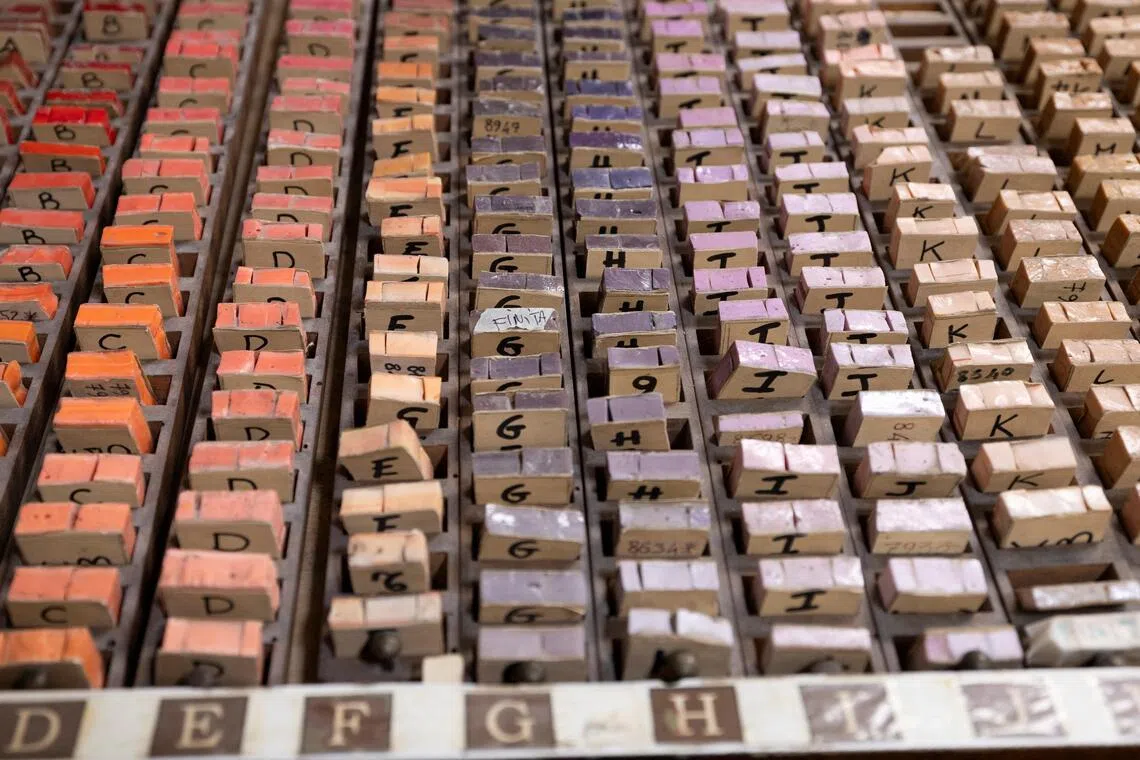
Each artist follows a slightly different method. Some begin with black-and-white reference images mapped out like puzzle blueprints, while others work from coloured drawings or photographs. All rely on the studio’s extraordinary archive—a vast catalogue of 27,000 distinct mosaic tile colours.
Stored in a towering, two-floor filing system with 9,000 drawers, the archive makes the Vatican Mosaic Studio not only a working atelier but also a living museum of colour. It is here, in silence and concentration, that art meant to endure for centuries continues to take shape.

