

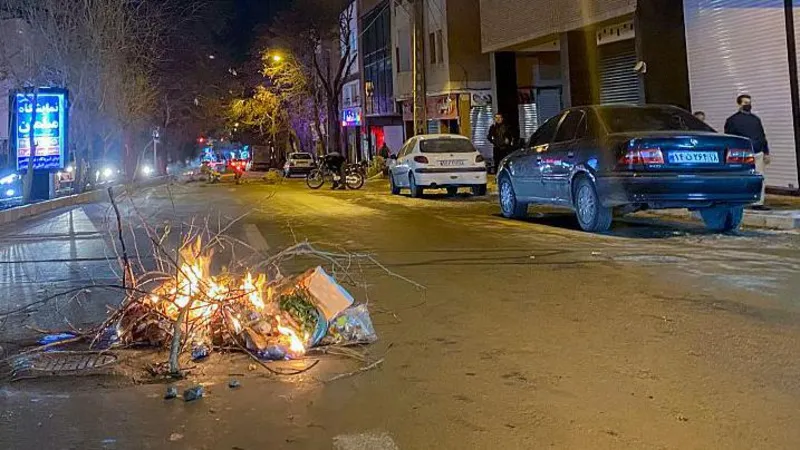
Large numbers of Iranians have poured onto the streets of Tehran and many other cities, openly demanding an end to the Islamic Republic and, in some places, calling for the restoration of the monarchy. Demonstrations have now reached hundreds of towns and cities nationwide, reflecting a wave of anger that cuts across age, class, and social background.
From young students to older citizens, from the affluent to the struggling, people across Iran are expressing deep resentment toward the clerical leadership that has governed the country for nearly five decades. Protesters describe a sense of stolen futures and unbearable daily life under the current system.
One young woman in Tehran told the BBC that she joined the demonstrations because her aspirations had been taken away. She said she wanted those in power to understand that people still have “a voice to shout” and “a fist to punch them in the face.”
Another woman spoke about the emotional weight driving many to the streets. “We’re living in limbo,” she said. “I feel like I’m suspended in the air with no wings to leave and no hope to build a future here. Life here has become unbearable.”
Since late December, protests have continued to grow in scale and intensity, driven by long-standing political repression and worsening economic conditions. Each day has brought new demonstrations, spreading further across the country.
A 29-year-old man named Sina, speaking to the BBC via text message from Karaj, west of Tehran, said people were becoming increasingly fearless. “I went out to buy groceries and people were openly criticising the regime in broad daylight,” he said. “I thought the protests would fade, but they haven’t lost momentum.”
Understanding the full scope of events is difficult. Independent journalism is heavily restricted in Iran, many people are afraid to speak openly, and authorities have now imposed severe internet limitations. The BBC spoke to sources before connectivity was almost entirely cut off. Despite these barriers, the scale of public anger is evident, especially in videos circulating online that show large crowds confronting security forces.
Iranians cite a wide range of grievances, including the lack of political freedom, systemic corruption, and an economy in crisis that has led to soaring prices and declining living standards.
The last major wave of unrest occurred in 2022 following the death of Mahsa Amini while in custody. She had been detained by morality police for allegedly failing to comply with Iran’s compulsory hijab rules.
This time, the immediate trigger was a strike by shopkeepers at Tehran’s historic Grand Bazaar on 28 December. The strike was sparked by the sharp fall in the value of Iran’s currency and quickly escalated into a broader challenge to the legitimacy of the Islamic Republic.
University protests followed soon after. Authorities responded by ordering campuses to close, officially citing cold weather. By that point, however, unrest had already spread far beyond academic spaces. Violent clashes broke out in smaller towns and cities, particularly across western Iran.
Many chants heard during the protests echo slogans from previous uprisings. “Death to the Dictator,” aimed at 86-year-old Supreme Leader Ayatollah Ali Khamenei, has been widely heard, as has “Azadi, Azadi,” meaning “Freedom, Freedom.”
Another slogan repeated by crowds is: “This homeland won’t be a homeland until the mullahs are buried.”
What distinguishes the current protests is the emergence of new chants calling for the return of the monarchy. “Pahlavi will return” has been heard repeatedly, referencing Reza Pahlavi, the son of Iran’s last shah, who was overthrown in the 1979 revolution. Reza Pahlavi had urged people to take to the streets on Thursday night.
Calls for monarchy restoration have grown louder in recent days. A 26-year-old woman named Sara from Tehran told the BBC she believes he represents the only viable alternative. “Personally, I think he’s the only way out of this,” she said.
Others interpret these chants differently. Some say they reflect desperation rather than widespread support for monarchy, driven by the absence of clear political alternatives.
“I’m not the biggest fan of Reza Pahlavi,” said Maryam, a 27-year-old from Tehran. “But honestly, my opinion doesn’t matter right now. Unity matters more. This feels very different from the Woman, Life, Freedom protests.”
She explained that the 2022 demonstrations were rooted in grief over Mahsa Amini’s death. “Now,” she said, “people seem more angry and more determined.”
In the western city of Ilam, near the Iraqi border, another woman described how protesters targeted a supermarket linked to the authorities, throwing its goods onto the street as a symbol of their rejection of the regime.
She also said that even people from families connected to the state were joining the unrest. “I know young people whose families are part of the system,” she told the BBC. “My friend and her three sisters are protesting, even though their father is a well-known intelligence figure—and he has no idea.”
Iran is now at a pivotal moment, with protests shaking the country more deeply than it has experienced in years. Where this movement will ultimately lead remains unknown.

