

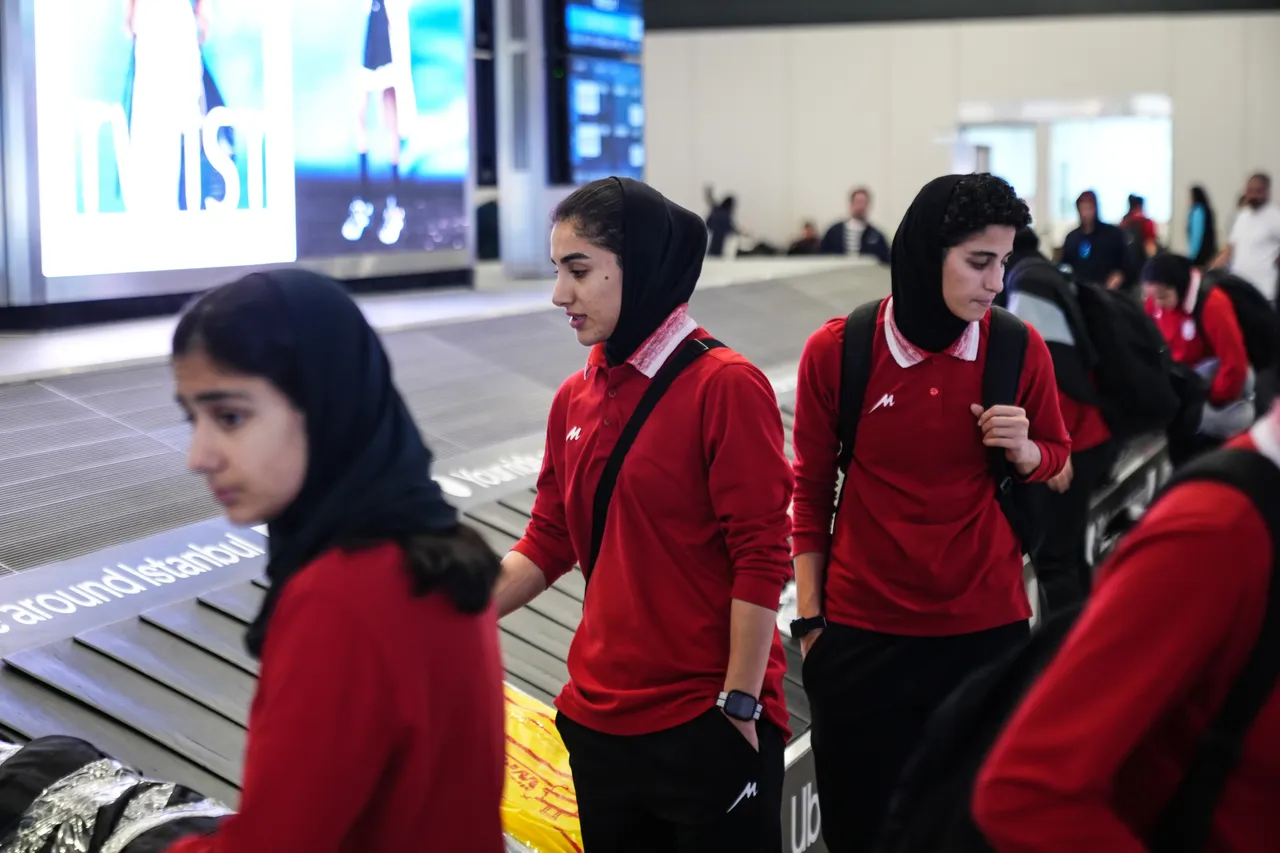
Five members of Iran’s national women’s football team have returned to Iran after withdrawing their bids for asylum in Australia — a development that human rights activists say may have been driven by threats made against their families back home.
The players crossed into Iran from Turkey on Wednesday afternoon, arriving in their team tracksuits after flying back via Malaysia and Oman to Igdir in eastern Turkey, where Turkish media reported they were escorted from the airport to a hotel under police protection before making the crossing.
Three of the five have been named by activists in the Iranian diaspora as Zahra Soltan Meshkehkar, Mona Hamoudi and Zahra Sarbali. Iranian state media reported that team captain Zahra Ghanbari was also among those who reversed their decision. The fifth player has not been publicly named. Two other women who had joined the group chose to remain in Australia as defectors.
The saga began after footage emerged of a host on Iranian state television calling the players “traitors” who deserved punishment for staying silent during Iran’s national anthem at their opening Asian Cup match on 2 March — just days after the US and Israel launched their war against Iran. The team went on to sing the anthem at their next two matches before being eliminated from the tournament, leading observers to conclude they had been instructed to do so by government officials travelling with the squad.
After the anthem incident, the players sought humanitarian visas to remain in Australia. Australia’s Home Affairs Minister Tony Burke confirmed that five women who wanted to stay had been escorted by police from their Gold Coast hotel to a safe location. Burke met them there and signed off on their humanitarian visa applications at around 1:30am local time — visas that would have allowed them to live, work and study in the country. The BBC witnessed some of the team’s minders running through the hotel trying to locate the players, who had already left.
But some then began to change their minds. Burke acknowledged that the Australian government could not “remove the context in which the players are making these incredibly difficult decisions” — a carefully worded acknowledgement of the pressure bearing down on them from Iran.
Iran’s sports ministry framed the returns as a victory, saying the players had “defeated the enemy’s plans” through their “national spirit and patriotism,” and accused the Australian government of doing Trump’s bidding. The IRGC-affiliated news agency Tasnim claimed the players had been subjected to “psychological warfare, extensive propaganda and seductive offers” during their time in Australia.

