

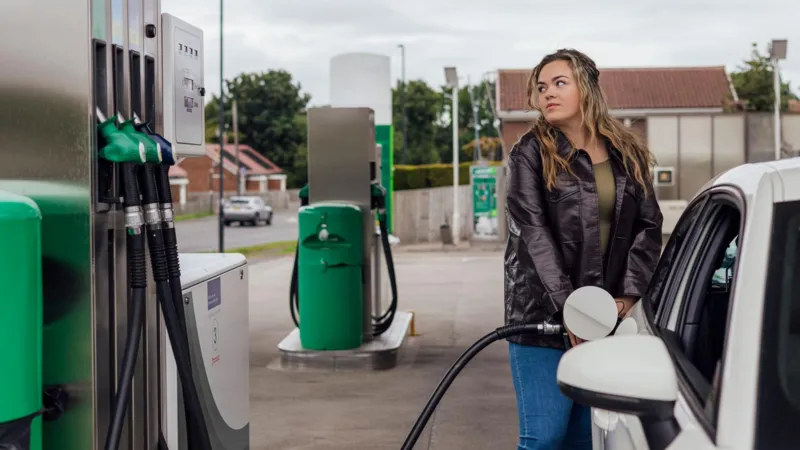
UK inflation fell to 3% in January, down from 3.4% in December, driven by lower prices for food, fuel and air travel.
Economists said the fall increases the likelihood that the Bank of England will cut interest rates at its March monetary policy meeting.
The Office for National Statistics (ONS) said the “marked” drop took inflation to its lowest level since March 2025.
While inflation has slowed, prices are not falling overall — they are still rising, but at a slower rate.
ONS chief economist Grant Fitzner said:
“Inflation fell markedly in January to its lowest annual rate since March last year, driven partly by a decrease in petrol prices.
“Airfares were another downward driver this month with prices dropping back following the increase in December.”
However, Fitzner added that lower prices for bread, cereals and meat were partly offset by higher costs for hotel stays and takeaways.
Interest rate outlook
Wednesday’s inflation data followed figures showing a slowdown in wage growth, increasing expectations that the Bank of England will cut its key interest rate, which currently stands at 3.75%.
Economists expect inflation to continue falling in the coming months, helped by government plans to cut household energy bills from April. Forecasters Cornwall Insight said the move could reduce the energy price cap for a typical household by £117, bringing it down to £1,641 from April.
Yael Selfin, chief economist at KPMG, said:
“Given the favourable inflation outlook, the Bank is expected to cut interest rates three times this year, leaving interest rates at 3% by the end of 2026.”
The Institute for Chartered Accountants of England and Wales (ICAEW) said the latest figures show the fight against soaring prices “took a decisive turn for the better in January”.
ICAEW economics director Suren Thiru said:
“These figures make a spring interest rate cut look almost assured, though a lingering question among policymakers will be whether to pull the trigger in March or April, as some may want slightly more evidence of easing inflation before reducing rates.”
Simon French, chief economist at Panmure Liberum, said there is now around an 80% chance the Bank of England will cut interest rates in March.
Speaking on the BBC’s Today programme, he said the Bank’s previous decision to hold rates at 3.75% was so finely balanced that it would take only “a little bit of additional evidence” of slowing inflation to sway one member of the committee.
French also said part of the reason inflation has eased slowly is the 2024 Budget delivered by Rachel Reeves, which included higher employer National Insurance contributions. He said this had pushed up prices for consumers.
Inflation trend and political reaction
A chart published alongside the data showed UK Consumer Price Index inflation falling to 3% in January 2026, down from 3.4% the previous month. Inflation peaked at 11.1% in October 2022 before falling sharply, reaching a low of 1.7% in September 2024, before rising again.
Chancellor Rachel Reeves welcomed the drop in inflation, saying:
“Cutting the cost of living is my number one priority.”
She added:
“Thanks to the choices we made at the budget we are bringing inflation down, with £150 off energy bills, a freeze in rail fares for the first time in 30 years and prescription fees frozen again.”
Inflation has been gradually moving closer to the Bank of England’s 2% target.
However, the Conservatives said inflation remains above that level “thanks to Labour’s choices”. Shadow Chancellor Mel Stride said:
“Families are still feeling the pinch because of Labour’s economic mismanagement.”
December’s inflation rise was attributed to seasonal factors, including higher Christmas flight prices and an increase in tobacco tax announced in the Budget.
Prices on the ground
In January, the biggest downward contributors to inflation were transport, food, and non-alcoholic beverages.
One baker told the BBC she welcomed the slowdown in price rises, as the cost of premium ingredients had surged. Luxury chocolate alone has risen by £7 per kilo over the past 18 months.
Gaya Vara said it now costs just under £20 per kilo. She said she has chosen not to switch to cheaper ingredients for her high-end London bakery, instead absorbing the rising costs — which has reduced profits.
Household finances were also supported by January sales, according to the British Retail Consortium (BRC), which pointed to heavy discounting on clothing, footwear and furniture.
The BRC also highlighted falling prices for staples such as bread, cereals and rice.
BRC chief economist Harvir Dhillon said:
“The improving picture reflects intense competition between retailers, who continue to try and absorb higher costs wherever possible to keep prices down for customers.”
However, the organisation warned that government policies — including higher minimum wages, rising National Insurance contributions and the upcoming Employment Rights Act — could make it harder for retailers to prevent future price increases.

