

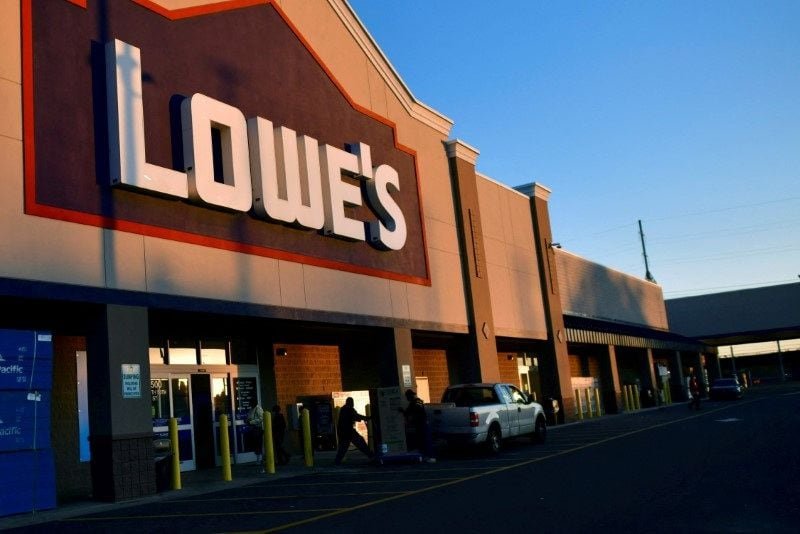
Due to consumers’ hard-hitting inflation and reduced spending on home improvement projects, Lowe’s Cos (LOW.N) anticipated a more significant loss in annual comparable sales than it had previously anticipated and cut its profit prediction on Tuesday. This caused the company’s shares to fall by 6%.
This year, the home renovation industry in the United States has shown signs of moderation. Consumers have been delaying large-scale home remodeling and other discretionary projects to spend primarily on needed activities as household budgets have stretched thinner in response to rising inflation concerns.
Home Depot (HD.N), Lowe’s larger rival, surpassed market forecasts for quarterly results last week on sustained demand for plumbing and hardware and from its “pro-customers,” such as professional builders and contractors. In contrast, Lowe’s pessimistic report comes in stark contrast to Home Depot’s (HD.N.) performance.
Do-it-yourself (DIY) customers, who tend to be more frugal with their money, make up the remainder of Lowe’s customer base, in contrast to the 25% of Home Depot’s customer base that is made up of professional customers. Professional customers make up nearly half of Home Depot’s client base.
Lowe’s CEO, Marvin Ellison, said the company experienced a “greater-than-expected pullback in DIY discretionary spending, particularly in bigger ticket categories” during the third quarter.
The number of customers who visited Lowe’s locations decreased by 9.4% from July to September, according to data provided by Placer.ai. This decrease is more significant than the 8.2% drop observed three months before this period.
According to LSEG IBES’ statistics, the company experienced a decline in same-store sales of 7.4% for the three months that ended on November 3, which was significantly higher than the typical analyst projection of a drop of 5%.
Lowe’s now anticipates that full-year comparable sales will drop by 5%, a significant increase from its previous projection of a reduction of 2% to 4%. The consensus forecast among analysts is for a 3.4% decrease.
The earnings per share for the year are now anticipated to be $13, a decrease from the previous forecast range of $13.20 to $13.60.

