

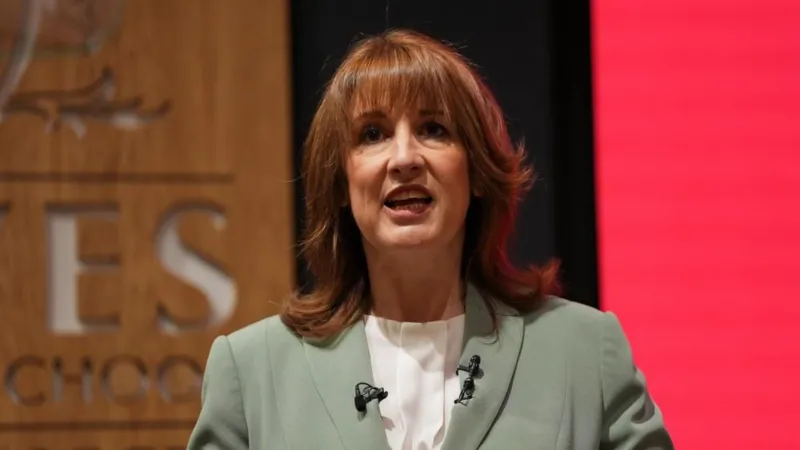
Regional mayors could soon have direct control over a slice of national tax revenue, Chancellor Rachel Reeves has announced — a move she says will give local leaders the freedom to spend on what actually matters in their areas, rather than waiting on central government to decide for them.
The plans won’t mean new taxes. Instead, they would redirect a portion of existing national tax income — including potentially income tax — straight to regional leaders. Treasury officials are set to work with mayors and businesses to develop the blueprint, which is due to be published later this year, with fuller details expected at the autumn Budget.
Reeves laid out the announcement at her Mais Lecture at Bayes Business School in the City of London, framing it as part of a broader push to shake the UK economy out of its sluggish stretch. Alongside the devolution plans, she unveiled a £2.5bn investment in artificial intelligence and quantum computing, and signalled a closer alignment with EU rules in areas where she believes it makes economic sense.
On technology, Reeves was direct about a problem she wants to fix: too many promising British tech firms and scientists are ending up overseas, particularly in the US, lured by better tax conditions, stronger investment cultures and a more attractive stock market environment. She said she wants that pattern to stop, and pointed to the quantum computing investment as expected to create 100,000 UK jobs. She also promised to deliver “the fastest AI adoption in the G7.”
Former deputy prime minister Sir Nick Clegg, who recently joined the board of cloud platform provider Nscale, echoed the optimism, telling the BBC last week that AI would create jobs and entire companies that don’t yet exist.
The Iran war, however, is casting a long shadow over all of it. The surge in oil prices since the US-Israeli strikes on Iran is raising fears of inflation and economic slowdown, and some experts are already calling on the government to fast-track North Sea oil development in response. Reeves told the BBC a decision on the controversial Rosebank and Jackdaw fields would come “soon,” though she stopped short of advocating for new exploration outright, saying the matter would be decided “across government.” She pointed instead to production increases in Canada and Norway, and stressed that the UK’s planned reintegration into European energy markets — part of the post-Brexit reset — would also help keep energy prices in check.
On the broader question of EU alignment, Reeves argued the UK should fall in line with European rules wherever it genuinely serves British businesses and workers, with divergence being “the exception, not the norm.” The approach is already taking shape in food and farm standards, but her language suggested ambitions reaching further — potentially into chemicals and manufacturing.
The Conservatives were quick to hit back. Shadow Chancellor Sir Mel Stride accused Reeves of using the lecture to inch the country back toward the EU, and said Labour had “mismanaged the economy” while blaming Brexit for problems of its own making. Reeves, for her part, gave no ground — pressing ahead with what she’s framing as a practical, growth-focused agenda at a moment when the economic headwinds are getting harder to ignore.

