

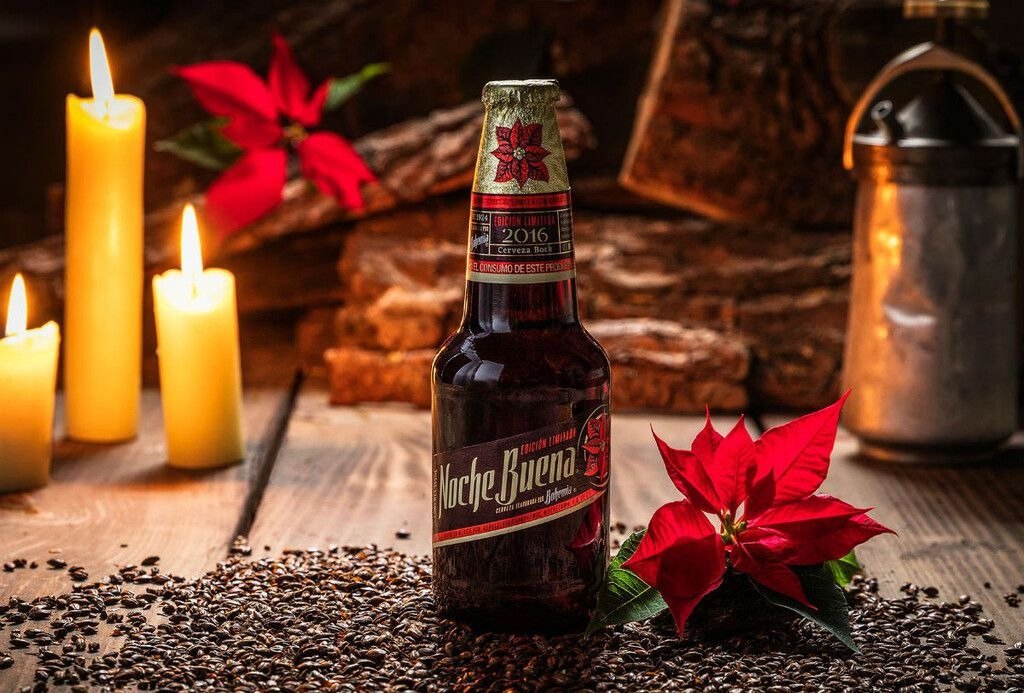
Each year, as Christmas approaches in Mexico, a familiar red-and-gold label returns to shop shelves for a brief moment. Noche Buena, a seasonal beer brewed only for the holidays, has become a cherished part of Mexican Christmas culture, enjoyed for just a few weeks before disappearing again.
Produced by Grupo Modelo, the same company behind Corona and Modelo Especial, Noche Buena is released annually in late autumn and typically vanishes by early January. Its limited availability is part of its appeal, turning the beer into a festive marker of the season rather than an everyday drink.
Noche Buena is a Vienna-style lager with a deep amber colour and a richer, malt-forward profile than many of Mexico’s lighter beers. It has subtle notes of caramel and toasted grains, offering a fuller-bodied alternative to the crisp lagers commonly associated with the country’s beer scene.
The beer takes its name from “Nochebuena,” the Spanish term for Christmas Eve, which is the most important holiday celebration in many Mexican households. Families gather late into the night for food, conversation and tradition, and Noche Buena has become a familiar presence at these celebrations.
For many Mexicans, drinking Noche Buena is less about novelty and more about ritual. Its arrival signals that the holiday season has officially begun, much like decorations going up or seasonal foods appearing on the table. The beer is often shared at family dinners, office gatherings and festive reunions with friends.
Despite its popularity, Noche Buena is not marketed aggressively outside of Mexico. It is rarely exported in significant quantities, and even when it appears abroad, it is often difficult to find. This has helped preserve its status as a distinctly local tradition rather than a global seasonal product.
The beer’s scarcity is deliberate. Grupo Modelo has long positioned Noche Buena as a once-a-year release, resisting pressure to make it available year-round. This approach reinforces its emotional connection to Christmas and keeps demand high during its short window on the market.
In Mexico, anticipation builds weeks before the beer’s release. Social media fills with posts asking whether Noche Buena has arrived in stores yet, and some drinkers buy extra bottles to enjoy throughout the season. Once supplies run out, there is no restock until the following year.
Noche Buena is often paired with traditional holiday dishes, such as romeritos, bacalao and roasted meats. Its maltier profile complements rich, savoury flavours, making it a natural fit for festive meals that differ from everyday Mexican cuisine.
The beer also reflects a broader cultural relationship with seasonal foods and drinks in Mexico. Just as panettone appears at Christmas or rosca de reyes is eaten in January, Noche Buena belongs to a calendar of flavours tied to specific moments in the year.
For visitors to Mexico during the holidays, discovering Noche Buena can feel like gaining access to a local secret. It is not advertised as a tourist attraction, but rather encountered naturally in neighbourhood shops, family gatherings or casual meals during December.
Outside Mexico, the beer has gained a quiet following among those who have lived in the country or spent Christmas there. For them, finding a bottle abroad can trigger a sense of nostalgia, recalling past holidays and the warmth of seasonal traditions.
While craft beer has grown rapidly in Mexico over the past decade, Noche Buena remains firmly rooted in the mainstream. Its enduring popularity shows that long-standing traditions can coexist with changing tastes, especially when they are tied to shared memories and celebrations.
As January approaches and the holidays wind down, Noche Buena fades from shelves once more. Its absence is expected, even welcomed, reinforcing the idea that some things are best enjoyed briefly and at the right time.
In a country rich with festive customs, Noche Buena stands out as a simple but powerful symbol of Christmas. For a few weeks each year, it brings people together, marking the season not with excess, but with familiarity, anticipation and a taste that only belongs to the holidays.

