

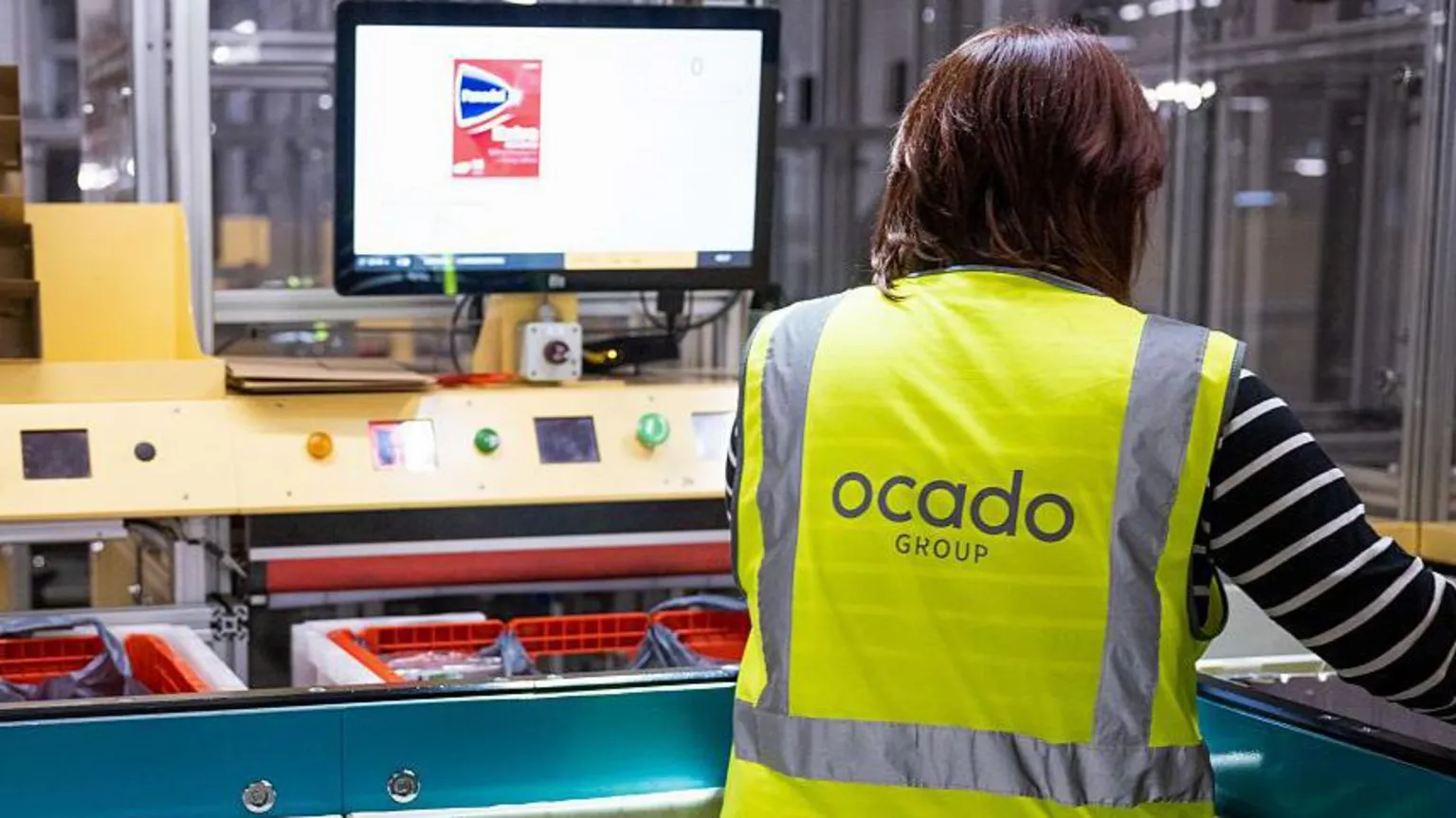
Ocado Group has announced plans to cut around 1,000 jobs over the next year, representing roughly 5% of its global workforce, as the company moves to rein in costs amid mounting financial pressures.
The technology and online grocery firm, which employs about 20,000 people worldwide, said a “significant number” of roles would become redundant as part of a wider restructuring programme. The majority of employees are based in the UK, and about two-thirds of the planned job losses are expected to fall there.
Most of the UK cuts will affect staff at Ocado’s headquarters in Hatfield, Hertfordshire. The company said the reductions would largely come from its technology and support teams.
Ocado operates two main business lines: it supplies automation and software technology to supermarket distribution centres, and it also runs an online grocery operation in partnership with Marks & Spencer.
The company said the restructuring is expected to reduce costs by approximately £150m.
Tim Steiner, Ocado’s chief executive, said the changes were part of a longer-term effort to reshape the business.
“These changes reflect the lower structural cost base that we have signalled over recent years,” he said.
“Regrettably, this means a significant number of roles will no longer be required. We will support those impacted through this process.”
Market analysts say the move reflects deeper challenges facing the company. Chris Beauchamp, chief market analyst at IG, suggested Ocado’s early lead in online grocery delivery had eroded.
“For a company once seen as the future of supermarket delivery, its fate has been overtaken by its more pedestrian, but larger, rivals,” he said.
“They have used their scale, reach and existing infrastructure to build a far more compelling story for investors.”
Rather than adopting Ocado’s technology, Beauchamp argued, many supermarkets chose to develop their own systems.
“They have simply bypassed the newcomer, leaving Ocado as the great white elephant that failed to deliver,” he added.
Investors reacted negatively to the announcement, with Ocado’s shares down more than 7% by midday.
The company’s stock has already suffered steep declines over the past year, following decisions by its North American partners to shut down several Ocado-run facilities after demand fell short of expectations.
In the US, grocery giant Kroger is closing three warehouses operated using Ocado’s technology. In Canada, Sobeys announced in January that it would shut a fulfilment centre in Calgary.
The job-cut announcement coincided with Ocado’s publication of its full-year financial results. The company reported that group revenues rose 12% to £1.36bn in the year ending 30 November.
However, losses deepened. Pre-tax losses from continuing operations widened to £377.6m, compared with a loss of £339.8m the previous year.
The planned cuts prompted concern locally. Andrew Lewin, the Labour MP for Hatfield, described the decision as “a serious setback”.
“Hatfield has been Ocado’s HQ for many years, and people from our community have been integral to the growth and success of the business,” he said.
“Ocado’s decision to cut hundreds of local jobs will hit hard,” Lewin added, warning that staff were now facing significant uncertainty about their futures.

