

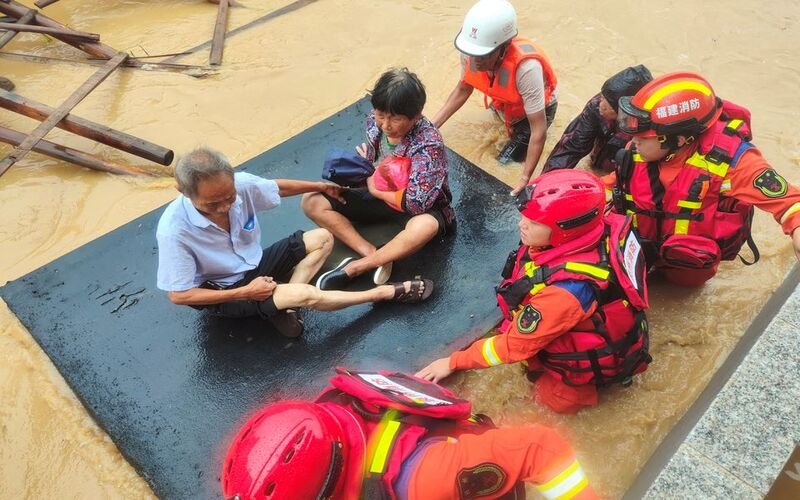
In July 2023, Typhoon Doksuri made landfall in Northern China, bringing heavy rain and posing potential risks to the region. As one of the strongest typhoons of the season, Doksuri’s impact on the affected areas and its implications for local communities and infrastructure are of significant concern. In this article, we delve into the details of Typhoon Doksuri’s landfall and its potential effects on Northern China.
Background: Typhoon Season in Asia-Pacific
The Asia-Pacific region experiences a typhoon season each year, characterized by powerful tropical cyclones. These storms can bring torrential rain, strong winds, and storm surges, resulting in significant damage and disruption to affected areas.
Typhoon Doksuri’s Landfall
In July 2023, Typhoon Doksuri made landfall in Northern China. The typhoon threatened coastal regions and inland areas with sustained winds and heavy rain.
Rain and Flooding
One of the primary concerns with Typhoon Doksuri was the potential for intense rainfall and subsequent flooding. Coastal regions and low-lying areas were particularly vulnerable to inundation, which could lead to property damage, displacement of communities, and disruption of essential services.
Strong Winds and Storm Surge
In addition to heavy rain, Typhoon Doksuri’s strong winds had the potential to cause damage to buildings, trees, and power infrastructure. Storm surge, the rising sea level caused by the cyclone’s winds, could further exacerbate coastal flooding.
Preparations and Response Measures
To mitigate Typhoon Doksuri’s impact, Northern China authorities took precautionary measures and implemented response plans.
Evacuation and Sheltering
In at-risk areas, authorities may have carried out evacuations to move residents to safer locations. Shelters and evacuation centers were set up to provide temporary accommodation for those displaced by the storm.
Disaster Response Teams
Emergency response teams, comprising government agencies, rescue personnel, and volunteers, were on standby to assist with search and rescue operations and provide aid to affected communities.
Infrastructure Protection
Measures to secure critical infrastructure, such as power stations, transportation networks, and communication facilities, were taken to reduce damage and ensure rapid recovery after the storm.
Potential Impact on Agriculture
Typhoon Doksuri’s heavy rainfall could affect agriculture in the affected regions. Flooding may damage crops and disrupt farming activities, affecting food supplies and livelihoods.
Conclusion
Typhoon Doksuri’s landfall in Northern China posed significant challenges to the region, with heavy rain and potential flooding threatening local communities and infrastructure. The authorities’ preparedness and response measures were crucial in safeguarding lives and minimizing the storm’s impact. As the affected areas recover from the typhoon’s aftermath, continued rehabilitation and infrastructure repair efforts will be essential for restoring normalcy and resilience in the face of future natural disasters.

