

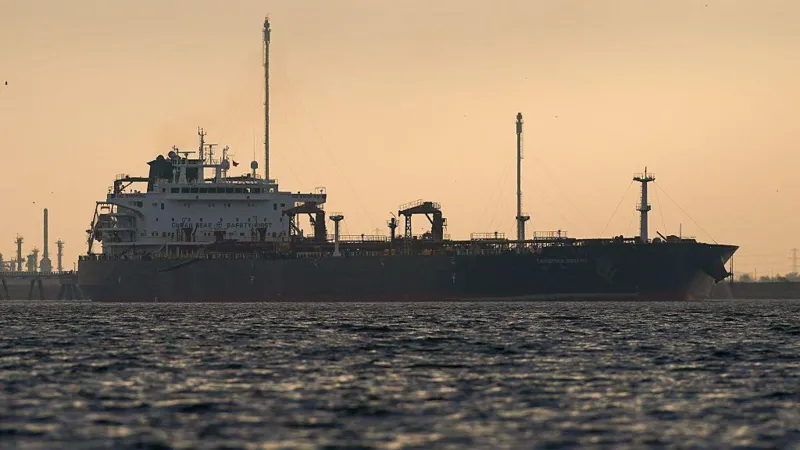
At the heart of the escalating tensions in the Middle East lies a narrow way with outsized global importance: the Strait of Hormuz. What should be a conduit for global energy supply has instead become a flashpoint, as tanker operators are now being urged not to comply with reported Iranian demands for transit payments.
The warning, led by industry voices such as Intertanko, reflects a deeper that the rules governing international waters are being tested—and potentially rewritten—under the pressure of conflict.
A Dangerous Precedent
The suggestion that ships must pay for safe passage through the strait challenges a long-standing principle of international maritime law: freedom of navigation. According to International Maritime Organization, such waterways are meant to remain open and accessible to all, free from tolls or coercion.
To concede otherwise, industry leaders argue, would set a troubling precedent. If one nation can impose fees under threat, what stops others from doing the same in equally strategic corridors?
For tanker operators, the issue is not merely financial—it is existential. Paying such tolls, especially if directed toward entities like the Islamic Revolutionary Guard Corps, raises legal and ethical concerns, particularly given its designation as a terrorist organization by Western governments.
Ceasefire in Name Only
The situation is further complicated by the fragility of the current ceasefire. Despite diplomatic efforts involving figures like JD Vance, the agreement has yet to restore confidence—or traffic—through the strait. Tanker movement has plummeted dramatically, from nearly 140 vessels daily to just a handful.
This paralysis underscores a critical reality: ceasefires on paper do not guarantee safety at sea. Until there is a verifiable halt to attacks and credible security assurances, shipping companies are unlikely to risk their crews or cargo.
Global Consequences, Local Decisions
The implications extend far beyond the الخليج. Nearly a fifth of the world’s oil and gas passes through the Strait of Hormuz. A sustained disruption threatens to ripple across global markets, driving up the cost of fuel, electricity, food, and even medicine.
Hundreds of vessels now sit stranded, caught in a geopolitical limbo. For companies like Stena Bulk, the calculus is clear: no level of profit justifies uncertain. Without guarantees, the strait remains effectively closed—not by law, but by risk.
A Test of International Order
At its core, this standoff is about more than shipping lanes. It is a test of whether international norms can withstand the effects of regional conflict. If freedom of navigation erodes here, it could signal a broader shift in how global trade routes are governed.
For now, restraint appears to be the industry’s only viable response. But the more it persists, the greater the strain—not just on supply chains, but on the principles that underpin them.
The Strait of Hormuz has always been strategic. Today, it is something more: a barometer of how fragile the global order can be when geopolitics and commerce collide.

