


In a move that has reignited intense global debate, former U.S. President Donald Trump has introduced a polarizing plan to address the deeply entrenched Israel-Palestine conflict. Revealed in January 2025, the proposal calls for neighboring nations like Jordan and Egypt to absorb additional Palestinian refugees. It also controversially includes language about the need to “clean out” Gaza, a phrase that has drawn widespread criticism from human rights organizations and world leaders alike.
This development comes at a critical time, as tensions in the region remain high. The Israel-Palestine conflict, one of the world’s longest-standing territorial disputes, has consistently been a lightning rod for heated international discourse. Any proposal aimed at addressing its complexities inevitably faces intense scrutiny, and Trump’s latest suggestion is no exception.
The plan has sparked a cascade of questions and criticism, particularly regarding its feasibility. Calling on Jordan and Egypt to accept greater responsibility for displaced Palestinians places immense pressure on these nations, both of which are already grappling with significant domestic challenges. Hosting refugees requires substantial resources, infrastructure, and international backing—dimensions critics claim Trump’s plan fails to adequately address.
“We need solutions, not incendiary comments that fuel tension,” stated one regional expert, voicing a sentiment shared by many in the international community. For Jordan and Egypt, the repercussions of such a proposal could be severe, further straining fragile economies and social structures that are already stretched thin. History has shown that refugee movements involve far more than mere logistical planning—they come with deep societal and human consequences.
The controversy surrounding Trump’s use of the phrase “clean out Gaza” has further fueled global concern. While the former president has not elaborated on what this entails, the phrase carries a troubling connotation. Some interpret it as a strategy aimed at enhancing security for Israel. Others view it as a humanitarian red flag, potentially escalating an already volatile conflict and worsening conditions for millions of Palestinians living in the region.
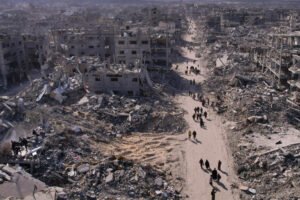
A harrowing photograph taken by Omar al-Qattaa, showing displaced Palestinians moving toward the northern Gaza Strip in January 2025, underscores the human toll tied to this situation. Thousands have already been displaced by ongoing violence, and any abrupt policy changes could deepen their suffering. Such images are a sobering reminder that behind every political proposal are real lives at stake.
Trump’s approach to the Middle East reflects patterns established during his presidency. While his administration brokered the Abraham Accords—normalizing relations between Israel and several Arab nations—his policies frequently aligned with Israel’s interests, often leaving Palestinians and their advocates feeling marginalized. This latest proposal appears to follow a similar trajectory, raising doubts about its balance and fairness.
The reactions from key stakeholders will be pivotal. Leaders in Jordan and Egypt, who would bear the immediate brunt of such a plan, face difficult decisions as they weigh national interests against international expectations. Meanwhile, global observers are urging for a broader, more sustainable strategy—one that addresses both Israeli security concerns and the humanitarian needs of Palestinians.

