

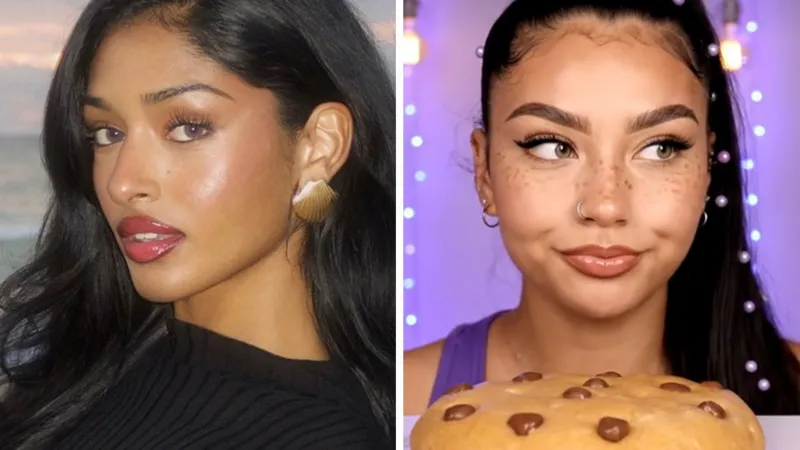
Two social media personalities are thriving online right now but there’s a striking difference between them: only one of them actually exists in real life. The other is entirely generated by artificial intelligence, and both have built followers, engagement and even income on major social platforms. As AI technology becomes more advanced, this striking contrast highlights how digital celebrity is evolving and how audiences are responding to it.
The AI influencer in question widely known online as Gigi posts videos and content that mirror the style of human social media stars. She shares lifestyle clips, beauty content, casual vlogs and other formats typical of today’s influencer scene. What makes Gigi remarkable isn’t just her polished appearance and smooth speech but the fact that she’s not a real person at all. She was created by a 21-year-old university student using generative AI tools that produce realistic faces, voices and movement, all from text prompts.
Within months, Gigi amassed millions of views, thousands of followers and a growing revenue stream through the platform’s creator fund essentially earning money for views on videos she never physically filmed. One of her clips reportedly brought in hundreds of dollars in just a few days, showcasing the powerful combination of viral appeal and AI efficiency.
In contrast, the human influencer featured in the same story has built her presence through hours of dedicated effort over years. She plans shoots, films herself, edits footage, buys lighting and gear, and carefully curates content to attract followers. Her journey reflects the traditional route to online success slow, intentional and deeply personal.
While both profiles are successful in terms of engagement and visibility, the way they operate couldn’t be more different. Gigi’s AI existence means she doesn’t film herself, appear on camera in person, or live a life behind the scenes. Instead, her creator uses sophisticated generative tools to produce every aspect of her online persona. Some AI influencers like Gigi can generate a day’s worth of content in minutes, a fraction of the time it might take a human creator to script, shoot and edit a single video.
This new breed of AI influencers sometimes referred to as “virtual creators” is becoming more common as technology improves. Advanced machine learning models can now produce highly realistic visuals and audio, making it difficult for casual viewers to tell whether a personality is real. This blurring of lines raises important questions about transparency, authenticity and how we relate to digital identities.
Some of Gigi’s fans genuinely believe she is a real person. They like, comment on and share her videos, engaging with her content just as they would with any human influencer. That level of immersion shows how convincing AI personas can be, particularly when audiences aren’t aware of their artificial nature.
The rise of influencers like Gigi reflects broader trends in digital culture. Social media platforms increasingly reward frequent posting, rapid engagement and eye-catching visuals — areas where AI has a clear advantage. An AI creator doesn’t tire, isn’t limited by personal schedule and doesn’t face the same physical or emotional demands as a human content producer.
For human creators, this represents both an opportunity and a challenge. On one hand, AI tools can help with ideation, scriptwriting and even editing, making their workloads lighter. On the other, purely AI-generated personalities can produce content faster and more cheaply, potentially drawing attention, ad dollars and followers away from people who invest their time and presence in building authentic communities.
Experts in digital media caution that while AI content creation opens up creative possibilities, it also introduces risks. AI influencers can unintentionally spread misinformation, mimic real individuals without consent or distort perception by presenting unrealistic lifestyles. Because AI output is based on patterns learned from existing data, it can also perpetuate biases or inaccuracies that go unnoticed within seemingly polished content.
There are also ethical questions about audience expectations. Followers may not realise they are engaging with an AI avatar, especially when the content feels familiar and personable. Brands that collaborate with influencers might assume they are partnering with a real person, which complicates advertising standards and disclosure requirements.
Despite these concerns, proponents of AI in creative spaces see it as a democratizing force. People who don’t have access to expensive equipment, professional training or large followings can use AI to enter the creator economy. Virtual influencers can help expand representation, experiment with new aesthetics and push the boundaries of what is possible in digital storytelling.
Some platforms are already starting to consider how to label AI personas more clearly. Discussions about marking content as “AI-generated” or creating guidelines for virtual influencer partnerships are underway, though there is no universal standard yet. Such measures could help audiences distinguish between real people and synthetic personalities, potentially increasing transparency.
Beyond social media, AI personas are expanding into advertising, fashion campaigns and virtual events. Major brands have experimented with CGI celebrities and digital models in marketing, often blending human and AI elements. These developments suggest that the influencer landscape of the future will likely include a mix of both real and virtual creators.
For the human influencer in this comparison, the distinction remains clear: her work is grounded in lived experience, personality and personal connection. She interacts with followers based on real emotions, reactions and moments from her life aspects that AI, no matter how advanced, cannot truly replicate.
That difference matters to many followers, who value authenticity, relatability and the sense of knowing the person behind the posts. For them, an influencer’s vulnerability, spontaneity and imperfect moments are part of the appeal elements that intentionally blur the line between performer and everyday life.
As AI technology advances, the conversation around influencer authenticity is only likely to grow. Audiences, platforms and brands will need to navigate a world where human and artificial creativity exist side by side, each offering different experiences and strengths.
Ultimately, the success of both the human and AI influencer shows how varied content creation has become. Audiences are no longer looking for just one type of digital personality; they are engaging with storytelling that resonates whether it comes from a person with a real story or an AI designed to entertain and engage.
In the end, the rise of AI influencers is not about replacing human creators but about expanding what ‘influence’ can mean in a digital age. As the technology evolves, the lines between reality and artificiality will continue to shift, shaping how we define celebrity, creativity and connection online.

