

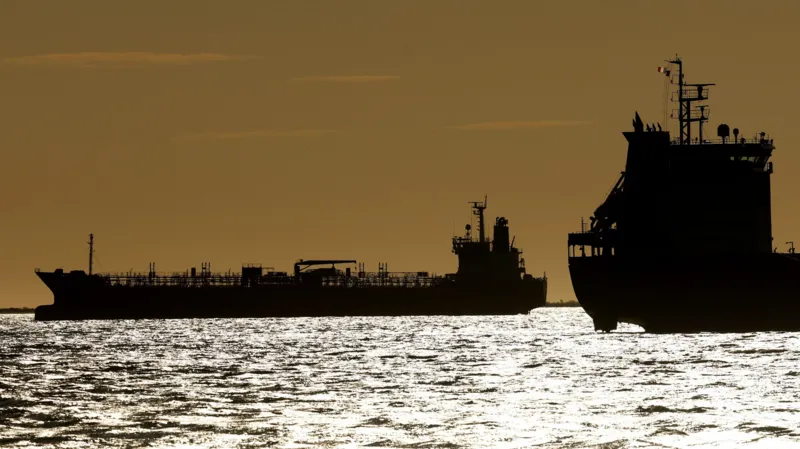
The United States is weighing whether to lift sanctions on Iranian oil — a move that would represent a dramatic reversal of longstanding American policy and one that has already drawn sharp criticism from experts who say it raises as many problems as it solves.
Treasury Secretary Scott Bessent floated the idea on Fox Business on Thursday, saying it could help push more oil onto global markets at a time when energy prices are climbing steeply in the wake of the Iran war. Specifically, he said the US was looking at waiving sales restrictions on Iranian oil already at sea — around 140 million barrels — and estimated the move would push down global prices for roughly 10 to 14 days.
The reaction from outside government was sceptical at best. David Tannenbaum of Blackstone Compliance Services, a maritime sanctions consultancy, was blunt about it. “To put it mildly, this is bananas,” he said. “Essentially we’re allowing Iran to sell oil, which could then be used to fund the war effort.” Rachel Ziemba of the Center for a New American Security was more measured but equally cautious, pointing out that because the supply in question is relatively small compared to overall global demand, the price impact would be limited. Much of the oil under discussion, she noted, was already finding its way to market despite the sanctions. “It could add a little bit,” she said, “but I don’t think it’s a game changer.”
Before the war, China was by far the biggest buyer of Iranian crude, purchasing around 4 million barrels a day at a steep discount because of existing sanctions. Bessent suggested that a waiver could redirect some of those barrels to other oil-hungry buyers like India, Japan and Malaysia, while forcing China to pay market price instead. But he offered no details on how the waiver would work in practice or how the US would prevent proceeds from flowing back to the Iranian government. The Treasury Department declined to elaborate.
Trump himself gave no clear answer when asked whether the idea would move forward, telling reporters only that “we will do whatever is necessary to keep the price” before cutting himself off.
The proposal sits uncomfortably alongside other developments this week. The House of Representatives just passed a bill aimed at tightening sanctions on Iran’s oil sector — the opposite direction entirely. And the administration’s earlier decision to suspend sanctions on Russian oil drew fierce pushback from European allies who warned it would bolster Putin and prolong the war in Ukraine. Whether lifting Iranian sanctions would spark similar controversy domestically remains to be seen.
The broader picture is grim. Around a fifth of global daily oil consumption — roughly 20 million of the 100 million barrels the world uses each day — traditionally passed through the Strait of Hormuz. Since the war began at the end of February, shipping through the strait has effectively stopped. Experts estimate the conflict has knocked about a tenth of global supply out of the market. The tit-for-tat strikes on the South Pars and Ras Laffan gas facilities this week have raised the prospect of supply constraints lasting years, even if the conflict ends soon.
“The US government is definitely in an every-barrel-counts situation,” Ziemba said. “They’re looking to find additional oil wherever they can.” That they are even considering lifting sanctions on the country they are actively at war with says everything about how serious the energy shock has become.

