

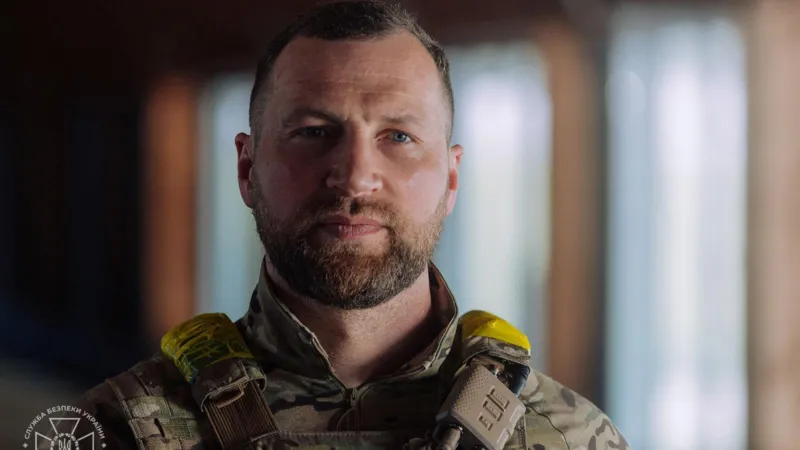
Ukrainian President Volodymyr Zelensky has replaced the head of the country’s powerful Security Service of Ukraine (SBU), appointing Major General Yevhenii Khmara as acting chief and removing long-time leader Vasyl Malyuk.
The SBU plays a key role in Ukraine’s internal security and counter-intelligence operations. Since Russia’s full-scale invasion in 2022, the agency has also been deeply involved in covert missions, including sabotage and targeted strikes inside Russian territory.
Malyuk, who led the SBU since 2022, became one of Ukraine’s most recognisable security figures. He was credited with overseeing major operations against Russia and leading internal purges of suspected Russian agents. Most notably, he coordinated the high-profile “Spider Web” operation last year, during which Ukrainian drones struck multiple Russian air bases. Khmara was also involved in planning that mission.
Malyuk’s dismissal sparked criticism across Ukraine, including from senior military figures, with reports suggesting he initially resisted stepping down. Despite his removal as SBU chief, Zelensky has asked Malyuk to continue leading special operations against Russian forces, calling him uniquely skilled in conducting “asymmetric” warfare.
Khmara’s appointment has eased some concerns about the future direction of the security service. Supporters point to his experience leading Alpha, one of the SBU’s elite units, and his direct combat experience in Donetsk and during the defence of the Kyiv region in 2022. However, critics argue his background may not fully prepare him for overseeing the entire agency.
Former SBU officer Ivan Stupak suggested the leadership change may be linked to Zelensky’s recent appointment of former intelligence chief Kyrylo Budanov as head of the presidential office, claiming tensions between Budanov and Malyuk influenced the decision. Other analysts dispute this, describing Khmara as a capable and respected choice.
Khmara’s role must still be confirmed by Ukraine’s parliament, which could reject the nomination. Alternative candidates remain under consideration.
The reshuffle comes as Ukraine faces ongoing battlefield challenges nearly four years into the war. While progress on the front lines has been difficult, Kyiv has achieved notable success through long-range strikes on Russian infrastructure, including oil facilities, weapons factories, and air bases.
Last week, Zelensky announced further changes to his leadership team, including nominating Mykhailo Fedorov as defence minister and appointing Oleh Ivashchenko as head of foreign intelligence.
Some commentators warn that frequent reshuffles during wartime risk destabilising leadership. As one former official put it, Zelensky is increasingly relying on a limited pool of trusted figures as the conflict continues.

