

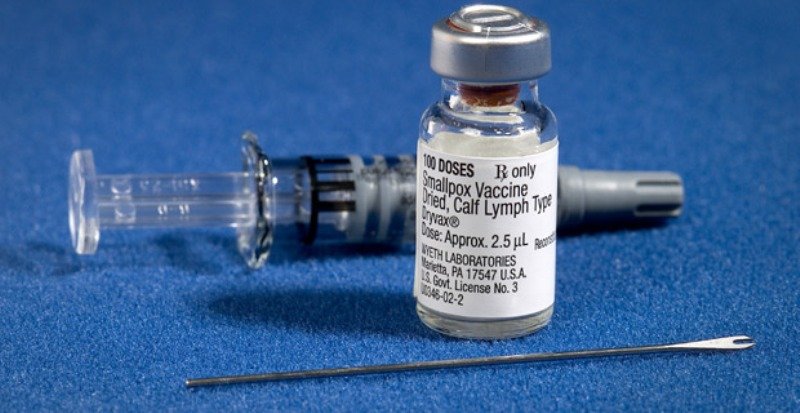
The smallpox virus is so infectious and deadly that it is considered a bioterrorism threat. Only two labs in the entire world are allowed to house the disease: one at the Centers for Disease Control’s headquarters in Atlanta, and the other at the VECTOR Institute in Russia. However, vials containing the potent virus were found in an unapproved and unequipped lab in Bethesda, Maryland.
According to the CDC, the virus was found in a cold room at a National Institutes of Health research building. They were found in a room that remained at a constant temperature of five degrees Celsius (41 degrees Fahrenheit), though it is unknown how long they were in there.
“At the end of the day, we don’t know why [the vials] showed up,” CDC spokesman Tom Skinner said, as reported by ABC News. He speculated that the vials could date back as far as 1950. Skinner continued by imploring that the vials posed no risk to the health of the public.
In all, six vials containing variola, the virus responsible for smallpox, as well as ten other vials that were not appropriately labeled were found to be present. They were apparently found laying on their sides, stuffed into a cardboard box packed with cotton balls and index cards that held them in place. The cold room had no additional security besides the security guards already present.
“It’s pretty hardy as viruses go, particularly in the freeze-dried state. That could certainly prolong viability,” said Dr. Steven Monroe, director of CDC’s division of pathogens and pathology. He explained that the CDC was notified on July 1 and that a three-man team was immediately sent to handle the virus’s removal. Variola DNA testing confirmed that the six labeled vials were indeed the variola virus. The remaining vials are still being tested to determine if any of their contents are infectious.
Smallpox had a 3,000-year-long history, killing about a third of those who became infected with the virus. In 1979, smallpox was declared to be globally eradicated, according to the World Health Organization. Since that time, all labs worldwide have either destroyed their stockpiles or sent them to one of the two approved labs. Earlier this year, the World Health Assembly voted to not destroy the remaining virus vials so that scientists can continue to study the disease.

