

The Trump administration’s push to expand oil and gas extraction across the US is set to bring drilling near cherished natural and cultural sites, raising alarm among conservationists and prompting questions from the UN’s heritage body.
Unesco said it has received information on the administration’s plan to scrap a drilling-free buffer zone around Chaco Culture National Historical Park in New Mexico, a world heritage site and one of the most important cultural areas in the US. A Unesco spokesperson said it has procedures regarding “potential threats” to a world heritage property and was awaiting a response from the federal government as to its impact.
“The world heritage committee has consistently considered extractive activities to be incompatible with world heritage status,” a UNESCO spokesperson said.
As well as warning about the consequences of drilling within the boundaries world heritage sites, the spokesperson said the committee has also “emphasized that projects proposed outside world heritage properties should not adversely affect their outstanding universal value – which are the features of the site that justify its inscription, and should be subject to appropriate impact assessments before decisions are taken”.
The US has 27 world heritage sites, places protected by international treaty for their cultural, historical or scientific significance, including parks such as Yellowstone and Yosemite and landmarks such as the Statue of Liberty.
Several of them, however, have nearby drilling or mining projects, with Trump’s “drill, baby, drill” approach leading to a sweeping opening up of the US’s forests, oceans and protected landscapes to the extraction of the fossil fuels that are dangerously overheating the planet.
“We will be a rich nation again and it is the liquid gold under our feet that will help us do it,” the president has said. “We have the largest amount of oil and gas of any country on earth – and we are going to use it.”
One US world heritage site, the Everglades, is listed as being “in danger” due to the impact of development and pollution. Others could join this imperiled list if nearby industrialization is deemed harmful. “Unesco follows developments that may have implications for world heritage properties and their outstanding universal value,” said the Unesco spokesperson, who added that nearby industrial projects should be “carefully assessed” before proceeding.
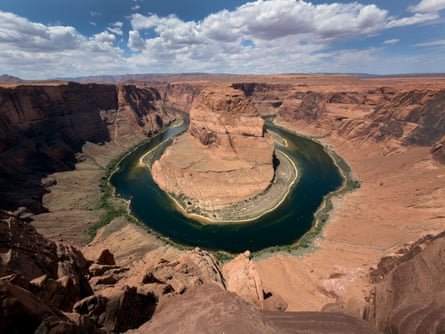
Some Republicans have lobbied the US president to remove a ban on uranium mining near the Grand Canyon, a world heritage site, while the administration has leased thousands of acres for oil and gas drilling near the fragile underground cave systems in another listed site, the Carlsbad Caverns national park in New Mexico.
It is at Chaco, however, where the threat of oil and gas drilling looms largest. The federal Bureau of Land Management (BLM) has proposed eradicating a 10-mile (16 km) buffer zone shielding the protected area from industrial activity, including fossil fuel drilling and uranium mining, a move that a broad coalition of opponents, including tribal leaders, archeologists and green groups, warn could cause major environmental harm to the area.
The plan to begin drilling into the 336,400-acre (136,136-hectare) zone next to Chaco attracted 100,000 mostly hostile submissions in an unusually short 14-day public comment period that closed in July.
Deb Haaland, the former interior secretary who oversaw the creation of the buffer zone in 2023, said its removal will cause “irreversible damage”. She added of Trump and Steve Pearce, director of the BLM: “Their attempt to profit off this sacred place shows a clear lack of consideration and disrespect for the lives that New Mexicans live.”
The 53-sq-mile (137-sq-km) historic park in north-western New Mexico contains a trove of key cultural sites, including the ruins of pueblos, settlements of the Indigenous Pueblo peoples. The site is also internationally recognised by astronomers as being a dark skies area, ideal for viewing the stars.
“This park offers an incredible transportive experience where you essentially go back in time 1,000 years to experience what the ancient Pueblo people saw,” said Maude Dinan, New Mexico program manager at the National Parks Conservation Association. “The buffer zone is incredibly important and removing it would completely change this experience.”
Allowing oil and gas development near Chaco would introduce a toxic haze of air pollution that would cut visitor numbers, opponents contend, as well as spoil views, risk water pollution from fracking activities, and result in bright lights and gas flaring that would ruin the pristine dark skies once treasured by the Pueblo people, who were keen astronomers, as well as today’s stargazers.
Daniel Tso, a community leader in the region’s Navajo community where he served as a Navajo Nation council delegate, said there are allotments of land outside the buffer zone where the oil and gas industry has shown “total disregard for the community and total disrespect for the landholders”. He fears the same situation closer to Chaco should the buffer zone be eradicated.
“I have allotments inside the buffer zone where the land is untouched, the aquifers are pristine,” he said. “If the oil and gas companies go in there the sacredness of that land is gone. Outside this zone, some of these oil and gas wells are within 100ft of Navajo people’s homes, causing tremendous health impacts.”
Dinan said she was pessimistic the outcry over the BLM’s plan will be heeded, pointing to recent administration decisions to shrink the protected areas of two prized national monuments in Utah and to ditch a rule that safeguarded swathes of untouched forests.
“It makes me wonder where the line in the sand is; it feels that no matter how valuable or sacred a place is the administration is willing to trade it all in,” she said.
“Almost all of the federal land around places like Chaco and Carlsbad is already leased for oil and gas drilling, so the idea there’s an urgent new demand for this is an illusion. There doesn’t seem like a good co-existence going on at the moment.”
The department of interior, which oversees the BLM, and the National Parks Service did not respond to a request for comment.

