

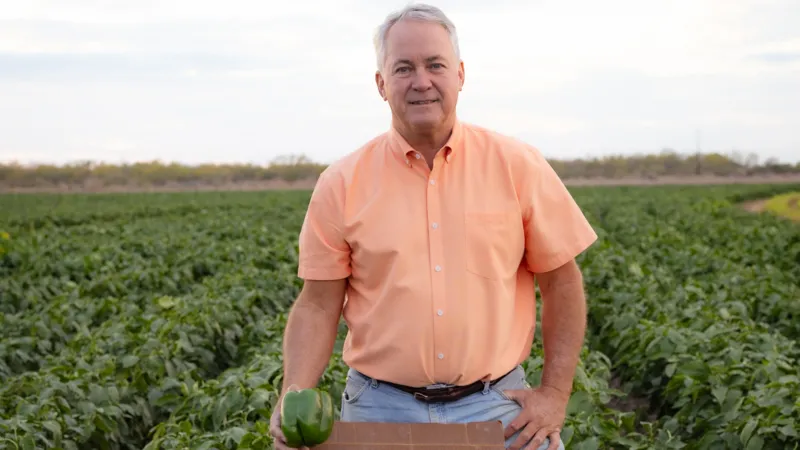
For Steve Cargil, farming has been a family tradition since 1953. The 67-year-old grew up on his family’s land near Uvalde, Texas, expecting that one of his three children would eventually take over the farm.
That plan began to look uncertain after a severe hailstorm in 2018 destroyed crops that Cargil and his son Ryan had spent months growing. Ryan told his father he was no longer sure he could continue farming when so much work could disappear overnight.
With none of his children planning to farm full time, Cargil began worrying about the future of the family’s land and his own retirement. A solution came unexpectedly through solar power.
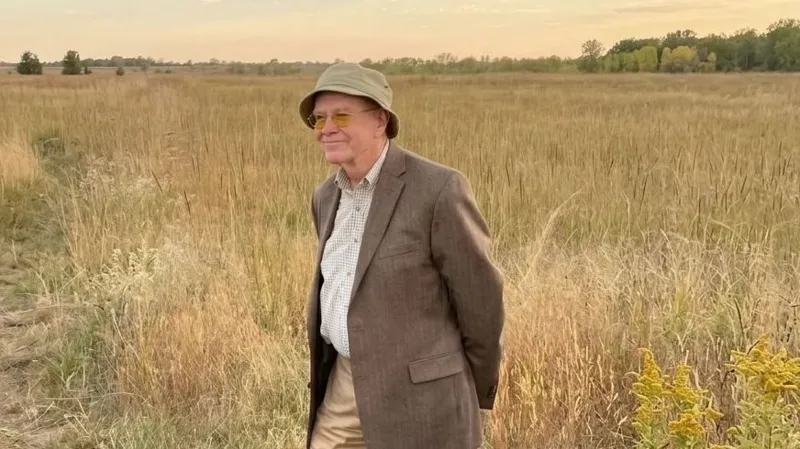
Cargil leased 600 acres of his property to OCI Energy for a large solar project. The agreement now brings in about $200,000 a year, helping him keep the remaining farm operating through drought and rising costs. It has also allowed him to concentrate his limited irrigation water on the land he continues to cultivate.
“I never in my wildest dreams did I think that a solar project would be on my farm,” Cargil says. He now considers the development a major benefit to his family.
Texas has become a major center of America’s solar expansion. The U.S. Energy Information Administration expects utility-scale solar generation in the state’s ERCOT grid to surpass coal generation for the first time on an annual basis in 2026, with solar projected to generate 78 billion kilowatt-hours compared with 60 billion from coal.
The growth is being driven partly by rising electricity demand and the relatively rapid development of new solar capacity. EIA data shows Texas accounted for about 40% of planned U.S. utility-scale solar additions for 2026, with developers also planning substantial battery-storage capacity in the state.
And in March of last year, more electricity was produced by solar in Texas than from coal for the first time, according to the US Energy Information Administration.

For farmers, the expansion can provide another source of long-term income. Solar leases commonly run for decades, allowing some landowners to strengthen farm finances, prepare for retirement or transfer assets to future generations.
But the growth has also created opposition in parts of rural Texas. Some landowners object to the clearing of trees, changes to the landscape, drainage concerns and the construction of large battery-storage facilities. In Franklin County, residents have organized against new solar projects, arguing that the environmental costs of clearing rural land can conflict with the environmental benefits claimed for renewable energy.
The debate reflects a broader question facing Texas as its electricity demand grows: how much land should be devoted to new energy infrastructure, and how should communities balance economic opportunities with concerns about the character and environmental impact of rural development?
For Cargil, however, the solar project has provided something he had begun to doubt was possible — a stronger financial foundation for his family farm. He says he now has more hope that the land could remain in the family for another generation.
“You’re better off being lucky than being smart,” Cargil says, recalling advice from his father. “And this was one of those cases where I was just lucky.”

