

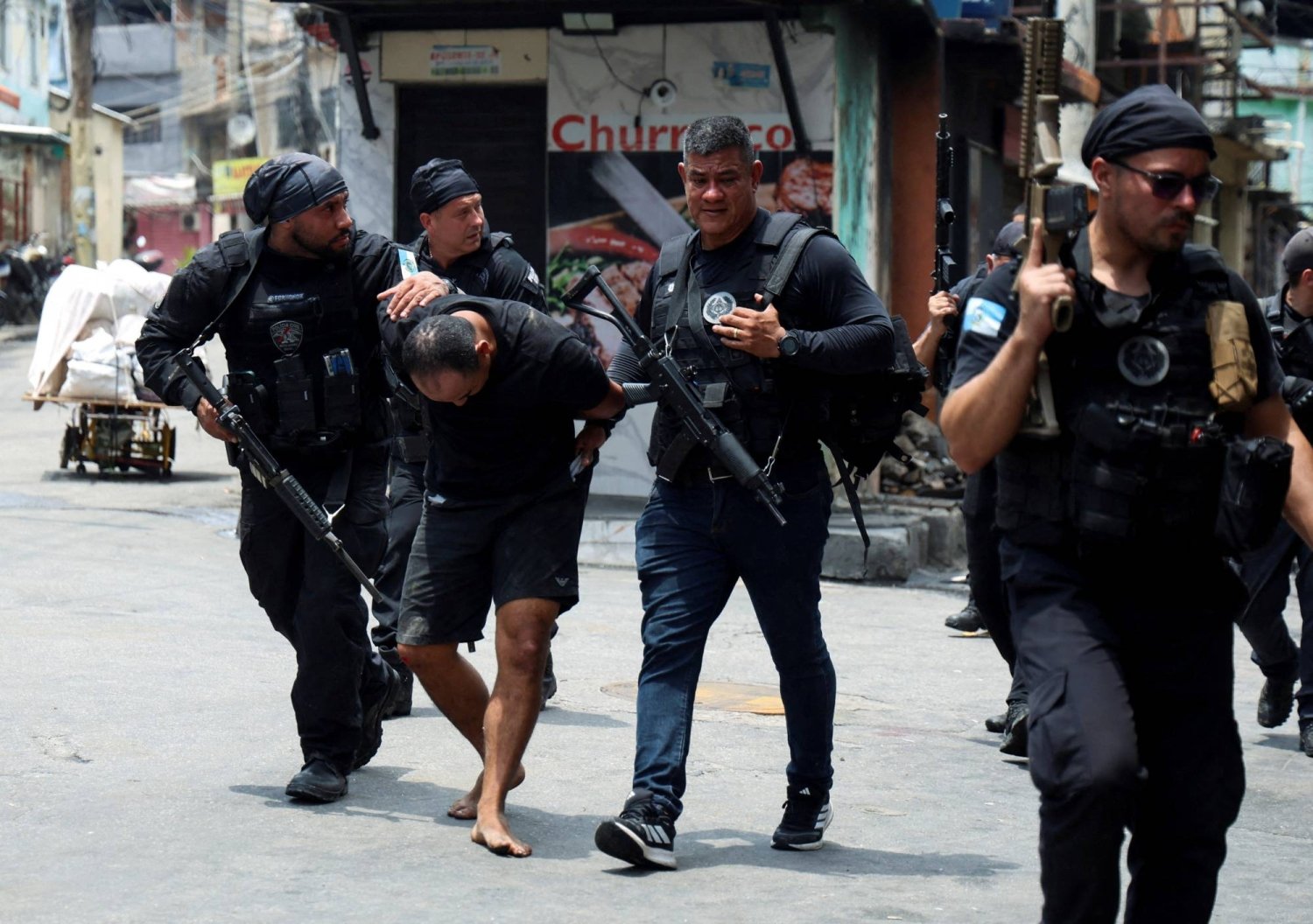
On October 28, just after midnight, police near Rio de Janeiro ran into about 20 armed guys on motorcycles leaving the Alemão favela. This area is a major base for Comando Vermelho, one of Brazil’s biggest crime groups.
Gunfire broke out. Two guys were shot and collapsed. As they were dying, they told the cops that word about the raid had gotten out and gang bosses were trying to get away, according to a report Reuters saw.
A few hours later, fireworks went off all over Alemão and nearby Penha, a signal that usually warned the favela the cops were coming. People scrambled for safety.
Your heart is racing, said Wazen Ferreira, a local journalist who took cover in a bar when he heard the explosions. Your mouth gets dry, and you just feel thirsty.
By 4 a.m., over a dozen armored trucks and police cars rolled into the favela, bringing hundreds of cops into the tight streets and dark alleys.
Gang members set fire to piles of tires and beat-up cars to block the roads, sending thick smoke into the air. Police drones flew overhead but struggled to keep track in the maze of alleys.
What happened next was a 17-hour fight that left at least 121 people dead, including four cops, with a fifth dying later from gunshot wounds. The raid, meant to take down Comando Vermelho leaders in Rio’s north, has become the deadliest police op in Brazil’s history.
The authorities called it a big win and said there would be more raids. But after looking at witness accounts, police reports, officer statements, and photos and videos, Reuters found a different story: the bad guys got away before the cops arrived, officers walked into traps, a rescue mission went haywire, and the gang leaders lived to fight another day.
People there said the raid didn’t do much to disrupt the criminals in charge. think this messed-up public safety plan works, said Albert Alves, who runs a community education program, pointing to bullet holes in a local ballet studio mirror. This has been going on forever and accomplishes nothing.
WALKING INTO A TRAP
When the cops moved into the Alemão–Penha area, top guys in Comando Vermelho, like their leader Edgar Alves de Andrade, known as Doca, might have already known they were coming. Bad weather delayed the raid several times, keeping the drones grounded and sparking online gossip, police director Andre Luiz de Souza Neves said. If they didn’t find proof that the plans had been leaked, but some admitted that moving so many troops might have tipped off the gang.
We didn’t have the element of surprise, said the civil police special unit’s boss, Fabricio Oliveira Pereira.
Even though the gang seemed ready, the police pushed toward Doca’s place, nicknamed Bear’s Den, where they thought he kept guns, drugs, and money records.
But before they got there, the cops got shot at from a spot on the hillside, according to reports. Within minutes, 45-year-old officer Bernardo Leal Annes Dias was shot in the leg, which had to be cut off later, and detective Marcus Vinicius Cardoso de Carvalho, 51, was killed by a bullet to the chest. The police quickly realized they were doomed.
AMBUSHED FROM ABOVE
While the civil police searched the ground, BOPE, the special military police unit stationed on hills overlooking the favela, gave backup. Mercy Ridge, the rough area between Penha and Alemão, had good spots for officers to watch for gang members moving between the communities.
Soon after sunrise, BOPE forces took their spots on the ridge. But when they heard about the casualties around 10 a.m., many left their posts to start what commander Marcelo Corbage called a rescue mission.He said that BOPE was the only unit with paramedics. Police figured about 500 armed gang members were in Penha, with hundreds more in Alemão. Public safety secretary Victor dos Santos said they planned to send in 2,500 officers – a five-to-one advantage – because they believed the gang members would surrender.
But prosecutors were told that only 1,100 officers actually entered Penha, far fewer than expected.
Drone footage showed many suspected gang members in camouflage carrying rifles through the woods as BOPE arrived and came under fire. Officers dragged bodies back through the forest.
By early afternoon, the rescue teams had taken many hits. One officer was shot in the head and died. Another died in the hospital after they tried to save him for 40 minutes. Seven more got hurt.
During the chaos, 20-year-old Wellington Brito, whose family said he had started hanging out with gang members recently, texted his mom while he was running.
I told you to stay home, she texted at 7:12 a.m.
I just want this to be over, he replied.
FEAR, FAILURE, AND A MOUNTING DEATH TOLL
Police reports said the op was supposed to be done by noon. The military police told prosecutors they thought it would wrap up by 5 p.m. Officers didn’t bring enough extra batteries for their body cameras, which they had to use since a 2022 court ruling, because they never thought it would turn into a 17-hour shootout, Corbage said.
As time went on, the officers got scared.“We won’t make it out of here alive,” one cop told Neves.
Past raids in Rio have seen death numbers jump after police officers get hurt. But Public Safety Secretary Santos said they did nothing wrong. There was no massacre, he said. People died because they fought the police.
BODIES PILED IN THE STREET
Schools closed, buses stopped running, and criminals set fire to vehicles all over Rio. Bodies, most already dead, started showing up at a nearby hospital.
By evening, officials said 64 people had died – the most in Rio’s history. But many families couldn’t find their people.
Community leader Erivelton Vidal said groups climbed Mercy Ridge that night and found bodies all over the woods. Witnesses said they saw an armored police truck nearby.
Officer statements confirmed that special police units collected bodies under orders from a senior forensics officer, something experts say makes it harder to look into the use of force.
Videos later showed five vans full of bodies arriving at the city morgue.
Forensic expert Cassio Thyone said taking bodies away before they’re examined goes against the rules.
People kept searching late into the night. One group found a head in tree branches, which family members and a government report later said was from a victim.
Among the searchers was Brito’s mother, Taua. She couldn’t find him on the hill, so she kept going downhill, where people were moving bodies to Penha’s main square to ID them.
Local families stripped clothing from the bodies, checked for tattoos and scars, and lined them up on the pavement under streetlights. Kids and parents watched as the dead, many of them missing limbs or badly injured, were laid out side by side. Rito’s mother finally found her son. She knelt next to him, lifted the sheet from his face, rubbed his cheek, and cried.
The police op, which authorities called a success, has left the community scarred, families grieving, and investigators dealing with one of the toughest inquiries in Brazil’s history. Vermelho’s leaders are still in charge. The favelas are still run by gangs. And there are still questions about bad planning, use of force, how the bodies were handled, and the deadly response.
What started as a mission to take down criminal leaders turned into a bloodbath in the streets of Penha, a moment that shows Brazil’s struggle with public safety and the lives caught in the middle.
As officials promise even more raids, many people are scared they’ll just see more heavy firepower, more dead, and no real change, a never-ending cycle.

