

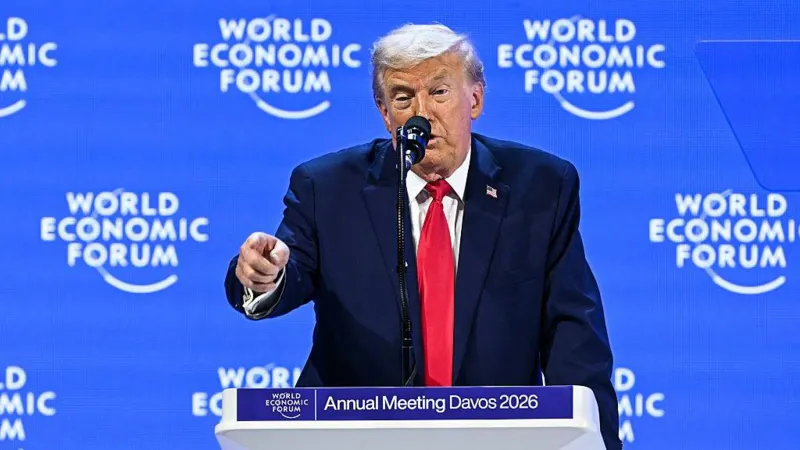
I was in the room when President Donald Trump entered, and it was clear he received a strong welcome at the beginning, including a standing ovation. There was an extraordinary rush to get inside, with many people turned away, including heads of state. Security was intense, preventing even some of the most well-known attendees from moving freely in or out of the hall.
Minutes into the speech, Trump appeared calm and measured, even dropping friendly remarks about wanting the UK “to do great.” What some expected to be a defining moment in which the US president would lay down the rules of a new global economic order instead felt more like a session of grandfatherly advice. The tone was noticeably different from the confrontational language often seen in his social media posts, including previous claims that Greenland would become part of America.
This raised the question of which version of Donald Trump the world was seeing. Had he taken on board how negatively some of his rhetoric had been received? The night before, Trump’s Commerce Secretary, Howard Lutnick, had told an audience that Europe’s economy was effectively “dead,” prompting a walkout. There was speculation over whether something similar might happen again, but Trump appeared keen to avoid that outcome.
At first, the president seemed to strike a diplomatic note, speaking warmly about western allies who had been unsettled by his recent statements. He even acknowledged that he perhaps should not speak further about Greenland, an issue that has repeatedly caused controversy. However, as the speech progressed, the tone shifted.
Trump began by outlining America’s historical role in supporting Greenland and maintaining friendly ties with Denmark. He then made a provocative remark, telling the audience that without the United States, everyone in the room would be speaking German. Shortly after, he announced that the US was seeking immediate negotiations to acquire Greenland. He stressed that this would be a negotiated settlement rather than a military action, but said the US needed full ownership of the territory.
He stated openly that America wanted the land to build what he described as the “greatest Golden Dome ever built.” He also issued a warning to Canadian Prime Minister Mark Carney over comments made the previous day, while insisting Greenland would also be used to help defend Canada. Referring to the proposal dismissively, he said he was asking for “a piece of ice” and called it “a very small ask.” Hearing this stated so plainly left many in the room stunned.
The reaction among attendees was mixed. Trump’s attempts at charm earned polite applause, but as he shifted from discussing disputed elections to criticising other leaders’ Davos speeches, some listened in visible disbelief. Despite his assurance that he would not invade Greenland, many were alarmed by his effort to persuade Europe to hand over the territory.
California Governor Gavin Newsom described the speech as “TACO Tuesday,” referencing the phrase “Trump always chickens out,” and argued that the president had already softened his position after strong pushback from French President Emmanuel Macron and Mark Carney. Republican Senator Thom Tillis said that even a negotiated annexation of Greenland would not have the support of Congress.
Although Trump appeared to be trying to reduce tensions, he continued to criticise allies and make personal attacks on foreign leaders. While he promised not to use force, he also insisted that Greenland would become part of a new America and suggested the world should be grateful for it.
The speech eventually ended, but its impact is likely to be discussed for a long time to come.

