

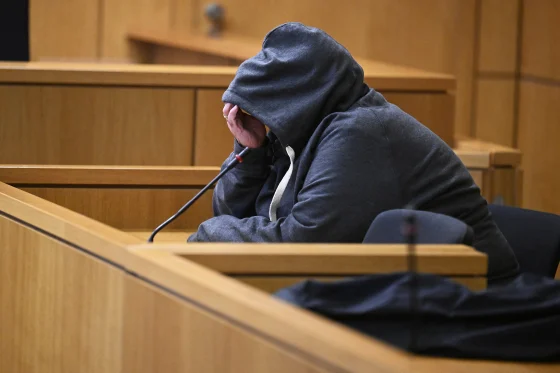
A German school janitor has been found guilty after drugging, raping, and secretly filming his wife for years. He even shared the abuse online. This case has gotten international attention and is drawing comparisons to a big sexual violence trial in France.
The guy, named in court as 61-year-old Fernando P., was convicted on Friday. He repeatedly sedated his wife, sexually assaulted her while she was out of it, and spread videos of the abuse online without her knowing.
He got eight and a half years in prison after the trial in Aachen, western Germany. Judges said he has a week to appeal. Court officials said Fernando P. messed with the most private parts of someone’s life by filming 34 different times, including four times when he committed rape and caused dangerous harm. He was also found guilty of sexual coercion and assault.
The court heard that he repeatedly gave his wife sedatives at home before assaulting her and filming it. Then, he shared the recordings with people on online forums and group chats.
These offenses went on from 2018 to 2024, but the abuse might have been happening for almost 15 years. He was cleared of some other charges, but those details weren’t shared.
This verdict is one year after Dominique Pelicot in France was found guilty of aggravated rape. He got people from online chatrooms to attack his then-wife, Gisèle, for nearly a decade. Forty-nine men were also convicted in that case, causing a lot of anger and a big discussion in France about sexism and violence against women.
Now, the Aachen verdict is getting attention in Germany, where people say it shows big problems in the country’s sexual violence laws.
A group called Nur Ja Heisst Ja (Only Yes Means Yes) says this is likely the first case of its kind in a German court. They’ve been saying for a while that German law doesn’t protect victims who are drugged or can’t fight back during an assault. Activist Jill S. told CNN before the decision that the trial shows some worrying holes in the legal system. It’s a real case because it shows where our laws aren’t good enough, she said. (She asked to keep her full name private to avoid online harassment.)
German law says that ‘no’ means ‘no’. Campaigners say this puts too much pressure on victims to say no, even if they’re unconscious. Nur Ja Heisst Ja wants to be a yes-means-yes rule, where someone has to actively agree. Spain and Sweden already do this.
The group also says Germany needs to update its laws around digital sexual abuse. Right now, having rape content isn’t illegal, which means victims are at risk of their private material being shared.
The Aachen case has brought back talk about a case in Hamburg. Journalists found that a man had been sharing videos online that seemed to show him drugging and raping his wife for over ten years. He died in 2024 before he could be charged.
Campaigners are now hoping this ruling will pressure lawmakers to pass the laws. Politicians like Kathrin Wahlmann, a justice minister, are trying to make it illegal to have rape videos.
The case has also caused discussion in other countries. French lawmaker Sandrine Josso says she was drugged by a French senator in 2023. She believes that current laws don’t deal with how many sexual crimes happen online. She says online platforms make it easier to share rape content and ways to commit sexual abuse.
Social media has made it easier because people form groups and share tips, helping them get better at it. That’s what’s so worrying, she told CNN.
Josso says online spaces with sexual assault material are like an online space of violence where people learn and celebrate attacks.
In both the French and German cases, abuse videos were shared online. This raises concerns that digital networks are creating new places for violence against women, where people can operate anonymously and get away with what they do.
Campaigners in Germany say holding people accountable is too rare. Jill S. says the Aachen case shows perpetrators felt safe. The sad thing is that all these men felt really safe sharing this content, putting it online, and leaving thousands of videos on their laptops.
She thinks the verdict will make them feel less safe and lead to more convictions.
Right now, Fernando P. is in jail, waiting to see if he’ll appeal. Meanwhile, activists and lawmakers are pushing for laws they say are important to protect victims, punish perpetrators, and deal with the growing problem of sexual violence online.

