

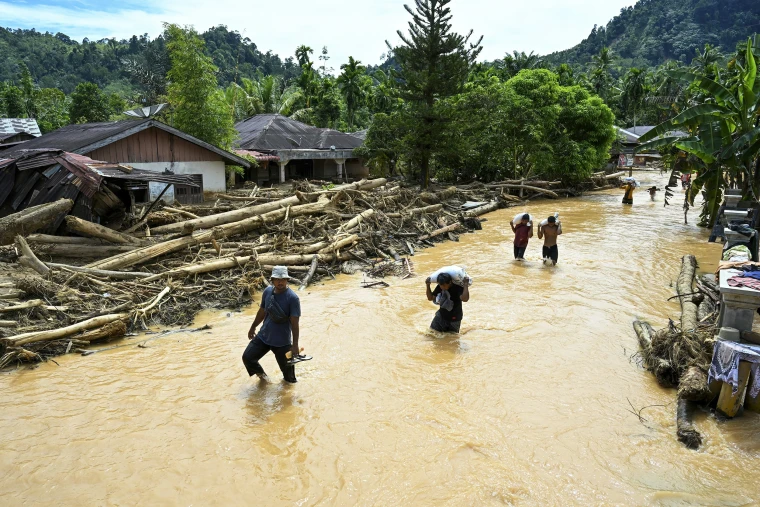
Indonesia is facing a difficult situation after a week of extremely heavy rains led to severe flooding and mudslides. So far, 961 people have died, 234 are still missing, and more than 5,000 have been injured, mostly in Aceh, North Sumatra, and West Sumatra.
The National Disaster Management Agency (BNPB) reports that nearly 1 million people have had to leave their homes. Around 975,075 people are staying in temporary shelters, and more than 156,000 homes have been damaged. While water levels are receding in coastal areas, the central highlands remain isolated, and more rain is expected soon.
Experts explain that November to April is usually a chaotic period due to the rainy season. However, the situation is now worse because of deforestation, uncontrolled construction, and damaged river areas. Other countries in Southeast Asia are facing similar challenges. Sri Lanka and Thailand have also experienced severe storms recently, bringing the total number of deaths in the region to over 1,750.
The Asian Development Bank recently issued a strong warning in its Asian Water Development Outlook 2025 report. The report states that climate change and the loss of natural habitats could leave billions of people across Asia without enough water.
The report highlights two trends happening at the same time. Since 2013, conditions have improved for 2.7 billion people, over 60% of the Asia-Pacific population, who once lived in extreme water poverty. However, extreme weather events such as floods, droughts, and storms now threaten these gains. From 2013 to 2023, the region experienced 244 major floods, 104 droughts, and 101 severe storms, which have reversed much of the progress.
Ecosystems are deteriorating in 30 out of 50 Asian countries due to pollution, land conversion, and rapid expansion. Rising sea levels, saltwater intrusion into freshwater sources, and frequent disasters—Asia experiences 40% of the world’s floods—are making the situation even more severe. There’s also a big gap between the amount of money needed and the amount available. They need $4 trillion for water and sanitation by 2040 (that’s $250 billion each year), but governments are only paying for about 40% of that. That leaves a $150 billion annual shortfall.
According to Norio Saito of the ADB, “Asia is facing two water realities.” He also said, “Without water security, there is no way to move forward.” He emphasized the need to restore ecosystems, build resilience, improve management, and develop new funding solutions to protect the future.

