

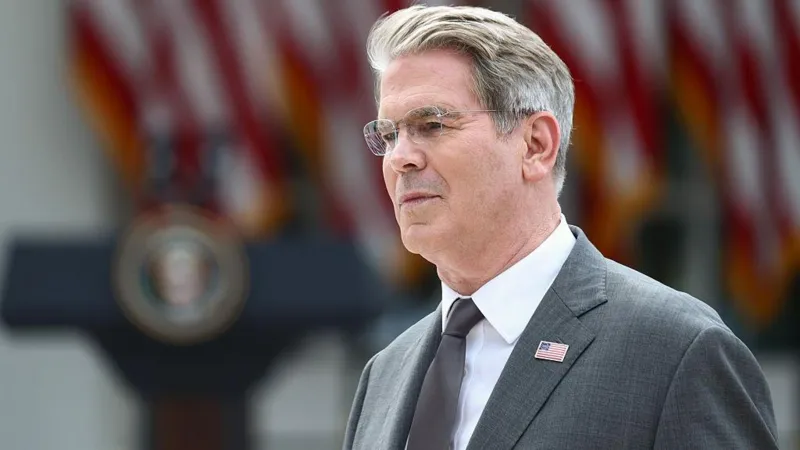
The US treasury secretary has threated Iran with “the single greatest financial offensive ever”, claiming the US-Israel war with Iran was “entering its endgame.”
Scott Bessent said the US would sever all economic ties with the country in “an economic D-Day” and that any nation partnering with Iran financially would also be isolated.
Bessent’s threat to the Iranian regime follows several U-turns and extended deadlines from US President Donald Trump’s administration on previous threats.
Iran dismissed Bessent’s comments and said it would shut down all oil exports from the region “if the war continues”, according to news agency Reuters.
The Iranian regime has also issued a new warning to shipping not to pass through the Strait of Hormuz without its permission, the agency reported.
One fifth of the world’s oil and gas usually passes through strait, a waterway south of Iran, but the flow has been effectively blocked by the country since the conflict began at the end of February.
Bessent made the comments in an opinion piece for the Financial Times. He did not detail what the economic pressure on Iran would involve, but he is expected to do so in a press conference in the US at 13:00 local time (18:00 BST) on Monday.
“The world should understand that our objective is to sever every economic lifeline that sustains the tyrannical regime until Tehran stands alone,” he wrote in the piece.
The US has made several threats to Iran over the course of its war with the country, including Trump saying in April that “a whole civilisation will die tonight” unless Iran agreed a deal to end the war and unblock the Strait of Hormuz.
The US eventually climbed down from that position after mediator Pakistan intervened and called for more diplomacy.
The economic impact of the Iran war is being felt in the US and across the world. Higher oil prices have fuelled concerns over the cost of living, with petrol and diesel prices much higher than they were a year ago.
In the US, gasoline prices have surpassed $4 a gallon and affordability is among the top concerns of American voters ahead of the mid-term elections in November.
On Monday, a barrel of Brent crude, the global benchmark for oil prices, was $93.
Last week, Bessent announced the US government would intervene in the bond markets and buy back more government debt in a bid to boost demand for bonds and lower borrowing rates.

