

Nvidia has announced a new artificial intelligence platform designed for autonomous vehicles, as the chip giant looks to expand AI beyond software and into physical products such as cars and robots.
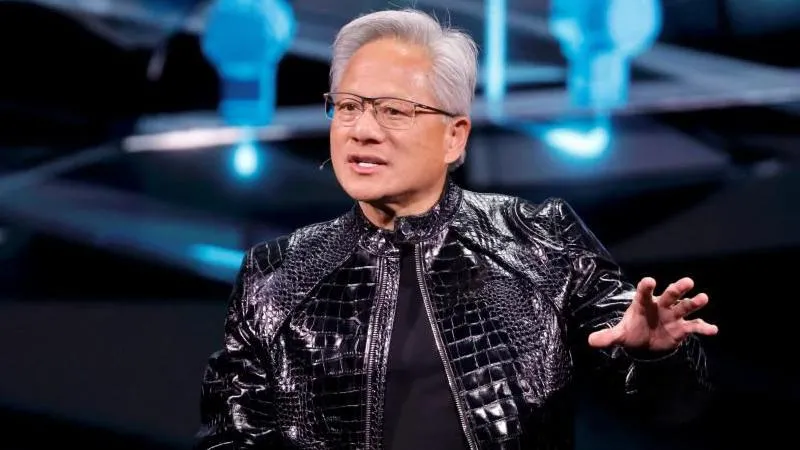
Unveiled at the Consumer Electronics Show (CES) in Las Vegas, the system—named Alpamayo—was introduced by Nvidia chief executive Jensen Huang, who said it would enable self-driving vehicles to reason through complex situations, handle rare driving scenarios, and clearly explain their decisions.
According to Huang, Nvidia is working with Mercedes-Benz to develop a driverless vehicle powered by the technology. The car is expected to launch in the United States within months, with plans to expand to Europe and Asia afterward.
Nvidia’s chips have been central to the rapid growth of artificial intelligence, largely powering software tools such as ChatGPT. However, major technology companies are now increasingly focused on bringing AI into real-world hardware, including vehicles, robots and industrial machines.
Speaking to a packed audience, Huang said the project marks a turning point for what he described as “physical AI”—systems that interact directly with the real world.
“The ChatGPT moment for physical AI is almost here,” he said, adding that Nvidia has learned extensively from helping partners build robotic and autonomous systems.
Industry analysts see the move as a strategic shift. Paolo Pescatore of PP Foresight said Alpamayo represents Nvidia’s transition from a chip supplier to a full platform provider for physical AI ecosystems, helping the company maintain its lead over competitors.
Nvidia’s shares rose slightly in after-hours trading following the announcement.
During his presentation, Huang showed a video of a Mercedes-Benz vehicle driving autonomously through San Francisco while a passenger sat behind the wheel with their hands off the controls. He said the system drives naturally because it was trained on human driving behaviour, while continuously explaining and reasoning through its actions.
Alpamayo is being released as an open-source AI model, with its core code available on the Hugging Face platform. Researchers and developers will be able to access and retrain the model freely, according to Nvidia.
Huang said Nvidia’s long-term goal is full autonomy across transportation, stating that one day “every single car and every single truck” could be self-driving.
The announcement puts Nvidia in closer competition with companies such as Tesla, which offers driver-assistance software through its Autopilot system. Tesla chief executive Elon Musk responded on social media, noting that achieving near-perfect autonomous driving is relatively easy compared to solving rare and unpredictable edge cases.
Like Tesla, Nvidia is also planning to launch a robotaxi service as early as next year, though it has not disclosed details about its partner or launch location.
Nvidia remains the world’s most valuable publicly traded company, with a market valuation exceeding $4.5 trillion. Although it briefly became the first firm to reach a $5 trillion valuation last year, investor concerns about an AI demand slowdown have since weighed on its stock.
The company also announced that its next-generation Rubin AI chips are already in production and expected to be released later this year. Nvidia says the new chips will deliver improved performance while consuming less energy, potentially reducing the cost of developing AI systems.

