

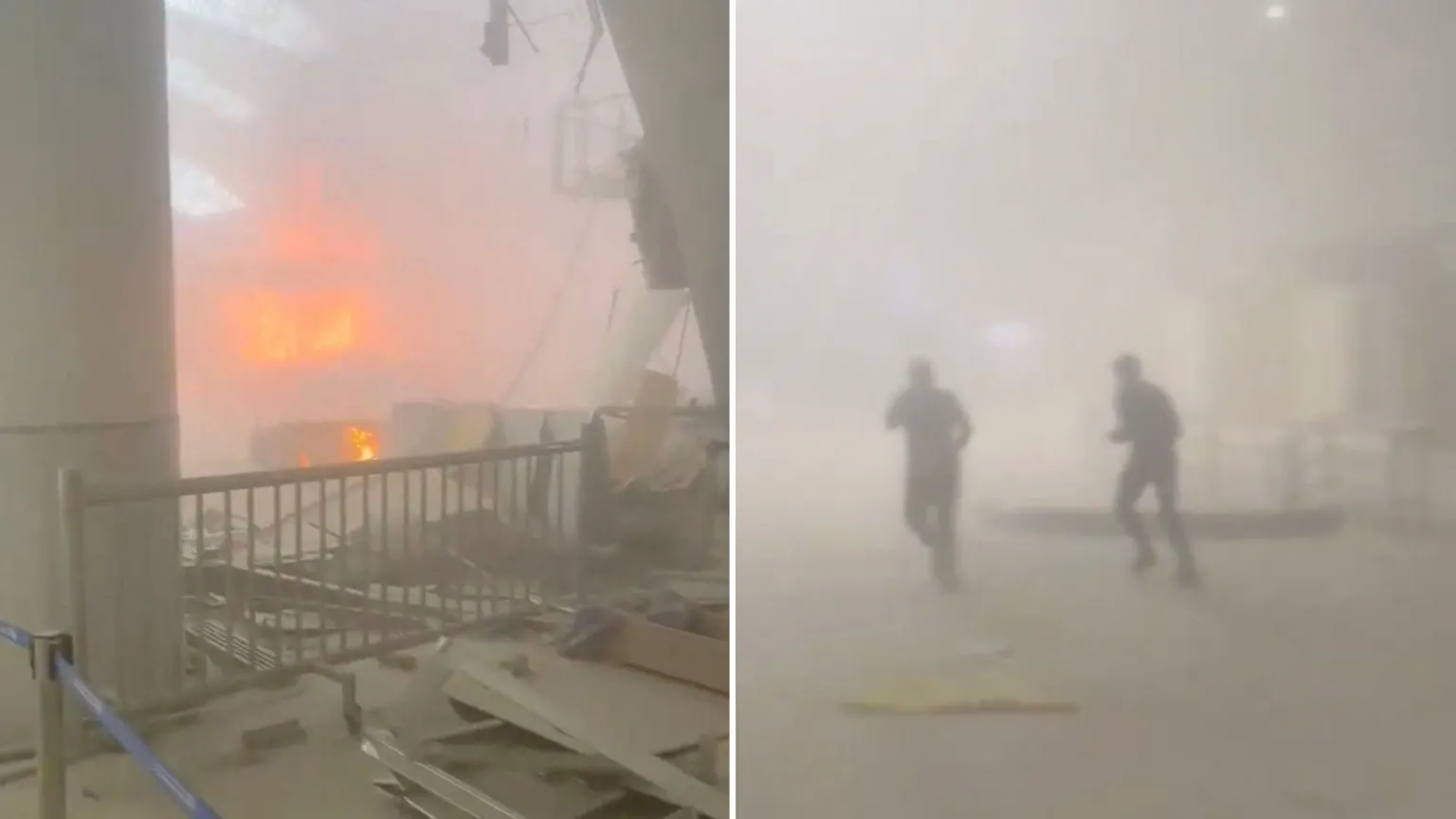
Kuwait’s defence ministry spokesman called Wednesday’s attack “criminal Iranian aggression”, while the foreign ministry said diplomatic missions had been damaged.
Iran’s Islamic Revolution Guard Corps (IRGC) claimed the attack, saying it was in retaliation for US strikes on an Iranian oil tanker and Qeshm Island. Iran also said it targeted US bases in the Gulf.
The US earlier said it had launched “self-defence” strikes on Iran, and shot down or intercepted Iranian missiles fired at Kuwait and Bahrain.
The latest escalation threatens a shaky US-Iran ceasefire.
The person who was killed in the Iranian attack on Kuwait’s airport was later identified as an Indian citizen.
In a statement, the Indian foreign ministry condemned the attack, saying that several other Indian nationals were injured.
“We again call upon parties to cease such attacks,” the statement added.
Following the strikes, Kuwait’s foreign ministry ordered two Iranian diplomats to leave the country within 24 hours, and summoned Iran’s charge d’affaires.
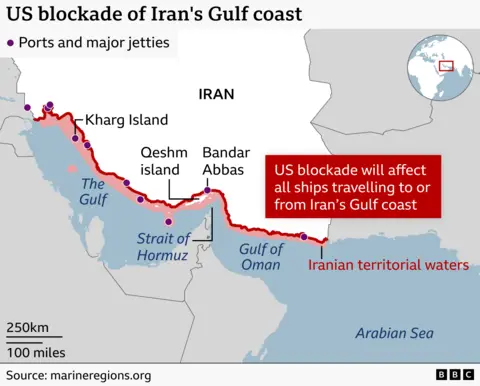
Earlier, US Central Command (Centcom) said that its overnight strikes on Qeshm Island, in the Strait of Hormuz, were “in response to attempted attacks by Iran across the Middle East” and targeted an Iranian military ground control station.
It also said that the US shot down three attack drones that had been launched by Iran toward “civilian mariners that were rightfully transiting regional waters”.
Centcom added that Iran had fired two missiles at Kuwait and three at Bahrain, all of which broke apart or were intercepted.
Iran said it had attacked US bases and helicopters in a “regional country” using missiles and drones in retaliation.
Centcom earlier said it had struck and “disabled” an unladen oil tanker that was sailing towards Iran, as part of the US naval blockade on the Strait of Hormuz, which began on 13 April.
A US aircraft fired a Hellfire missile into the engine room of the Botswana-flagged M/T vessel, after its crew “ignored repeated warnings”, it said.
The IRGC immediately vowed retaliation, saying that “disrupting the security of the Strait of Hormuz will carry a heavy price for the aggressive US military”.
In Tehran, the foreign ministry said in a statement that the leaders of Kuwait and Bahrain had “direct and unmistakable responsibility” for “last night’s acts of aggression”, according to AFP news agency.
Iran has repeatedly attacked targets in Bahrain and Kuwait, where US military bases are located.
The attacks happened as ceasefire negotiations between the US and Iran stalled, with a deal to end the war failing to advance over the weekend.
US President Donald Trump this week told his critics to “sit back and relax”, saying that Iran “really wants to make a deal, and it will be a good one for the USA”.
US media earlier reported that Trump had requested edits to the terms of a potential peace deal, after meeting with senior aides to discuss extending the framework of a ceasefire.
The changes related to the Strait of Hormuz and the removal of highly enriched uranium from Iran, the BBC’s US news partner CBS News reported – as well as a framework to reopen negotiations on Iran’s nuclear programme.
On Monday, Iran’s foreign ministry spokesman Esmail Baghaei denied this had been on the table, adding that Washington was “constantly changing its views and putting forward new or contradictory demands”.
In an interview aired on Wednesday, Trump said Iran had “already agreed” to not have a nuclear weapon.
Trump said Iran’s supreme leader, Ayatollah Mojtaba Khamenei, was “involved” in the talks.
“We seem to be getting along quite well,” Trump told the Pod Force One podcast.
Asked if he would like to meet him, he said: “I’d like to meet him. We probably will meet at some point, depending on how it all works out.”
US Secretary of State Marco Rubio told Congress on Tuesday that negotiators had not offered Iran sanctions relief in exchange for reopening the strait.
ADVERTISEMENT
“Right now, everything that’s been discussed with them is that … any sanctions relief is condition-based, which means it has to be in return for the reason why those sanctions were put in place in the first place, which is their nuclear programme,” he said.
“The war is over,” he said in another tense exchange with a senator, as lawmakers on the committee questioned the US strategy for ending the conflict.

