

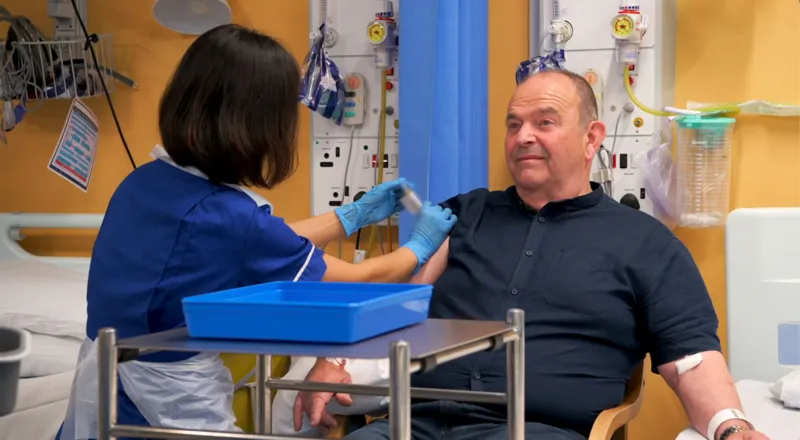
A personalised cancer vaccine, administered alongside an established immunotherapy drug, has reduced the risk of melanoma returning or patients dying by 42% in a major clinical trial, raising hopes for a new era of precision cancer treatment.
The study involved more than 1,100 patients with melanoma, an aggressive form of skin cancer. Researchers found that the combination of the experimental vaccine and Keytruda, an existing immunotherapy treatment, also reduced the risk of the cancer spreading by 38% over two years compared with Keytruda alone.
Drugmakers MSD, known as Merck in the United States, and Moderna are developing the treatment. Both companies say the same personalised vaccine approach is being investigated against other cancers, including kidney, bladder and lung tumours.
Although independent cancer specialists have described the findings as impressive, they caution that longer-term research is needed to determine whether the treatment significantly improves overall survival.
How the Personalised Vaccine Works
The experimental vaccine, called Intismeran, uses messenger RNA (mRNA) technology, similar to that used in some Covid-19 vaccines.
Unlike conventional vaccines, it is designed specifically for each patient. Scientists analyse information from an individual’s tumour to create a vaccine intended to train the immune system to recognise cancer cells and attack them if they return.
The treatment is aimed at patients whose tumours have already been surgically removed but who remain at risk of the cancer recurring.
In the trial, 1,137 adults received Keytruda, which helps the immune system identify and fight cancer cells. Approximately two-thirds also received the personalised vaccine, while the remaining participants received a placebo alongside their immunotherapy.
After two years, patients who received the vaccine combination were significantly less likely to experience a recurrence or see their melanoma spread than those treated with immunotherapy alone.
Professor Pippa Corrie, a consultant medical oncologist who helped oversee part of the study at Addenbrooke’s Hospital in Cambridge, described personalisation as an exciting development in cancer treatment.
She said the trial represented an important first demonstration of the technology’s potential, while highlighting the need to establish its practical benefits.
Patient Remains Cancer-Free Three Years Later
One participant, 75-year-old Tony Chapman from Corby in England’s East Midlands, joined the trial after his melanoma returned.
Chapman was initially diagnosed in 2019 and had a tumour removed from his chest. A lump subsequently appeared under his arm, and doctors told him the cancer had returned, requiring another operation.
He volunteered for the clinical trial, viewing it as an opportunity to contribute to scientific progress while potentially benefiting from a new treatment.
Like the other participants, Chapman does not know whether he received the experimental vaccine or a placebo alongside Keytruda.
Three years later, he remains cancer-free and undergoes medical checks every six months.
His experience illustrates the hopes surrounding personalised cancer treatments, although his individual outcome cannot establish whether the vaccine was responsible for his continued recovery.
Pharmaceutical Companies Prepare for Regulatory Review
The findings have attracted considerable attention from investors, with shares in MSD’s parent company and Moderna rising after earlier indications of the vaccine’s effectiveness.
However, both companies saw their shares come under pressure on Thursday after financial analysts suggested the latest results were less impressive than those reported in an earlier, smaller trial.
The companies said they were engaging with regulatory authorities, raising the possibility of seeking approval as soon as next year.
Any widespread use through the UK’s National Health Service would also depend on cost. Each patient requires genetic analysis of their tumour and the manufacture of a vaccine tailored to their individual cancer, potentially making the treatment expensive and complex to deliver.
Experts Urge Caution Despite Promising Results
Professor Alan Melcher of the Institute of Cancer Research in London, who was not involved in the study, described the findings as very impressive.
He said the results were an important proof of principle for personalised cancer vaccines, but warned against drawing conclusions beyond the available evidence.
Researchers cannot assume that a treatment showing promise against melanoma will work equally well against every other type of cancer. Longer follow-up will also be necessary to establish whether the approach improves overall survival.
The trial will continue, allowing researchers to monitor participants over time and assess whether the cancer returns and whether the treatment ultimately helps patients live longer.
The complete findings are due to be presented at the European Society for Medical Oncology cancer conference in Madrid. At the time of the report, they had not yet been published in a peer-reviewed medical journal, where independent specialists could scrutinise the results in detail.
A Potential New Direction in Cancer Treatment
The study offers encouraging evidence that personalised vaccines could become an important addition to cancer care, particularly for patients at risk of recurrence after surgery.
By using information from an individual’s tumour to direct the immune system, the approach seeks to make treatment more targeted than therapies designed to work broadly across patient populations.
However, important questions remain about long-term survival benefits, treatment costs and whether similar results can be achieved against other cancers.
For now, the findings represent a significant milestone in personalised medicine, rather than definitive proof that the vaccine will prevent cancer from returning in most patients. Further research and regulatory assessment will determine whether the promising results can translate into routine clinical care.

