

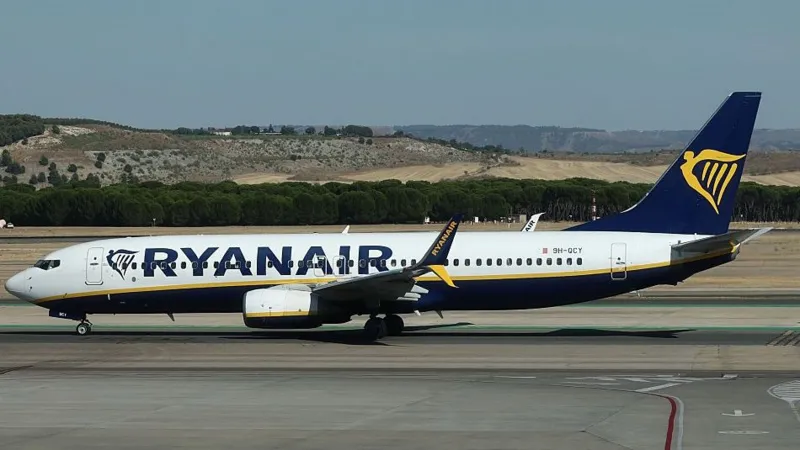
The budget airline warns that ticket prices could climb by double digits next summer as the US-Israel war with Iran drives up aviation fuel costs and increases pressure on the industry.
Ryanair is considering a temporary freeze on staff wages and plans to increase ticket prices as rising fuel costs put additional pressure on its finances.
The airline warned that fares across Europe would be “materially higher” next summer, with its chief executive, Michael O’Leary, predicting double-digit increases in 2027.
The company expects fuel prices to remain elevated well into 2027 unless the conflict involving the US, Israel and Iran reaches a swift resolution.
Ryanair estimates that the increase in fuel costs could add approximately €2bn (£1.6bn) to its short-term fuel bill. O’Leary said higher ticket prices would be necessary to help offset the additional expense, although he acknowledged that fare increases alone might not cover the full amount.
The airline is therefore examining other ways to control spending, including a possible wage freeze and slower recruitment.
Double-digit fare increases expected
O’Leary reiterated his earlier prediction that Ryanair would need to raise fares by around 20% to compensate for higher aviation fuel costs.
However, he admitted that achieving an increase of that size was uncertain.
“I’m not sure we’ll get to 20%,” he said, adding that the airline expected double-digit fare increases across Europe in 2027.
Aviation fuel prices have climbed sharply this year following the US-Israel war with Iran. The conflict has reduced supplies of refined petroleum products from the Gulf, increasing competition for fuel from alternative sources.
Although Ryanair has secured approximately 80% of its fuel requirements through hedging arrangements, effectively purchasing fuel in advance at fixed prices, the remaining portion of its supply has become significantly more expensive.
Pay freeze could begin next April
Ryanair is also considering freezing employee salaries as existing multi-year wage agreements with unions approach their conclusion.
The proposal could take effect from April next year, although the company has not formally informed unions of any such plan.
Unite, the union representing Ryanair employees, said it had not received notification of a proposed pay freeze.
Oliver Richardson, Unite’s national officer, said the union already had a multi-year agreement covering the coming year.
He stressed that the agreement was not dependent on the airline’s financial performance and said Ryanair was expected to honour its commitments.
The airline also plans to slow recruitment as operating expenses increase, while expanding its use of artificial intelligence across administrative and support departments.
Ryanair cuts winter flights as capacity remains under pressure
The airline has already reduced its winter flight schedule and warned that further cuts are likely.
Ryanair said capacity reductions were taking place across the aviation industry, particularly among short-haul airlines facing higher operating costs.
O’Leary believes the reductions could continue into the summer of 2027.
He also expects short-haul flight capacity to remain restricted through the early 2030s, suggesting that pressure on the European aviation market could persist beyond the immediate fuel crisis.
Profits fall as fuel expenses climb
Ryanair reported a 16% decline in pre-tax profits to €2.4bn for the six months ending in September.
The airline attributed much of the fall to a 15% increase in fuel costs.
Despite having hedged most of its fuel requirements, the higher cost of the unhedged portion has weighed on its financial performance.
With fuel prices expected to remain high, Ryanair is preparing for a difficult period that could involve more expensive tickets, reduced flight schedules, slower recruitment and tighter control of employee costs.
For passengers, the warning points to potentially higher travel expenses across Europe next summer, while airline workers could face uncertainty over future pay arrangements.

