

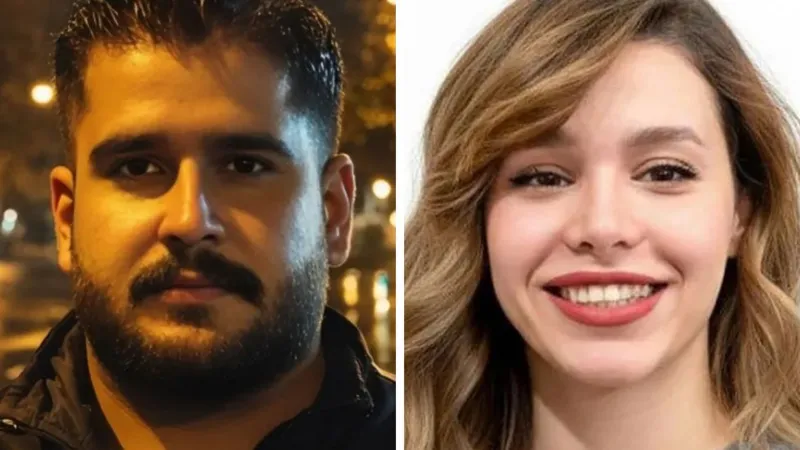
A sports referee and a university student are among the hundreds of people reported to have been killed during sweeping anti-government demonstrations across Iran.
Amir Mohammad Koohkan, a 26-year-old futsal coach and referee, was struck by live ammunition on 3 January while protests were taking place in the town of Neyriz, according to a close friend
“He was known everywhere for his kindness,” the friend said, adding that Koohkan’s family is devastated and furious over his death. “They are grieving because they lost their son, and angry because he was killed by the regime.”
Five days later, Rubina Aminian, a 23-year-old student, was reportedly shot during a protest in Tehran, human rights organisations say. According to accounts, she was shot from behind. Speaking to CNN, her uncle said: “She fought for what she believed was right.”
A US-based human rights organisation estimates that nearly 500 protesters and 48 members of the security forces have been killed in the two weeks since the demonstrations began. Sources inside Iran have told the BBC that the true number of deaths is likely higher.
Protests erupted on 28 December over worsening economic conditions in Tehran and quickly spread nationwide. According to the Human Rights Activist News Agency (HRANA), demonstrations have taken place in 186 cities across all 31 provinces of Iran.
What began as economic protests has evolved into the largest wave of unrest in years, with demonstrators openly calling for the end of the Islamic Republic and the removal of Supreme Leader Ayatollah Ali Khamenei.
The authorities have responded with a sweeping crackdown. HRANA reports that at least 10,600 people have been arrested and 496 protesters killed since the demonstrations began.
Medical professionals inside Iran have described hospitals struggling to cope with the number of dead and wounded. Persian confirmed that 70 bodies were delivered to Poursina Hospital in the northern city of Rasht on 9 January. Separately, the counted approximately 180 body bags in footage from a morgue near Tehran, believed to have been filmed the same night. International media organisations, , are unable to report freely from inside Iran. Since Thursday, the Iranian authorities have imposed widespread internet restrictions, further complicating efforts to gather and verify information.
Koohkan was killed during unrest in Neyriz, located in the south-western province of Fars. His friend, who did not witness the shooting personally, said eyewitnesses at the scene confirmed that he was hit by live rounds.
“It was far too soon for him,” the friend said. “He was so young.”
The two had known each other for a decade. “He was my coach when I was a child, and later he became like a brother to me,” the friend explained.
Koohkan, who had one brother, was described as someone deeply affected by the suffering of others. “He couldn’t tolerate seeing people living in misery,” the friend said. “Everyone in the town loved him.”
The friend said Koohkan’s family is experiencing both profound grief and anger. “They are mourning their son, but they are also angry because he was killed by the regime,” they said.
Rubina Aminian was also killed during the protests, according to three separate human rights organisations. The Kurdish student was reportedly shot while participating in a demonstration in Tehran.
Norway-based Iran Human Rights (IHRNGO) and the Kurdish organisation Hengaw said she was shot in the head. Another group, the Kurdistan Human Rights Network, reported she was shot in the back. Both Kurdish groups said government forces were responsible.
They has not been able to independently confirm the precise circumstances of Aminian’s death.
Aminian, whose name has also been spelled Robina or Roubina, was studying textile and fashion design at Shariati Technical and Vocational College in Tehran, according to IHRNGO.
Her uncle described her as fiercely independent. “She was strong and courageous,” he said. “She was not someone you could control or make decisions for.”
“She was thirsty for freedom and women’s rights,” he added. “She was someone who truly lived.”
After learning of her death, members of Aminian’s family travelled from their hometown of Kermanshah in western Iran to Tehran to identify her body, a source close to the family told IHRNGO.
According to the source, the family had to search among hundreds of bodies of young protesters at a location near her college.
“It wasn’t just my daughter,” Aminian’s mother said, according to the source. “I saw hundreds of bodies with my own eyes.”
The same source said Iranian authorities initially refused to release Aminian’s body to her family. They were also reportedly prevented from holding burial or mourning ceremonies in her hometown.
Instead, the family was forced to bury her along a road between the cities of Kermanshah and Kamyaran, the source said.
Iran’s Supreme Leader Ayatollah Ali Khamenei has dismissed protesters as “troublemakers”. Meanwhile, US President Donald Trump has warned that the United States may intervene, saying the US military is considering “very strong options”.
Iranian officials have accused protesters of being supported by the United States and Israel.
The current unrest is the most extensive since nationwide protests in 2022, which followed the death of Mahsa Amini, a young Kurdish woman who died in custody after being detained by Iran’s morality police over alleged hijab violations.
Human rights groups estimate that more than 550 people were killed and around 20,000 detained during that earlier uprising.

