

US President Donald Trump appeared on course for a setback at America’s top court on Wednesday over his unprecedented move to fire a central bank governor.
Supreme Court justices from both the left and right questioned why they should fast-track such a significant decision, raising concerns about due process, the independence of the Federal Reserve and the potential impact on the wider economy.
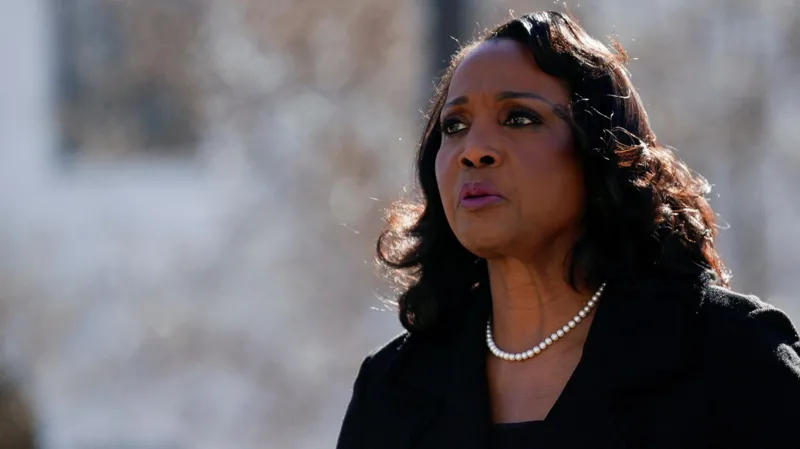
Trump said in August that he was removing Federal Reserve governor Lisa Cook, accusing her of engaging in mortgage fraud, allegations she has denied.
Cook has argued she was not given due process to challenge the claims, which supporters of the Fed say were used as a pretext to allow Trump to exert greater control over the central bank.
Justice Brett Kavanaugh, a conservative appointed by Trump, expressed sympathy with Cook’s position, asking: “What’s the fear of more process here?” He later warned that the administration’s interpretation of the law would “weaken, if not shatter, the independence of the Federal Reserve”.
Under US law, a president can remove a Federal Reserve governor only “for cause”, a requirement designed to shield the institution from political pressure and preserve its independence.
The White House argues that standard has been met, accusing Cook of filing mortgage documents that listed two different properties as her primary residence at the same time. Such designations typically qualify borrowers for lower interest rates.
The Trump administration has asked the court to allow Cook’s removal while the case proceeds, after lower courts blocked the move.
Solicitor General D John Sauer, arguing for the administration, said that even if the issue resulted from an error, it was still serious enough to undermine confidence in the Federal Reserve. He added that courts should defer to the president’s judgment in determining whether cause exists.
He dismissed concerns about procedural fairness, noting that Trump had raised the issue publicly before formally firing Cook. “There was a social media post,” he said. “And the response was defiance.”
Cook has strongly denied any wrongdoing. In a letter sent by her lawyers to the Justice Department in November, they said the allegations relied on “cherry-picked, incomplete snippets” of mortgage documents.
They acknowledged a single reference to a primary residence in one application but said the full file included accurate disclosures about the property’s intended use. “There is no fraud, no intent to deceive, nothing whatsoever criminal,” the letter said.
Paul Clement, representing Cook, told the court that officials in her position must be allowed to present evidence and should be protected from decisions made in advance. He warned that the administration’s reading of the law would render Congress’s “for cause” protection meaningless.
Several justices appeared to agree. Justice Kavanaugh said a system with no judicial review, minimal standards for cause and no required process would seriously damage the Fed’s independence.
The case is viewed as particularly high-stakes amid ongoing debate over Trump’s attempts to influence the Federal Reserve, which he has repeatedly urged to cut interest rates more aggressively to stimulate growth.
Federal Reserve chair Jerome Powell is also under scrutiny, facing a criminal probe related to cost overruns on renovation projects at Fed properties—allegations he has described as pretexts.
While the Supreme Court, which has a 6–3 conservative majority, has recently allowed the White House to proceed with other firings, it has indicated that the Federal Reserve occupies a distinct position due to its role as an independent policymaking institution.
After the hearing, Cook’s lawyers said they were hopeful the court would recognise the importance of keeping the central bank free from political interference.
Cook, who attended the proceedings, said the case would determine whether interest rates are set based on evidence and independent judgment or subjected to political pressure. She said she would continue to uphold the principle of independence in service to the American public.
Several justices signalled reluctance to approve Cook’s removal before lower courts rule on whether her mortgage filings—made before her appointment to the Fed—meet the legal threshold for a “for cause” dismissal.
Justice Sonia Sotomayor said the court should allow lower courts to review the matter thoroughly before intervening, while Justice Samuel Alito questioned why the case was being handled with such urgency.
Justice Amy Coney Barrett also pressed the administration on what harm would result from waiting, noting warnings that undermining confidence in the Fed could have serious economic consequences. “Doesn’t that counsel caution on our part?” she asked.

