

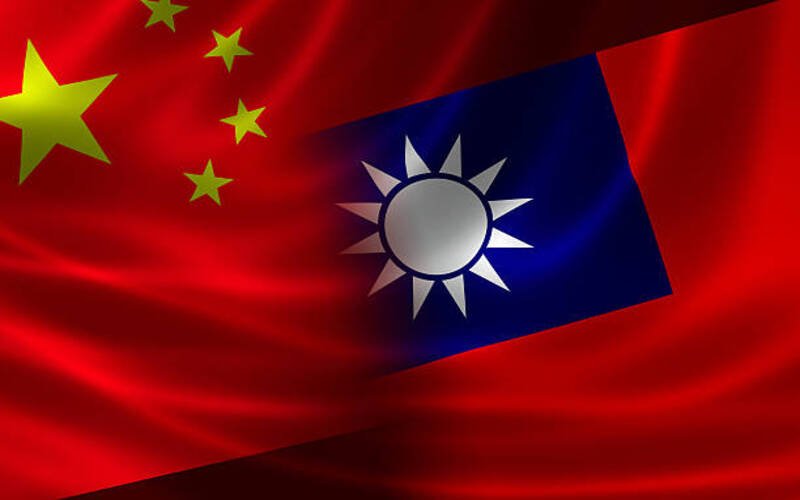
Taiwan accuses China of economic coercion after tariff cuts were removed. After Beijing announced the termination of tariff discounts on some chemical imports from Taiwan on Thursday, Taiwan accused China of economic pressure and political involvement. Beijing claimed that Taipei broke a trade deal, which was publicized shortly before the Taiwanese elections. Taiwan’s accusations came just before the polls.
China, which considers Taiwan to be its territory, has been attempting to coerce Taiwan into accepting Chinese sovereignty claims. Taiwan’s presidential and legislative elections are taking place on January 13, and China is involved in this process.
On many occasions, Taiwan’s government and the Democratic Progressive Party (DPP), which is now in power, have asserted that China is attempting to intervene in the election process, either by the use of military force or by co-opting Taiwanese officials, to achieve a result that is favorable to Beijing.
The Chinese Ministry of Finance has announced that from January 1, tariff reductions would be discontinued for twelve items, including acrylic and p-xylene. The reason is that Taiwan has implemented “discriminatory prohibitions and restrictions” on Chinese exports, which breaches a trade agreement signed in 2010.
“It is hoped that Taiwan will take effective measures to lift trade restrictions on the mainland,” according to the report. In a statement made last week, China stated that it had decided that Taiwan had erected trade barriers, which violated both the World Trade Organization (WTO) regulations and the trade accord signed in 2010.
Following the weekly Cabinet meeting that took place on Thursday, the Office of Trade Negotiations of Taiwan issued a statement in which it stated that China was engaging in “typical economic coercion” and that it should cease its “one-sided political manipulation” and engage in discussions within the framework of the World Trade Organization, of which both Taiwan and China are participating members.
According to the report, China’s inquiry procedure has been unfair, difficult to understand, and not up to international standards. “Our government was deliberately skipped over during the investigation process, showing that the probe’s political aims were greater than their economic ones.”
The formulation of Taiwan’s China policy The Mainland Affairs Council said that China has a variety of techniques at its disposal to meddle in the election, and the trade investigation was one of those methods.
“The election is the Chinese communists’ short-term political goal, but its economic coercion against Taiwan will not end with the election and will continue for a long time,” a spokeswoman named Jan Jyh-horng told reporters.
With that being said, Minister Kung Ming-hsin of the National Development Council stated that the tariff hike will not impact Taiwan’s economic prospects.
Because of this, we will not alter our projection for the economy’s growth in the next year. It will continue to be more than 3%,” Kung stated.
The Chinese government’s Taiwan Affairs Office placed the responsibility on Taiwan’s administration, stating that the Democratic Progressive Party’s (DPP) “stubborn adherence to Taiwan independence” was the cause of the difficulty in effectively resolving issues.
The Chinese government believes that the Democratic People’s Party (DPP) and its presidential candidate, the current Vice President Lai Ching-te, who is now leading in the polls, are separatists.
Only the people of Taiwan have the power to determine their destiny, according to Lai, who has made several attempts to negotiate with China but has been unsuccessful.

